
Monitor co-founder Wafula warns against trading independence for reopening
Abstract
Daily Monitor co-founder Phillip Wafula Oguttu has issued a strong caution against Nation Media Group (NMG) Uganda compromising its editorial independence in exchange for the reopening of its media outlets. This warning comes amidst ongoing, military-led negotiations following the recent shutdown of NMG Uganda's operations, including the Daily Monitor newspaper and NTV Uganda. The situation highlights a critical tension between constitutional guarantees of press freedom in Uganda and persistent executive and military interference in media operations. Legal professionals are urged to consider the profound implications of such concessions on the rule of law, democratic governance, and the fundamental right to freedom of expression.
Introduction
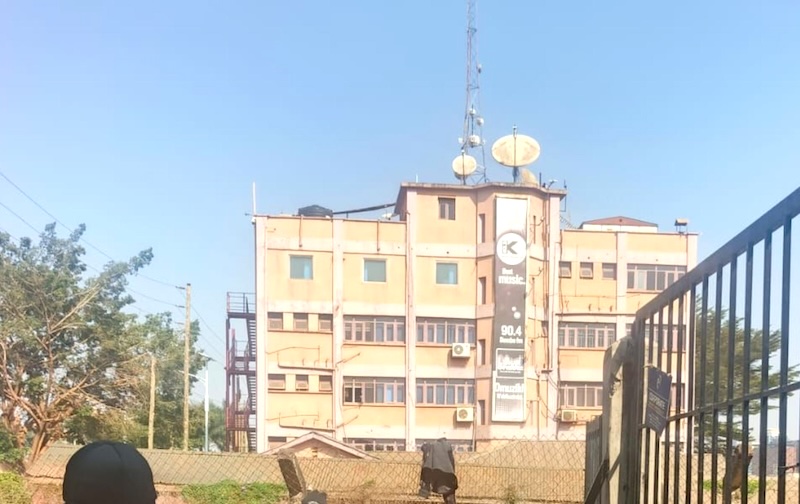
The recent closure of Nation Media Group (NMG) Uganda's operations, encompassing prominent outlets like the Daily Monitor newspaper and NTV Uganda, by military order has ignited a critical debate concerning media freedom in Uganda. This unprecedented action, reportedly initiated by the Chief of Defence Forces, General Muhoozi Kainerugaba, and involving the deployment of military personnel to media premises, bypassed established civilian regulatory bodies. As behind-the-scenes negotiations for the reopening of these vital media houses continue, a stark warning has been issued by Phillip Wafula Oguttu, a co-founder of the Daily Monitor. He has unequivocally cautioned against any agreement that would cede editorial influence to the government, asserting that such a compromise would fundamentally betray the newspaper's founding principle of independence. This article examines the legal framework underpinning media independence in Uganda, the implications of government influence on editorial decisions, and the broader ramifications for the rule of law and democratic society.
Background
The right to freedom of speech and expression, which explicitly includes freedom of the press and other media, is a cornerstone of Uganda's constitutional architecture, enshrined in Article 29(1)(a) of the Constitution of the Republic of Uganda, 1995. While Article 43 allows for limitations on these rights, such restrictions must be 'acceptable and demonstrably justifiable in a free and democratic society.' Complementing these constitutional guarantees, the Press and Journalist Act (Cap. 105) was enacted to ensure press freedom, establish a Media Council for mass media regulation, and create an institute for journalists. Similarly, the Uganda Communications Act, 2013, consolidates and harmonises communication laws, vesting the Uganda Communications Commission (UCC) with the authority to regulate the communications industry.
Despite this legal framework, the history of media-state relations in Uganda has been marked by recurrent tensions and confrontations. The Daily Monitor and NTV Uganda, in particular, have faced multiple shutdowns and raids by state security forces over the years, including incidents in 2002, 2006, 2007, and 2013, often linked to their critical reporting on government and security matters. The latest closure, ordered by a military general and involving the Uganda People's Defence Forces (UPDF) directly, rather than the statutory media regulator, signifies a concerning pattern of executive and military overreach. This context underscores the gravity of Wafula Oguttu's warning, as negotiations for reopening reportedly involve commitments from NMG management to adopt a 'more patriotic, balanced, and objective approach' to journalism, raising fears of state-imposed editorial control.
Analysis
The prospect of Nation Media Group Uganda trading editorial independence for its reopening carries significant legal and constitutional implications. Any agreement that grants the government influence over editorial decisions would directly contravene Article 29(1)(a) of the Constitution, which guarantees freedom of the press. Such an arrangement would undermine the very essence of a free press, which is to serve as a public watchdog, holding power accountable without fear or favour. The limitations permitted under Article 43 are strictly defined and cannot justify state control over editorial content, as this would not be 'demonstrably justifiable in a free and democratic society.'
Furthermore, the involvement of military officials in regulating media content and ordering closures bypasses the established statutory framework, particularly the mandate of the Uganda Communications Commission (UCC) under the Uganda Communications Act, 2013, and the Media Council under the Press and Journalist Act. This circumvention of civilian regulatory bodies raises serious concerns about the rule of law and the separation of powers. Regional rights groups have already condemned this as a 'pattern of executive overreach' and an affront to Uganda's rule of law.
Ugandan courts have, in several landmark decisions, demonstrated a commitment to upholding press freedom. In *Charles Onyango Obbo and Andrew Mwenda v. Attorney General*, the Supreme Court declared Section 50 of the Penal Code Act, which criminalised the publication of false news, inconsistent with Article 29(1)(a) of the Constitution. More recently, the Constitutional Court has nullified parts of the Computer Misuse Act and declared criminal defamation unconstitutional, affirming that civil remedies are sufficient for defamation. These judicial pronouncements underscore the constitutional imperative for a free press and set a high bar for any attempts to restrict media freedom. The High Court also ruled in *Timothy Mulungi and Henry Sekanjako* that journalists' rights to movement, speech, conscience, opinion, assembly, and association were violated, further reinforcing judicial protection of media practitioners. A compromise on editorial independence would effectively negate these hard-won legal victories and could lead to a chilling effect, fostering self-censorship among journalists and ultimately depriving the public of diverse and critical information. Such actions also place Uganda in contravention of international human rights instruments, such as Article 9 of the African Charter for Human and Peoples' Rights, which protects the right to receive and disseminate opinions within the law.
Conclusion
The warning from Daily Monitor co-founder Phillip Wafula Oguttu serves as a crucial reminder of the non-negotiable value of editorial independence for a vibrant democracy. For legal practitioners, this situation highlights the ongoing necessity to vigilantly defend constitutional rights, particularly freedom of the press, against executive and military encroachment. Any agreement that subjects media houses to government influence, even under the guise of 'patriotic' or 'balanced' reporting, sets a dangerous precedent that undermines the foundational principles of independent journalism and the rule of law.
Practitioners must be prepared to challenge such arrangements as unconstitutional and inconsistent with Uganda's domestic and international human rights obligations. The recent progressive rulings by Ugandan courts on media freedom provide a strong basis for such challenges. Moving forward, it is imperative for all stakeholders to advocate for a transparent, legally sound regulatory environment for media, free from arbitrary interference by security agencies. The integrity of Uganda's democratic institutions hinges on a media that can operate without fear or favour, ensuring the public's right to information and fostering accountability in governance. Legal professionals have a vital role to play in safeguarding this fundamental pillar of society and should remain vigilant against any attempts to re-criminalise or indirectly control media expression.
Citations
- 1.Constitution of the Republic of Uganda, 1995
- 2.Press and Journalist Act, Cap. 105
- 3.Uganda Communications Act, 2013
- 4.Charles Onyango Obbo and Andrew Mwenda v. Attorney General, Constitutional Appeal No. 2 of 2002
- 5.Timothy Mulungi and Henry Sekanjako v. Attorney General, Miscellaneous Cause No. 64 of 2021
- 6.African Charter on Human and Peoples' Rights