
Mumbai to get India’s first city-wide master pedestrian network plan: BMC tells Supreme Court
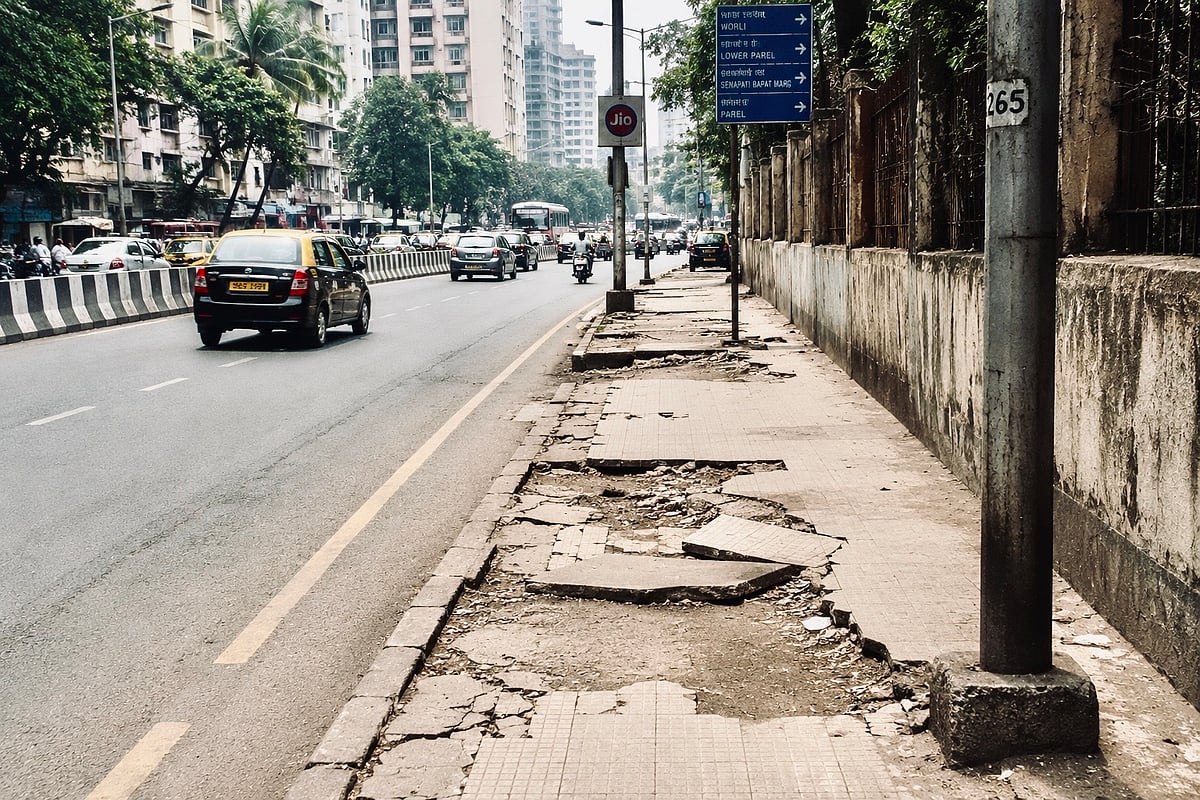
Abstract
The Brihanmumbai Municipal Corporation (BMC) has informed the Supreme Court of India that it is developing the nation's first city-wide master pedestrian network plan for Mumbai. This ambitious initiative aims to create a continuous, connected, and universally accessible pedestrian infrastructure across the metropolis. The plan leverages advanced geospatial technologies, including 3D city modeling, GIS mapping, satellite imagery, and LiDAR surveys, to identify and rectify existing fragmented footpaths, missing links, and accessibility gaps. This development is a direct response to a long-pending public interest litigation concerning pedestrian safety and the implementation of a universal footpath policy, underscoring the judiciary's role in driving urban infrastructure reform and upholding citizens' fundamental right to safe public spaces.
Introduction
Mumbai is poised for a significant transformation in its urban landscape, as the Brihanmumbai Municipal Corporation (BMC) has committed to the Supreme Court of India to develop the country's first city-wide master pedestrian network plan. This landmark initiative moves beyond piecemeal solutions, aiming to establish a continuous, connected, and universally accessible pedestrian network throughout the bustling city. The BMC's undertaking, detailed in an affidavit filed before the apex court, signifies a pivotal shift towards a scientific and integrated approach to urban mobility, prioritizing the safety and convenience of pedestrians.
This development is not merely an administrative exercise but a direct consequence of sustained judicial scrutiny and public advocacy for improved urban infrastructure. The proposed plan, which will utilize cutting-edge technologies like 3D city modeling, Geographic Information System (GIS) mapping, satellite imagery, and LiDAR surveys, represents a concerted effort to address the long-standing challenges of fragmented footpaths and inaccessible public spaces. It reflects a growing recognition of the fundamental right to safe and dignified pedestrian movement within India's rapidly urbanizing environment.
This article will delve into the legal and policy framework underpinning this initiative, analyze the proposed methodology and its implications, and discuss the challenges and opportunities for practitioners in urban planning, municipal law, and public interest litigation. The BMC's commitment, spurred by judicial intervention, marks a crucial moment for urban governance in India, setting a precedent for how cities can be reimagined to be truly pedestrian-friendly and inclusive.
Background
The genesis of Mumbai's master pedestrian network plan lies in a long-pending Public Interest Litigation (PIL) petition before the Supreme Court, which has consistently highlighted issues of pedestrian safety and the inadequate implementation of universal footpath policies. Public Interest Litigation has historically served as a vital instrument in Indian jurisprudence, enabling the judiciary to address matters of significant public concern and ensure justice for disadvantaged sections of society. The Supreme Court's active engagement in this matter underscores its role in compelling governmental bodies to fulfill their civic duties.
A crucial legal foundation for this initiative is the recent pronouncement by the Supreme Court, which declared the "Right to Walk" on safe, demarcated footpaths as a fundamental right under Article 21 (Right to Life and Personal Liberty) and Article 19(1)(d) (freedom of movement) of the Constitution of India. This landmark ruling places a positive and enforceable obligation on municipal authorities to construct, maintain, and ensure the accessibility of footpaths, prioritizing pedestrian safety over vehicular convenience. The Court has explicitly stated that this fundamental right shall override the privilege of a motorised vehicle.
Further reinforcing the legal mandate for accessible infrastructure are the Rights of Persons with Disabilities Act, 2016 (RPwD Act, 2016), and the Harmonised Guidelines and Standards for Universal Accessibility in India, 2021. These instruments mandate barrier-free environments and universal design principles in public spaces, ensuring inclusivity for all citizens, including those with disabilities. Locally, the Maharashtra Regional and Town Planning Act, 1966 (MRTP Act, 1966), provides the statutory framework for urban planning and development in Maharashtra, under which such a master plan would be formulated and implemented. The BMC had also previously introduced its own Universal Footpath Policy in 2023, though its implementation faced challenges.
Analysis
The BMC's proposed methodology for developing Mumbai's master pedestrian network represents a significant leap in urban planning, moving towards a data-driven and technologically advanced approach. The use of a 3D city model integrated with Geographic Information System (GIS) mapping, satellite imagery, LiDAR surveys, and drone mapping is designed to create a comprehensive geospatial inventory of existing pedestrian infrastructure. This sophisticated data collection will enable the precise identification of "existing footpaths, missing links, discontinuities, connectivity gaps and inaccessible stretches", a critical step in rectifying the city's historically fragmented pedestrian pathways.
This scientific approach directly addresses the Supreme Court's directives by aiming for a "continuous, connected and universally accessible pedestrian network". The integration of accessibility considerations from the outset aligns with the mandates of the Rights of Persons with Disabilities Act, 2016, and the Harmonised Guidelines and Standards for Universal Accessibility in India, 2021, which advocate for inclusive urban design. By identifying and rectifying accessibility gaps, the plan seeks to operationalize the fundamental right to walk safely and with dignity for all citizens, including persons with disabilities, as articulated by the Supreme Court.
However, the implementation of such an ambitious plan is not without its challenges. A persistent issue in Indian cities, particularly Mumbai, is the widespread encroachment on footpaths, often by street vendors. The BMC's affidavit acknowledges this by stating that the plan will need to balance the creation of continuous pedestrian corridors with the rights of street vendors, regulated under the Street Vendors (Protection of Livelihood and Regulation of Street Vending) Act, 2014, and relevant Maharashtra rules. The Supreme Court has previously directed the urgent removal of encroachments to ensure walkable footpaths. Effective integration of street vending zones into the pedestrian network, rather than mere displacement, will be crucial for the plan's success and social equity.
Furthermore, while the BMC had previously allocated funds for a 'Pedestrian First' policy in its 2023-24 budget, earlier attempts at footpath remodeling faced administrative hurdles and concerns over execution. The Supreme Court's continuous monitoring of this PIL, with the next hearing scheduled for September 2026, provides a vital layer of judicial oversight and accountability. This ongoing judicial intervention is expected to ensure sustained political will and resource allocation, preventing the plan from languishing due to bureaucratic inertia or competing urban development priorities that historically favored vehicular traffic. The plan's success will serve as a critical test case for the judiciary's ability to drive systemic change in urban governance.
Conclusion
The Brihanmumbai Municipal Corporation's commitment to developing India's first city-wide master pedestrian network plan for Mumbai represents a transformative moment for urban planning and pedestrian rights in the country. Driven by the Supreme Court's declaration of the "Right to Walk" as a fundamental right and its continuous oversight through a public interest litigation, this initiative underscores the judiciary's increasing role in shaping inclusive and accessible urban environments. The adoption of advanced geospatial technologies promises a scientific and comprehensive approach to rectifying historical planning deficiencies and creating a truly connected city for pedestrians.
For legal practitioners, this development carries significant implications. Urban planners and municipal lawyers will need to navigate the complexities of integrating this master plan with existing statutory frameworks, including the Maharashtra Regional and Town Planning Act, 1966, and ensuring compliance with universal accessibility standards mandated by the Rights of Persons with Disabilities Act, 2016. Real estate developers and infrastructure companies should anticipate heightened scrutiny to ensure their projects align with the new pedestrian network and accessibility norms. Crucially, public interest litigators will find stronger grounds for advocating for pedestrian rights and holding municipal bodies accountable for infrastructure development and maintenance across other Indian cities, potentially using Mumbai's plan as a blueprint and the Supreme Court's pronouncements as powerful precedents. The success of this ambitious plan will hinge on sustained political will, effective inter-agency coordination, and continued judicial vigilance, setting a benchmark for future urban development in India.
Citations
- 1.Article 19(1)(d) of the Constitution of India
- 2.Article 21 of the Constitution of India
- 3.Harmonised Guidelines and Standards for Universal Accessibility in India, 2021
- 4.Maharashtra Regional and Town Planning Act, 1966 (Maharashtra Act No. XXXVII of 1966)
- 5.Rights of Persons with Disabilities Act, 2016
- 6.Street Vendors (Protection of Livelihood and Regulation of Street Vending) Act, 2014