
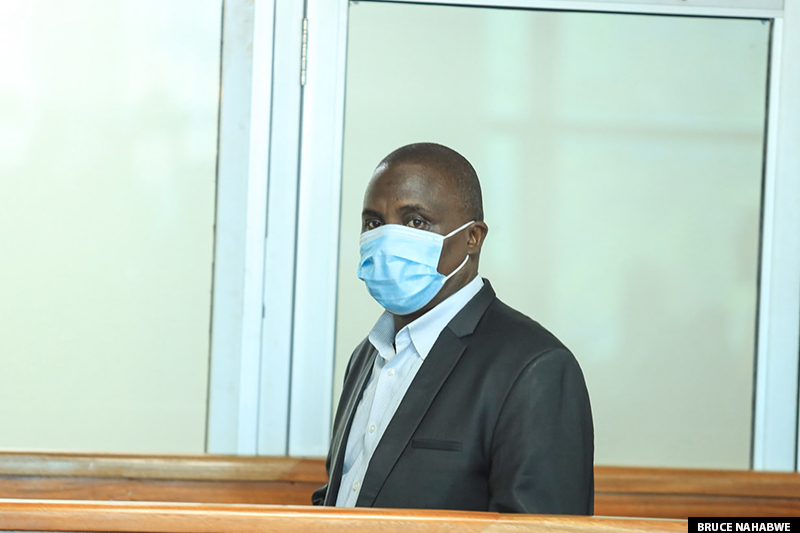
Muwanga Kivumbi, 16 others granted bail
Abstract
The International Crimes Division of the High Court of Uganda has granted bail to former Butambala County MP Muhammad Muwanga Kivumbi and 16 co-accused, who had been on remand for approximately six months on terrorism-related charges. Lady Justice Susan Okalany presided over the ruling, which saw Kivumbi granted cash bail of Shs 10 million and his sureties bonded at Shs 5 million (non-cash). The decision underscores the constitutional right to apply for bail and the presumption of innocence, even in grave cases, while also highlighting the court's discretion and the conditions imposed to ensure appearance for trial. Six other co-accused were denied bail due to unsuitable sureties, with directions to present fresh ones. This ruling provides crucial insights into the application of bail laws for serious offences in Uganda.
Introduction
In a significant development for Uganda's criminal justice system, the International Crimes Division (ICD) of the High Court recently granted bail to former Butambala County Member of Parliament, Muhammad Muwanga Kivumbi, and sixteen of his co-accused. The group had spent nearly six months on remand, facing grave terrorism-related charges stemming from alleged post-election violence in January 2026. This decision, delivered by Lady Justice Susan Okalany, marks a critical juncture in a high-profile case that has drawn considerable public and political attention.
The granting of bail in such serious matters, particularly those involving terrorism, reiterates the fundamental principles enshrined in Uganda's Constitution, including the presumption of innocence and the right to liberty. It also highlights the judiciary's role in balancing these rights against public interest concerns, such as the risk of absconding or witness interference. For legal practitioners, this ruling offers valuable insights into the court's interpretation and application of bail provisions, especially concerning offences triable exclusively by the High Court and those requiring proof of exceptional circumstances.
This article will delve into the legal framework governing bail in Uganda, examine the specific circumstances and arguments presented in the *Muwanga Kivumbi* case, and analyze the implications of the court's decision for legal practice and the broader administration of justice in the country. It will explore the interplay between constitutional rights, statutory requirements, and judicial discretion in determining bail applications for serious criminal charges.
Background
The right to bail in Uganda is a fundamental constitutional guarantee, primarily enshrined in Article 23(6) of the 1995 Constitution of the Republic of Uganda. This article stipulates that an arrested person is entitled to apply to the court to be released on bail, and the court may grant bail on reasonable conditions. This right is underpinned by Article 28(3)(a), which establishes the presumption of innocence until proven guilty. The statutory framework for bail is further detailed in the Criminal Procedure Code Act, the Magistrates Courts Act Cap 16, and the Trial on Indictments Act (TIA) Cap 23.
For offences triable only by the High Court, such as terrorism, Section 14(1) of the TIA grants the High Court discretion to release an accused person on bail at any stage of the proceedings. However, for certain grave offences listed under Section 16(2) of the TIA, including terrorism, bail may only be granted if the applicant proves to the satisfaction of the court that exceptional circumstances exist justifying their release and that they will not abscond. Exceptional circumstances typically include grave illness certified by a medical officer, a certificate of no objection from the Director of Public Prosecutions (DPP), or the infancy or advanced age of the accused.
The charges against Muwanga Kivumbi and his co-accused fall under the Anti-Terrorism Act, 2002. This Act defines terrorism broadly, criminalizes various related acts, and specifies that offences under it, particularly those punishable by more than ten years imprisonment, are triable only by the High Court, which alone has the power to grant bail in such cases. The International Crimes Division (ICD) of the High Court, established in 2008 and formalized in 2011, is specifically mandated to handle international crimes, including terrorism, war crimes, and crimes against humanity, making it the appropriate forum for this case.
Analysis
In the *Muwanga Kivumbi* case, the accused were charged with terrorism, an offence that carries severe penalties, including the death sentence if it directly results in death. The defence, represented by firms including Alaka & Company Advocates and Lukwago & Company Advocates, argued that the accused were entitled to bail based on the presumption of innocence, their fixed places of residence, strong community ties, and the availability of substantial sureties. Crucially, they also contended that their prolonged detention, spanning nearly six months (169 days) without committal to the High Court for trial or a hearing date, amounted to unconstitutionally prolonged remand.
The prosecution, led by Assistant Director of Public Prosecutions Thomas Jatiko, opposed bail, citing ongoing investigations and expressing concerns that the accused might interfere with witnesses if released. This is a common ground for opposing bail, as courts consider factors such as the likelihood of absconding, interference with witnesses, and the gravity of the offence when exercising their discretion.
Lady Justice Susan Okalany, in her ruling, found that the applicants had indeed met the legal requirements for bail. This decision implicitly acknowledges the weight of the constitutional provisions on the right to apply for bail and the presumption of innocence. While terrorism charges are serious and typically require proof of 'exceptional circumstances' under Section 16(3) of the TIA, the prolonged remand period, coupled with the defence's arguments regarding fixed abode and substantial sureties, likely swayed the court. The fact that the accused had been on remand for 169 days, nearing the 180-day threshold for mandatory bail for capital offences if not committed for trial under Article 23(6)(c) of the Constitution, may have also been a significant factor.
The bail conditions imposed were stringent: Muwanga Kivumbi was granted cash bail of Shs 10 million, while his three sureties were each required to execute a non-cash bond of Shs 5 million. The other 16 co-accused received cash bail of Shs 1 million each, with their sureties also executing non-cash bonds of Shs 5 million. Additionally, all successful applicants were ordered to deposit their passports with the court registrar, prohibited from travelling outside Uganda without prior court permission, and mandated to report monthly to the Registrar of the International Crimes Division and the Butambala Magistrates Court. These conditions reflect the court's effort to mitigate the risks raised by the prosecution while upholding the accused's right to liberty. Notably, six co-accused were denied bail due to their sureties being deemed unsubstantial, underscoring the strictness with which surety requirements are applied.
Conclusion
The decision by the International Crimes Division to grant bail to Muhammad Muwanga Kivumbi and his co-accused, despite the gravity of the terrorism charges, serves as a crucial reminder of the enduring constitutional safeguards for personal liberty and the presumption of innocence in Uganda. For legal practitioners, this ruling reinforces the importance of meticulously preparing bail applications, emphasizing factors such as fixed abode, substantial sureties, and, critically, the duration of pre-trial detention. It also highlights the judiciary's commitment to upholding constitutional rights even in politically sensitive cases involving serious offences.
Practitioners should note the stringent bail conditions imposed, including cash bail, non-cash bonds for sureties, passport surrender, and regular reporting, as these set a precedent for future applications in similar high-stakes cases. The deferral of bail for six co-accused due to unsuitable sureties also underscores the need for thorough vetting and preparation of sureties. Going forward, the legal community will be watching closely for the expeditious progress of investigations and trial, as ordered by Justice Okalany, and any potential review of bail terms if the trial does not commence within one year. This case continues to shape the landscape of criminal justice, particularly concerning bail for serious crimes, in Uganda.
How does this affect your business?
Get an AI analysis of this article grounded in your jurisdictions, practice areas, and any policy documents you've uploaded to Wansom.