
National Heroes Council to develop Shakahola heritage site honouring Mekatilili wa Menza
Abstract
The National Heroes Council (NHC) in Kenya has announced plans to develop a heritage site at Shakahola, Kilifi County, to honour the anti-colonial heroine Mekatilili wa Menza. This initiative, aimed at preserving her legacy and boosting historical tourism, navigates complex legal frameworks governing national heroes, cultural heritage, and land use. The project raises significant legal and ethical considerations, particularly concerning the site's name, given Shakahola's recent association with a tragic cult massacre. Legal professionals must consider the NHC's mandate under the Kenya Heroes Act, the National Museums and Heritage Act for site designation, and the Land Act for acquisition, alongside the critical need for public participation and sensitive management of conflicting historical narratives to ensure legal compliance and public acceptance.
Introduction
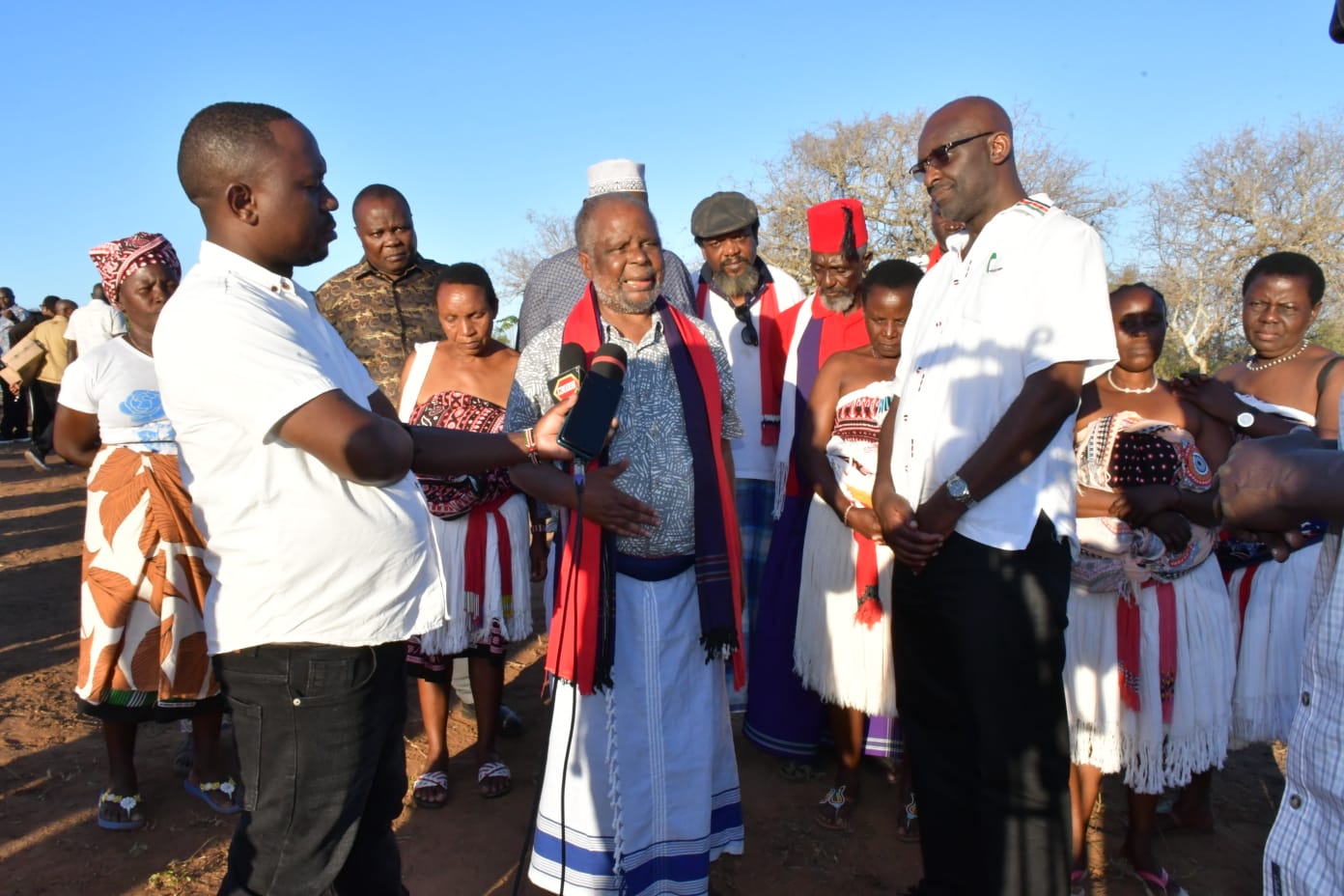
The National Heroes Council (NHC) has unveiled plans to establish a heritage site in Shakahola, Kilifi County, dedicated to commemorating the life and struggles of Mekatilili wa Menza, a revered Giriama resistance leader. This ambitious project, which will include a memorial statue and cultural facilities, aims to immortalise Mekatilili's pivotal role in Kenya's anti-colonial struggle and simultaneously enhance historical tourism in the region. The announcement, while celebrating a national heroine, immediately draws attention to the complex legal and ethical landscape surrounding heritage preservation and public memory in Kenya.
This development necessitates a thorough examination of the legal frameworks empowering such initiatives, particularly the mandate of the NHC and the provisions for heritage site designation. Furthermore, the choice of "Shakahola" as the site's location introduces a unique set of challenges. The area has recently gained notoriety for the tragic Shakahola Forest incident, involving a cult that led to mass deaths, raising profound questions about public perception, victim sensitivity, and the appropriate naming and contextualisation of national monuments.
For legal practitioners, this project presents a multifaceted case study involving public law, land law, cultural heritage law, and administrative law. Understanding the interplay of these legal regimes, along with the imperative for robust public participation and sensitive stakeholder engagement, will be crucial in advising on the successful and legally sound implementation of this significant national undertaking.
Background
The National Heroes Council is a statutory body established under the Kenya Heroes Act, No. 5 of 2014. Its primary mandate is to identify, select, and provide for the recognition and honouring of national heroes, formulate related policies, and oversee the management of national heroes' squares and commemorative items. Mekatilili wa Menza, born in the 1860s in Kilifi County, is widely celebrated as a fearless independence activist who led the Giriama people against British colonial administration between 1912 and 1915, making her a fitting subject for national honour.
Kenya's cultural heritage is protected under the National Museums and Heritage Act (Cap. 216), which establishes the National Museums of Kenya (NMK) and empowers the Cabinet Secretary to declare monuments and protected areas for the identification, protection, conservation, and transmission of cultural and natural heritage. This Act provides the legal basis for designating and managing sites of historical and cultural significance, ensuring their preservation for future generations. The process typically involves identification, assessment, and gazettement, often with input from relevant cultural institutions and local communities.
However, the proposed location, Shakahola, carries a recent and deeply painful association. In March 2023, the Shakahola Forest in Kilifi County became the scene of a horrific tragedy where hundreds of followers of a religious cult died due to starvation and other abuses. The site is now synonymous with mass graves and severe human rights violations, a stark contrast to the heroic legacy the NHC seeks to celebrate. This dual historical significance presents a unique challenge for the project's legal and public relations aspects.
Analysis
The NHC's authority to establish a heritage site stems directly from the Kenya Heroes Act, 2014, which mandates it to identify and honour national heroes and to oversee the management of institutions relating to heroes. While the Act provides a broad framework, the specific procedures for designating a physical site as a national monument or heritage area fall under the purview of the National Museums and Heritage Act, Cap. 216. Section 25 of this Act empowers the Cabinet Secretary to declare any place or object of historical or cultural interest as a monument or protected area by notice in the Gazette. This declaration process requires careful adherence to statutory requirements, including potentially public notification and consideration of objections.
Any land acquisition for such a public project, if the land is not already public, would be governed by the Land Act, 2012. Part VIII of the Land Act outlines the detailed procedure for compulsory acquisition of private land for public purposes, requiring a clear public purpose, adherence to a defined process, and prompt payment of just compensation. The National Land Commission (NLC) plays a central role in administering this process, which includes publishing notices in the Kenya Gazette and national newspapers, holding inquiries for interested parties to make representations, and ensuring fair compensation. Failure to follow these steps can lead to legal challenges in the Environment and Land Court.
The most significant legal and ethical hurdle for this project is the naming and location of the site at "Shakahola." The recent Shakahola massacre has left a deep scar on the national psyche, with ongoing investigations and legal proceedings against those responsible for the deaths of hundreds. Naming a site of national honour after a location associated with such profound tragedy could be perceived as insensitive to victims and their families, potentially leading to public outcry and legal challenges based on public interest or even human rights considerations. While the NHC's objective is noble, the juxtaposition of Mekatilili wa Menza's legacy of liberation with the recent horrors of Shakahola demands an exceptionally sensitive approach to site naming and contextualisation.
Comparative legal perspectives suggest that nations often grapple with how to memorialise sites of conflicting historical narratives. While some sites embrace their dual nature, others undergo renaming or careful demarcation to distinguish between different historical periods or events. The Heritage and Museums Bill, 2023, which aims to modernise the legislative framework, also highlights the need to guard against the use of heritage for sectarian purposes or political gain, a principle that could be extended to avoiding insensitivity. Effective public participation, as mandated by the Constitution of Kenya (Article 10) and various statutes, will be paramount to gauge public sentiment and build consensus around the project's approach, particularly regarding the contentious naming aspect.
Conclusion
The National Heroes Council's initiative to establish a heritage site honouring Mekatilili wa Menza is a commendable effort to preserve national history and promote cultural tourism. However, the decision to locate and name this site at "Shakahola" introduces a complex web of legal, ethical, and public relations challenges that require careful navigation. Practitioners advising on this project must ensure strict adherence to the Kenya Heroes Act, 2014, and the National Museums and Heritage Act, Cap. 216, for the proper identification, declaration, and management of the heritage site.
Crucially, the legal team must guide the NHC through robust public participation processes, as mandated by the Constitution and the Land Act, 2012, especially concerning land acquisition and the sensitive naming of the site. The potential for legal challenges from victim advocacy groups or concerned citizens, citing insensitivity or public interest concerns, cannot be overlooked. Moving forward, it will be vital to observe how the NHC addresses the dual narrative of Shakahola, balancing the celebration of a national hero with respectful acknowledgement of recent tragedies, potentially through careful site demarcation, contextualisation, or even a reconsideration of the site's specific naming to ensure the project achieves its noble objectives without inadvertently causing further distress.
Citations
- 1.Kenya Heroes Act, No. 5 of 2014
- 2.National Museums and Heritage Act, Cap. 216
- 3.Land Act, 2012
- 4.Tourism Act, No. 28 of 2011
- 5.Heritage and Museums Bill, 2023
- 6.Constitution of Kenya, 2010
- 7.The National Heroes Council - Saraka
- 8.Shakahola Forest incident - Wikipedia
- 9.Mekatilili Wa Menza - Wikipedia
- 10.MEKATILILI WA MENZA - Encyclopaedia Africana
- 11.National Museums and Heritage Act (Cap. 216). | Land Portal
- 12.Mekatilili Wa Menza: The Story of the Giriama Wonder Woman - Google Arts & Culture
- 13.The Cult Killings of Shakahola - Pulitzer Center
- 14.NATIONAL MUSEUMS AND HERITAGE ACT
- 15.Kenya opens nominations for national heroes recognition - People Daily
- 16.Cultural Heritage Preservation in Kenya: From Lamu Old Town to the National Museums and Intangible Heritage | Huduma Global Guide
- 17.THE KENYA HEROES ACT
- 18.The National Museums and Heritage Act - UNESCO
- 19.Mekatilili: local heroine | The Ferguson Centre for Empire and Postcolonial Studies
- 20.FAQs - The National Heroes Council
- 21.National Museums and Heritage Act, 2006 | PolicyVault.Africa
- 22.Kenya Heroes Act, 2014 | judy.legal
- 23.KNCHR's MONITORING FINDINGS OF THE SHAKAHOLA TRADEGY:- “MASHAKA YA SHAKAHOLA” - Kenya National Commission on Human Rights
- 24.Mekatilili wa Menza: Anti-Colonial Struggle in Kenya - Capire
- 25.Kenya pledges enhanced protection of heritage sites to boost tourism revenue - Xinhua
- 26.Compulsory Acquisition and Zoning Laws in Kenya - The Realtors Platform
- 27.Kenya Heroes Act, 2014 | PolicyVault.Africa
- 28.Kenya's Shakahola cult suspect pleads guilty to murdering 191 followers, most of them children - Anadolu Ajansı
- 29.KENYA HEROES ACT - PolicyVault.Africa
- 30.THE KENYA HEROES ACT - LawGuide
- 31.Shakahola Cult Massacre: Two years on, 'I want to bury my six children', pleads father - Willow Health Media
- 32.The National Heroes Council
- 33.Tourism Act, Revised 2018 | PolicyVault.Africa
- 34.Kenya Government Gazette supplement dated 2014-05-06 number 63 | Africa Commons
- 35.National Heroes Council opens window for public nominations - The Star
- 36.Strategic Plan 2023/24 - The National Heroes Council
- 37.SUMMARISED VERSION OF KEY LAND ACQUISITION PROCEDURES IN KENYA - Haki Yetu Organization
- 38.the national museums and heritage act - Nairobi airport
- 39.PUBLIC LAND ACQUISITION - SDGs Kenya Forum
- 40.Challenges in Sustainable Heritage Conservation and Preservation of Historic Cities and National Monuments in Kenya - IDEAS/RePEc
- 41.Land Acquisition For Selected Road Projects In Kenya - Uon Digital Repository
- 42.Milestones - National Land Commission
- 43.Objectives - The National Heroes Council
- 44.CS Cheptumo: Preservation has protected Fort Jesus - YouTube
- 45.Promoting Cultural Heritage Preservation in Kenya - KIPPRA
- 46.Poor Documentation Puts Kenya's Cultural Heritage at Risk - Talk Africa
- 47.The Heritage And Museums Bill, 2023 - Nairobi - Parliament of Kenya
- 48.Assessment of legislation on cultural heritage resources in Kenya | Request PDF
- 49.Tourism Policy, Legal and Institutional Reforms - Kenya Vision 2030
- 50.Government Agencies - National Tourism Service Portal - Tour Kenya
- 51.Why Ethical Wildlife Tourism is the Future of Travel in Kenya
How does this affect your business?
Get an AI analysis of this article grounded in your jurisdictions, practice areas, and any policy documents you've uploaded to Wansom.