
Nigerian soldiers force law professor to do frog jumps in Abuja land dispute
Summary
- Nigerian soldiers allegedly forced Professor John Ntui Ntuiabane to perform 'frog jumps' during a land dispute in Abuja.
- Senior lawyer Chief J.J. Edem was severely assaulted during the altercation.
- The incident highlights the need for careful navigation of complex property rights issues in Nigeria's land ownership laws.
- Lawyers advising clients on land-related matters must consider the potential risks and consequences of military involvement in civilian disputes.
What Happened
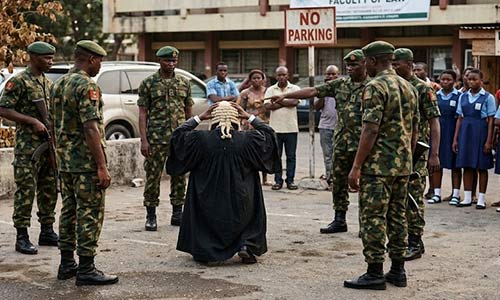
Professor John Ntui Ntuiabane, a respected law professor, was allegedly subjected to public humiliation by Nigerian soldiers who forced him to perform 'frog jumps' during the altercation.
A dramatic confrontation unfolded in Abuja, the Federal Capital Territory of Nigeria, as a land dispute between rival claimants took a violent turn. Professor John Ntui Ntuiabane, a respected law professor, was allegedly subjected to public humiliation by Nigerian soldiers who forced him to perform 'frog jumps' during the altercation. The incident occurred while Chief J.J. Edem, a senior lawyer, was severely assaulted. According to reports, the confrontation involved rival claimants vying for control of a disputed plot of land in Abuja.
Legal Context
The Nigerian military's involvement in civilian disputes is not unprecedented, but the use of physical punishment as a means of resolving conflicts raises serious concerns about the rule of law. In Nigeria, land ownership laws are governed by various statutes and regulations, including the Land Use Act of 1978, which vests control over land in state governments. However, the application of these laws can be complex and contentious, often leading to disputes between rival claimants. The incident highlights the need for careful navigation of these complex property rights issues.
Why It Matters
The incident has significant implications for lawyers advising clients on land-related matters in Nigeria. The involvement of military personnel in civilian disputes underscores the importance of considering the potential risks and consequences of such interventions. Lawyers must be aware of these complexities and advise their clients accordingly to avoid similar confrontations. Furthermore, the incident serves as a reminder of the need for effective dispute resolution mechanisms that prioritize the rule of law and respect for human rights.
Practical Implications
Lawyers should be aware of the potential for military involvement in land disputes and advise clients accordingly, as this incident highlights the need for careful navigation of complex property rights issues.
Source
How does this affect your business?
Get an AI analysis of this article grounded in your jurisdictions, practice areas, and any policy documents you've uploaded to Wansom.