
Nigerian Supreme Court Overturns FPSO Vessel Seizure Order, Drawing Jurisdictional Line Between Contractual Loan Disputes and Admiralty Claims
Abstract
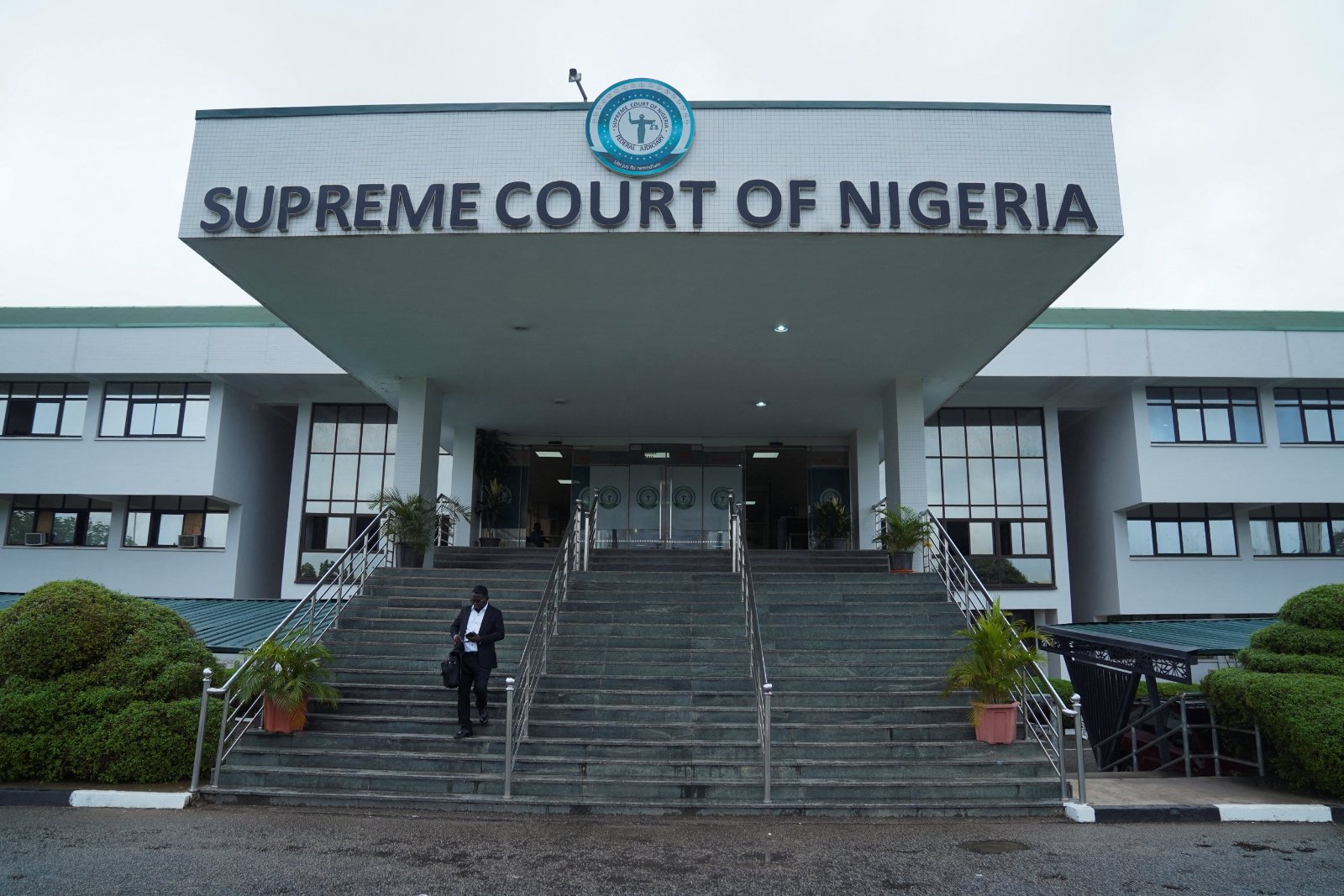
The Supreme Court of Nigeria has dismissed the Court of Appeal's September 2025 order for seizure and sale of crude oil pledged as collateral by General Hydrocarbons to First Bank. The five-member panel found that the underlying dispute is contractual, arising from a loan facility secured against petroleum assets, and not an admiralty matter. On that basis, the court held that the Federal High Court and Court of Appeal lack jurisdiction entirely, and directed release of the crude oil cargo to General Hydrocarbons. The ruling sits within a prolonged multi-forum dispute that has involved AMCON receivership proceedings, multiple conflicting court orders, an arbitral tribunal award against General Hydrocarbons, and allegations of fraudulent loan origination connected to former Petroleum Minister Diezani Alison-Madueke. For banks, asset managers, AMCON, and legal counsel advising on secured petroleum asset lending in Nigeria, the ruling creates a binding precedent on how loan recovery disputes involving vessel-held collateral are classified and where they must be litigated. The immediate consequence is that First Bank and AMCON face a significant setback in their recovery efforts, with the collateral now released from judicial custody.
Introduction
The dispute between First Bank, AMCON, and General Hydrocarbons has been litigating across multiple courts simultaneously, with conflicting orders from different judges of coordinate jurisdiction creating a procedural tangle that the Supreme Court has now begun to cut through. The core financial background is a $490 million loan extended by First Bank in 2011 to Atlantic Energy Drilling Concepts, which defaulted and was written off in 2019. General Hydrocarbons subsequently entered a tripartite deed with First Bank and AMCON, guaranteeing payment of the outstanding discounted exposure. When General Hydrocarbons itself defaulted on that guarantee obligation, AMCON appointed a receiver manager in November 2025 and sought to enforce against the FPSO and its crude oil cargo, which led to the Court of Appeal's seizure and sale order that the Supreme Court has now dismissed.
The jurisdictional ruling is the element with the widest legal significance. The Federal High Court's admiralty jurisdiction under the Admiralty Jurisdiction Act covers maritime disputes, ship arrests, cargo claims, and related matters. A lender seeking to recover a loan secured against a petroleum vessel does not automatically bring an admiralty claim by virtue of the security being a vessel or its cargo. The Supreme Court's holding that the claim is contractual repositions this entire category of dispute, with implications for how banks structure enforcement proceedings against vessel-held oil collateral going forward.
Background
The Admiralty Jurisdiction Act, No. 59 of 1991, confers on the Federal High Court exclusive jurisdiction over admiralty matters in Nigeria, including actions concerning the possession, ownership, and operation of ships, cargo claims, and maritime liens. The Act also grants the court in rem jurisdiction, meaning it can act against a vessel itself as the subject of litigation rather than only against its owner. The Court of Appeal's order directing seizure of FPSO Tamara Tokoni and sale of its crude oil cargo was premised on treating the dispute as admiralty in nature, with the vessel and cargo constituting the res of the litigation.
AMCON, the Asset Management Corporation of Nigeria, was established under the Asset Management Corporation of Nigeria Act, No. 4 of 2010, with broad powers to acquire, manage, and recover non-performing loans from Nigerian financial institutions. AMCON's enforcement powers include the appointment of receiver managers over defaulting debtors' assets, which is what triggered the November 2025 receivership over General Hydrocarbons. AMCON's position in this dispute is as the ultimate holder of the recovered loan exposure rather than a direct lender, which adds a layer to the enforcement architecture that the multiple conflicting court orders reflect.
Analysis
The Supreme Court's jurisdictional ruling establishes a principle that lenders and their counsel need to internalise immediately. Securing a loan against petroleum assets, including crude oil cargoes aboard an FPSO, does not transform a contractual loan recovery action into an admiralty claim. The nature of the claim is determined by its legal character, not by the nature of the collateral. A bank suing to recover a loan and enforce its security over a vessel cargo is pursuing a contractual claim with a security interest, which must be litigated in the appropriate civil jurisdiction rather than the admiralty division. This matters because banks have, in Nigerian practice, sometimes sought to invoke admiralty jurisdiction specifically to access the in rem ship arrest remedy as an enforcement tool, using vessel arrest as a practical mechanism to force debtors to negotiate. The Supreme Court's ruling narrows that strategy by making clear that the underlying claim must genuinely be admiralty in nature, not merely connected to maritime assets.
The practical consequence for First Bank and AMCON is severe. The crude oil cargo, which the Court of Appeal had ordered sold and the proceeds held in escrow, must now be released to General Hydrocarbons. That cargo represented the most liquid and immediately realisable asset in a dispute where the total exposure is substantial. Its release removes a significant recovery mechanism and leaves First Bank and AMCON pursuing contractual enforcement through the appropriate civil courts, which is a slower and less certain path than realising collateral under a court-supervised sale. Legal counsel for both institutions will need to assess the current state of General Hydrocarbons' assets following the receivership and the arbitral tribunal's cost award, and advise on the most viable remaining enforcement pathway. The arbitral award of $112,100 and N111.25 million in legal costs against General Hydrocarbons from October 2025 remains valid and enforceable, providing at least a partial basis for continued recovery action.
The broader governance dimension of this dispute is the multi-forum litigation problem that the Supreme Court's ruling does not fully resolve. Multiple conflicting orders from courts of coordinate jurisdiction, receivers appointed under one order while injunctions restrain that appointment under another, and receiver managers launching proceedings that separate judges characterise as abuse of process, all reflect a systemic problem in how complex commercial litigation is managed in Nigeria when sophisticated parties pursue parallel strategies across different courts. This is not simply a dispute management failure: it creates real uncertainty for creditors, third-party contractors, and counterparties who need to understand who lawfully controls a debtor's assets at any given point. The Supreme Court's jurisdictional clarity removes one layer of that confusion, but the underlying dispute about who controls General Hydrocarbons and on what legal basis is not resolved by this ruling alone.
Conclusion
The Supreme Court has drawn a clear jurisdictional line: loan recovery against vessel-held collateral is a contractual matter, not an admiralty claim, regardless of what the collateral is. That ruling costs First Bank and AMCON their most accessible recovery asset in a dispute that has been litigating for years across multiple courts. The broader lesson for Nigerian banking practice is that the admiralty jurisdiction route cannot be used as an enforcement shortcut when the underlying claim is contractual. Lenders structuring petroleum asset security need to ensure their enforcement documentation and strategy is built around the correct civil framework from the outset.
Citations
- 1.Admiralty Jurisdiction Act, No. 59 of 1991, Laws of the Federation of Nigeria
- 2.Asset Management Corporation of Nigeria Act, No. 4 of 2010
- 3.Supreme Court of Nigeria, General Hydrocarbons v First Bank of Nigeria / AMCON, ruling of 3 July 2026 (full citation to be confirmed on publication)
- 4.Arbitral tribunal award, General Hydrocarbons v First Bank, 28 October 2025
- 5.Federal High Court Lagos, injunction by Justice Ambrose Lewis-Allagoa, September 2025
- 6.Federal High Court Lagos, ruling striking out AMCON receivership enforcement order, December 2025