
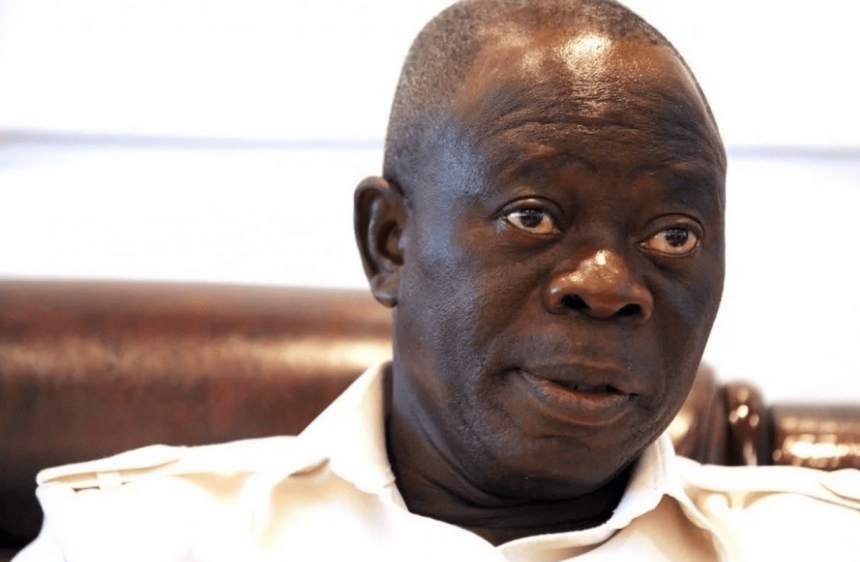
NNPC Probe: I’m not a burden, I’m committed to Tinubu’s government — Oshiomhole
Abstract
The ongoing Senate probe into the audited accounts of the Nigerian National Petroleum Company Limited (NNPC Ltd.) underscores the critical role of parliamentary oversight in ensuring transparency and accountability within Nigeria's vital oil and gas sector. Senator Adams Oshiomhole's defence of the probe highlights the National Assembly's constitutional mandate to scrutinise public funds and entities, even those operating under a commercialised structure. This article examines the legal framework empowering the Senate, particularly its Public Accounts Committee, to conduct such investigations, considering NNPC Ltd.'s transformation under the Petroleum Industry Act 2021 and the implications for corporate governance and public accountability in a commercially-driven, yet state-owned, enterprise.
Introduction
The Nigerian political landscape is currently abuzz with discussions surrounding the Senate's ongoing probe into the audited accounts of the Nigerian National Petroleum Company Limited (NNPC Ltd.). This development, championed by figures like Senator Adams Oshiomhole, who insists on the Public Accounts Committee's duty to investigate financial reports, signals a renewed focus on transparency and accountability within Nigeria's crucial oil and gas industry. The probe is not merely a political exercise but a fundamental assertion of legislative oversight, designed to ensure prudent management of national resources.
This article delves into the legal underpinnings of the National Assembly's power to investigate, particularly as it applies to NNPC Ltd. It will explore the constitutional and statutory provisions that empower the Senate to scrutinise the financial dealings of government-owned entities, even those operating with a commercial mandate. Understanding these legal frameworks is essential for practitioners advising both government bodies and corporate entities on compliance, governance, and the boundaries of legislative authority in Nigeria.
Background
The legal framework for parliamentary oversight in Nigeria is primarily enshrined in the 1999 Constitution of the Federal Republic of Nigeria (as amended). Section 88 of the Constitution grants each House of the National Assembly the power to direct investigations into any matter within its legislative competence, the conduct of affairs of any person or government department charged with executing its laws, or the disbursement and administration of funds appropriated by it. This power is explicitly for the purpose of making laws, correcting defects in existing laws, or exposing corruption, inefficiency, or waste.
Central to this oversight function is the Public Accounts Committee (PAC) of both the Senate and the House of Representatives. The PAC is a specialized committee constitutionally mandated to examine the reports of the Auditor-General for the Federation on the accounts of the Federation and to investigate financial irregularities. The Auditor-General for the Federation (AuGF), established under Sections 85, 86, and 87 of the Constitution, is tasked with auditing the accounts of the Federal Government and submitting reports to the National Assembly. However, Section 85(4) of the Constitution limits the AuGF's power regarding statutory corporations and bodies established by an Act of the National Assembly, allowing only for 'periodic checks' rather than full audits of their financial statements.
The Nigerian National Petroleum Company Limited (NNPC Ltd.) itself underwent a significant transformation with the enactment of the Petroleum Industry Act (PIA) 2021. The PIA mandated the incorporation of NNPC Ltd. under the Companies and Allied Matters Act (CAMA) as a limited liability company, with its shares held by the Ministries of Finance and Petroleum Incorporated on behalf of the Federal Government. This restructuring aimed to commercialise the entity, requiring it to operate profitably and efficiently without recourse to government funds. Despite its commercialisation, NNPC Ltd. remains a public interest entity, subject to the provisions of the PIA, CAMA, and other relevant financial reporting regulations, including those set by the Financial Reporting Council of Nigeria (FRC), established by the Financial Reporting Council of Nigeria Act 2011 (as amended).
Analysis
The Senate's probe into NNPC Ltd.'s audited accounts is a direct exercise of its investigative powers under Section 88 of the 1999 Constitution. While NNPC Ltd. now operates as a commercial entity, its ownership by the Federal Government and its critical role in administering Nigeria's petroleum resources mean it remains firmly within the ambit of parliamentary oversight. The purpose of such an investigation, as articulated by Senator Oshiomhole, is to "ask hard questions" and expose any corruption, inefficiency, or waste, aligning perfectly with the constitutional mandate.
The PIA 2021, in Section 62, explicitly requires an annual audit of NNPC Limited. These audited accounts, prepared by external auditors in accordance with the Financial Reporting Council of Nigeria Act 2011 (as amended), would then form the basis for the Public Accounts Committee's scrutiny. The shift from the former NNPC (a statutory corporation) to NNPC Ltd. (a CAMA-registered company) is significant. While the Auditor-General for the Federation's direct audit powers over statutory corporations were limited to 'periodic checks' under Section 85(4) of the Constitution, NNPC Ltd.'s status as a limited liability company means it is subject to standard corporate audit practices. The PAC's role is to review the *reports* of these audits, ensuring that public funds are applied for approved purposes and that value for money is achieved.
However, the investigative powers of the National Assembly are not unfettered. Nigerian courts have consistently held that these powers must be exercised within constitutionally defined parameters. The National Assembly cannot usurp the functions of the judiciary by prosecuting or punishing individuals, nor can it investigate matters outside its legislative competence. The investigation must genuinely be for the purpose of law-making, correcting defects in laws, or exposing corruption and inefficiency in the execution of laws or administration of appropriated funds. Therefore, while the Senate has broad powers to demand documents and summon officials, as provided by Section 89 of the Constitution, the scope and intent of the probe must remain within these constitutional boundaries.
The probe also highlights the evolving nature of accountability for state-owned enterprises that have been commercialised. While NNPC Ltd. is expected to operate commercially, its public ownership means it cannot escape public scrutiny. The Financial Reporting Council of Nigeria Act 2011 (as amended) mandates adherence to financial reporting standards for public interest entities, which NNPC Ltd. undoubtedly is. This dual nature – commercial operation coupled with public accountability – presents a complex legal and governance challenge, requiring a delicate balance between commercial autonomy and robust oversight.
Conclusion
The Senate's probe into NNPC Ltd.'s audited accounts is a vital demonstration of legislative oversight, reinforcing the principles of transparency and accountability in Nigeria's governance. For legal practitioners, this development underscores the importance of understanding the intricate interplay between constitutional powers, sector-specific legislation like the PIA 2021, and general corporate governance laws. Entities like NNPC Ltd., despite their commercialisation, remain subject to rigorous public scrutiny, and their financial reports must withstand the detailed examination of parliamentary committees.
Practitioners advising government-owned enterprises must ensure strict adherence to financial reporting standards, internal controls, and statutory audit requirements, anticipating robust oversight from the National Assembly. This probe serves as a reminder that the pursuit of good governance and the fight against corruption are continuous processes, requiring vigilance from all arms of government and the legal profession. As NNPC Ltd. navigates its new commercial identity, its commitment to transparent financial practices will be paramount, not only for public trust but also for attracting necessary investment into Nigeria's petroleum sector.
Citations
- 1.1999 Constitution of the Federal Republic of Nigeria (as amended)
- 2.Petroleum Industry Act 2021
- 3.Financial Reporting Council of Nigeria Act 2011 (as amended)
- 4.Companies and Allied Matters Act 2020
How does this affect your business?
Get an AI analysis of this article grounded in your jurisdictions, practice areas, and any policy documents you've uploaded to Wansom.