
NTSA's Mandatory Vehicle Inspection Rules 2026: A Nationwide Compliance Obligation With Seven Days' Notice
Abstract
The Traffic (Motor Vehicle Inspection) Rules 2026, published by the National Transport and Safety Authority and effective 1 July 2026, extend mandatory annual vehicle inspections to all private vehicles more than four years old — a regulatory expansion that brings the vast majority of Kenya's vehicle fleet into a formal compliance regime for the first time. The rules introduce a structured fee schedule, a licensing framework for privately operated inspection centres, criminal penalties of up to Ksh20,000 or six months' imprisonment for non-compliance, and new inspection triggers for modified, accident-involved, and salvage vehicles. With an effective date less than one week away at the time of publication, the compliance window is effectively closed for unprepared motorists but the obligations on fleet operators, insurers, logistics companies, and legal advisers are both immediate and ongoing, making this one of the most operationally urgent regulatory developments of 2026.
Introduction
Kenya's road safety record has long been among the most concerning in the region, with the World Health Organization and domestic data consistently pointing to vehicle mechanical failure as a significant contributor to road traffic accidents and fatalities. The existing vehicle inspection regime applied principally to public service vehicles and commercial transport leaving the private vehicle fleet, which constitutes the majority of vehicles on Kenyan roads, largely outside mandatory mechanical oversight. The Traffic (Motor Vehicle Inspection) Rules 2026 close that gap decisively, bringing private cars into a mandatory annual inspection framework alongside public and commercial vehicles.
The practical urgency of this development cannot be overstated. The rules take effect on 1 July 2026 — days from the date of this briefing. Given that the majority of vehicles on Kenyan roads are imported used cars older than four years, the overwhelming majority of private vehicle owners are immediately within scope. Operating a vehicle without a valid inspection sticker after that date constitutes a criminal offence. For fleet managers, corporate counsel, insurers, and compliance officers, the question is not whether this regulation is relevant, it is whether their organisations are ready for it
Background
Vehicle inspection in Kenya has historically been governed by the Traffic Act, Cap. 403, and subsidiary regulations administered by the NTSA, which was established under the National Transport and Safety Authority Act 2012. Prior to the Traffic (Motor Vehicle Inspection) Rules 2026, mandatory periodic inspection obligations applied primarily to public service vehicles , matatus, buses, and taxis and to commercial goods vehicles. Private vehicles were subject to inspection only on change of ownership or in specific circumstances, creating a regulatory gap that left a large portion of the national fleet without periodic mechanical certification. The new rules are published under the NTSA's subsidiary legislation-making powers and represent a significant extension of the Authority's regulatory reach into the private vehicle segment.
The regulatory context also includes Kenya's obligations under the United Nations Decade of Action for Road Safety 2021–2030, to which Kenya is a signatory, and the African Road Safety Action Plan, both of which call for strengthened vehicle roadworthiness frameworks as a core road safety intervention. Domestically, the rules interact with the Insurance Act, Cap. 487, which requires all vehicles to carry third-party insurance as a condition of road use a requirement that insurers and underwriters will now need to assess in light of the new inspection obligation, since a vehicle operating without a valid inspection sticker is simultaneously in breach of the Traffic (Motor Vehicle Inspection) Rules 2026 and potentially in a position that affects the validity of its insurance cover.
Analysis
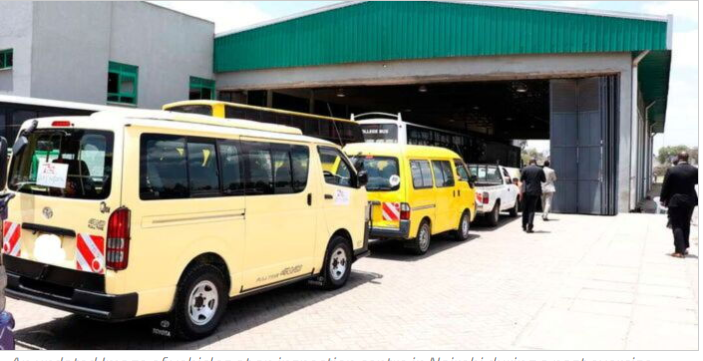
The immediate compliance challenge created by the Traffic (Motor Vehicle Inspection) Rules 2026 is infrastructure, not intent. Kenya's existing network of vehicle inspection centres historically oriented toward PSV and commercial vehicle processing is unlikely to have the physical capacity to absorb the full private vehicle fleet within any compressed timeframe. With the rules effective from 1 July 2026, the NTSA faces a practical challenge that it has partially anticipated by introducing a licensing framework for privately operated vehicle testing centres. That framework which allows commercial entities to establish and operate inspection facilities alongside government centres is the structural mechanism through which capacity is intended to scale. However, licensing, equipping, and staffing private inspection centres takes time, and the regulatory infrastructure that will underpin enforcement is almost certainly not fully deployed on day one. Legal and compliance advisers should monitor NTSA's enforcement posture in the immediate post-commencement period carefully, as a phased or risk-based approach to early enforcement is the most likely operational reality even if the legal obligation is absolute from 1 July.
For corporate fleet operators, logistics companies, ride-hailing platforms, and any business that operates vehicles as part of its commercial activity, the rules introduce a structured compliance obligation that must be embedded into vehicle management systems immediately. A fleet vehicle operating without a valid inspection sticker after 1 July 2026 is not merely in administrative default , it is operating in criminal breach of the regulations, exposing both the driver and potentially the organisation to fines and imprisonment. For risk managers, the insurance dimension is equally pressing: a vehicle that is unroadworthy and operating without a valid inspection certificate may give an insurer grounds to contest liability in the event of an accident, potentially exposing the fleet operator to uninsured third-party claims. The interaction between the new inspection obligation and existing motor insurance policies should be reviewed as a matter of urgency by corporate legal and compliance teams.
The rules also introduce inspection triggers beyond the annual cycle that require proactive monitoring. Vehicles that have undergone engine modifications, been involved in accidents, or are undergoing re-registration must be inspected before returning to road use. For businesses that maintain vehicle fleets including those involved in logistics, construction, agriculture, and ride-hailing these event-triggered inspections create compliance touchpoints that must be built into operational workflows. The salvage vehicle framework, which requires severely damaged vehicles to pass inspection before being returned to road use, has additional implications for motor vehicle insurers and repairers who manage post-accident vehicle reinstatement. Compliance teams in the insurance sector should update their claims and reinstatement procedures to incorporate the new inspection requirement as a condition precedent to vehicle return.
Conclusion
The Traffic (Motor Vehicle Inspection) Rules 2026 are legally straightforward, operationally urgent, and commercially significant. The compliance obligation is clear, the penalties are real, and the effective date is days away. For every organisation that operates vehicles in Kenya and for every legal and compliance adviser who serves them , the only appropriate response is immediate action.
Citations
- 1.Traffic (Motor Vehicle Inspection) Rules 2026 — National Transport and Safety Authority; primary regulatory instrument.
- 2.Traffic Act, Cap. 403 (Kenya) — parent legislation governing road traffic and vehicle use.
- 3.National Transport and Safety Authority Act 2012 (Kenya) — establishing NTSA and its regulatory mandate.
- 4.Insurance Act, Cap. 487 (Kenya) — third-party motor insurance obligation and its interaction with vehicle roadworthiness requirements.
- 5.United Nations Decade of Action for Road Safety 2021–2030 — international framework to which Kenya is a signatory.
- 6.African Road Safety Action Plan — regional road safety obligations relevant to Kenya's vehicle inspection regime.