
ODPP Approves Murder Charges in Utumishi Girls Academy Fire: Prosecutorial Escalation Signals Institutional Safety Reckoning
Abstract
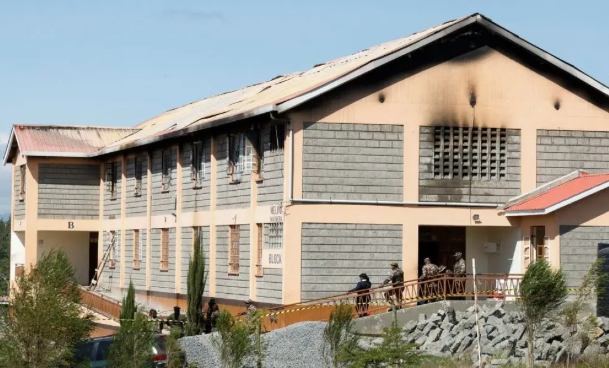
The Office of the Director of Public Prosecutions has approved sixteen counts of murder against students implicated in the 28 May 2026 dormitory fire at Utumishi Girls Academy in Nakuru County, which killed 16 students and injured several others and in doing so, has triggered a legal and governance moment that extends well beyond the courtroom. The decision to charge students with murder, rather than lesser offences, reflects a deliberate prosecutorial posture against what the ODPP has explicitly described as a rising trend of arson in learning institutions. But the deeper intelligence story lies in what the prosecution does not address: the institutional safety failures inadequate fire suppression systems, obstructed escape routes, and deficient emergency preparedness that turned an act of arson into a mass casualty event, and the regulatory and governance accountability that must follow.
Introduction
On 23 June 2026, the ODPP issued a formal statement confirming that it had reviewed the preliminary inquiry file submitted by the Directorate of Criminal Investigations and found sufficient evidence to proceed against students implicated in the Utumishi Girls Academy fire. The suspects will face sixteen counts of murder one for each life lost in the 28 May 2026 blaze that tore through a dormitory at the Nakuru County school overnight, trapping students inside and overwhelming emergency responders. The decision marks a significant prosecutorial escalation, moving the case from investigation to formal criminal accountability at the most serious charge available under Kenyan law.
The ODPP's statement did more than announce charges. It issued an institutional warning, expressing deep concern over what it characterised as an increasing pattern of arson and related criminal conduct in educational institutions across Kenya. That framing situating this prosecution within a broader trend rather than treating it as an isolated incident signals that the ODPP is positioning this case as a deterrent as much as a justice response. For legal, compliance, and governance professionals, that signal matters: it suggests that prosecutorial attention to institutional violence in schools is intensifying, and that the legal and regulatory environment around school safety is entering a period of heightened scrutiny.
Background
The Utumishi Girls Academy fire occurred on 28 May 2026, breaking out at night in a student dormitory. The blaze spread rapidly, trapping learners inside and resulting in the deaths of 16 students, with several others sustaining injuries. Early accounts from emergency responders pointed to the speed of the fire's spread and the difficulty of evacuation as key factors in the scale of the tragedy. The DCI initiated investigations shortly after, with forensic teams examining both the origin of the fire and whether structural or procedural failures including possible obstruction of escape routes contributed to the death toll. Those investigations produced evidence sufficient for the ODPP to conclude, on review, that arson was the cause and that identified students bore criminal responsibility.
The legal framework governing this prosecution is anchored in the Penal Code of Kenya, under which murder carries a mandatory death sentence or, following judicial interpretation of constitutional protections, life imprisonment. The charge of murder requires proof of malice aforethought that the accused intended to cause death or grievous harm, or knew their actions were likely to cause death. Prosecuting arson-related deaths as murder rather than manslaughter or the lesser offence of arson causing death is a significant charging decision, one that will place a high evidentiary burden on the prosecution and will test whether the evidence gathered by the DCI can sustain that threshold at trial. Separately, Kenya's legal framework includes obligations on school administrators and the national government under the Basic Education Act 2013 and subsidiary regulations issued by the Teachers Service Commission and Ministry of Education governing fire safety, dormitory standards, and emergency preparedness in boarding schools obligations whose enforcement record will almost certainly become relevant as this case develops.
Analysis
The decision to charge students with murder is the most visible dimension of this case, but it is not the only accountability question it raises. The ODPP's mandate is to prosecute identified perpetrators and it is doing so. What the prosecution does not and cannot resolve is the parallel question of institutional and regulatory accountability: why a dormitory fire in a boarding school was able to kill sixteen students before they could escape. Forensic investigators examined whether escape routes were obstructed. That question, if answered affirmatively, points not only to the conduct of the accused students but to the adequacy of the school's physical infrastructure, the enforcement of fire safety regulations, and the oversight exercised by the Ministry of Education and county government. The criminal prosecution and the regulatory accountability inquiry are legally distinct processes, but they are factually and politically inseparable.
For compliance and governance professionals in the education sector including school administrators, board members of private and faith-based institutions, county education officials, and the Teachers Service Commission the Utumishi case is a direct risk signal. Kenya's boarding school estate, particularly girls' schools, has a documented history of dormitory fires, and the regulatory response has historically been inconsistent. The Basic Education Act 2013 imposes duties on school management committees and proprietors to maintain safe learning environments. The Ministry of Education's infrastructure standards require functional fire suppression systems, clearly marked and unobstructed emergency exits, and fire drills. Where those standards are not met, institutional exposure civil, regulatory, and potentially criminal is real. Boards and administrators who have not conducted recent fire safety audits of their dormitory infrastructure are carrying unquantified risk that this case has now made visible.
The ODPP's explicit framing of this prosecution as a response to a rising trend of institutional arson carries its own governance implication. It positions the criminal justice system as an active deterrent in a space where regulatory enforcement has historically been the primary accountability mechanism. That shift from regulatory to criminal accountability raises the stakes for all actors in the institutional chain: school administrators who fail to maintain safe infrastructure, county governments that fail to enforce compliance, and Ministry officials who do not act on reported deficiencies. If the Utumishi prosecution produces convictions on murder charges, it will establish a precedent that death resulting from institutional arson in schools carries the full weight of criminal law and the institutional failures that enabled that death will face their own legal scrutiny in the civil courts and regulatory proceedings that are likely to follow.
Conclusion
The ODPP's decision to prosecute students for murder in the Utumishi Girls Academy fire is a serious and necessary exercise of prosecutorial authority but it answers only part of the accountability question this tragedy demands. Sixteen students are dead, and the criminal law will address the conduct of those who started the fire. What it will not address, unless compelled by civil litigation or regulatory action, is why a Kenyan boarding school dormitory in 2026 was unable to protect sixteen children from a fire that broke out in the night. That question belongs to the regulators, the administrators, and the policymakers and this case has made it impossible to ignore.
Citations
- 1.Penal Code of Kenya, Cap. 63 — murder charges, elements of malice aforethought, and applicable penalties.
- 2.Basic Education Act 2013 (Kenya) — duties of school proprietors and management committees regarding safe learning environments.
- 3.Office of the Director of Public Prosecutions Act 2013 (Kenya) — prosecutorial mandate, independence, and charging decisions.
- 4.National Police Service Act 2011 (Kenya) — DCI mandate for criminal investigations.
- 5.Ministry of Education — Boarding Schools Regulations and infrastructure standards governing fire safety, dormitory construction, and emergency preparedness.
- 6.Constitution of Kenya 2010, Article 26 — right to life; Article 29 — freedom from cruel treatment; relevant to sentencing framework following Supreme Court jurisprudence on mandatory death penalty.
- 7.ODPP Public Statement, 23 June 2026 — approval of murder charges against students implicated in the Utumishi Girls Academy fire.