
Operation DELTA SENTINEL: Nigerian Navy Cracks Down on Oil Theft and Bunkering
Abstract
The Nigerian Navy recently intercepted 22,870 litres of illegally refined Automotive Gas Oil (AGO) in Rivers State, highlighting the persistent challenge of oil theft and illegal bunkering in Nigeria's Niger Delta. This operation, conducted by personnel of Nigerian Navy Ship (NNS) SOROH under Operation DELTA SENTINEL, underscores the Navy's ongoing efforts to curb economic sabotage and protect critical national assets. The incident brings to the fore the complex legal framework governing petroleum products, maritime security, and environmental protection in Nigeria, involving various statutes such as the Petroleum Industry Act, the Miscellaneous Offences Act, and the Nigerian Navy Act. For legal practitioners, this development signals continued robust enforcement actions and the potential for increased litigation in areas of criminal prosecution, asset forfeiture, and environmental liability, necessitating a deep understanding of the intricate interplay between these laws and the roles of various enforcement agencies.
Introduction
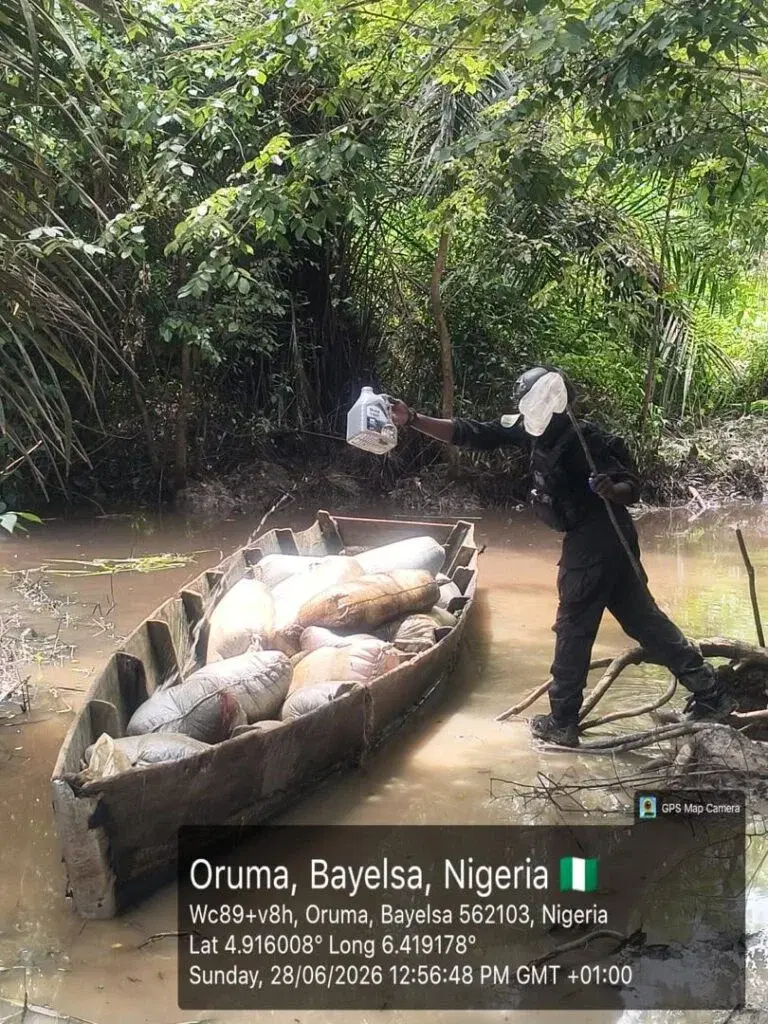
Nigeria's economic lifeline, heavily reliant on its vast petroleum resources, continues to face significant threats from illegal oil bunkering and crude oil theft. A recent operation by the Nigerian Navy, specifically personnel of Nigerian Navy Ship (NNS) SOROH, resulted in the interception of 22,870 litres of suspected illegally refined Automotive Gas Oil (AGO) in the Orashi Forest area of Okolomade Community, Abua/Odual Local Government Area of Rivers State. This intelligence-led operation, conducted under the broader 'Operation DELTA SENTINEL', also led to the impoundment of a wooden boat used for transporting the illicit products, effectively disrupting a key logistics channel for criminal networks.
This incident is not an isolated event but rather a recurring symptom of a deeply entrenched problem that costs Nigeria billions of dollars annually, exacerbates environmental degradation, and undermines national security. The Nigerian government, through its various agencies, particularly the Nigerian Navy, has intensified its crackdown on these illicit activities in the Niger Delta. For legal professionals, this ongoing battle presents a complex landscape of statutory interpretation, enforcement challenges, and potential liabilities across criminal, environmental, and corporate law. This article will delve into the legal ramifications of such operations, examining the relevant statutory frameworks, the powers of the Nigerian Navy, and the broader implications for legal practice in Nigeria's oil and gas sector.
Background
The legal and regulatory framework governing Nigeria's petroleum industry is extensive, reflecting the sector's critical importance to the national economy. At its core, Section 44(3) of the Constitution of the Federal Republic of Nigeria, 1999 (as amended), vests the entire ownership and control of all minerals, oil, and gas in, under, or upon any land in Nigeria, its territorial waters, or continental shelf, in the Federal Government. This constitutional provision forms the bedrock upon which all subsequent petroleum legislation is built, making any extraction, possession, or dealing in petroleum products without due authorisation illegal.
Historically, the Petroleum Act of 1969 regulated the exploration, production, and distribution of petroleum. However, a significant paradigm shift occurred with the enactment of the Petroleum Industry Act (PIA) 2021, which repealed the 1969 Act and introduced a comprehensive framework for the governance, administration, fiscal regime, and host community development in the Nigerian petroleum industry. The PIA established new regulatory bodies, including the Nigerian Midstream and Downstream Petroleum Regulatory Authority (NMDPRA), tasked with overseeing midstream and downstream operations, including licensing requirements for petroleum product distribution. Beyond the petroleum-specific laws, the fight against illegal bunkering is bolstered by general criminal statutes such as the Miscellaneous Offences Act, which prescribes severe penalties, including life imprisonment or 21 years without option of fine, for offences like tampering with oil pipelines or dealing in petroleum products without lawful authority.
Analysis
The Nigerian Navy's interception of illegal diesel in Rivers State is a direct exercise of its statutory mandate to ensure maritime security and protect Nigeria's economic assets. The Nigerian Navy Act empowers the Navy with responsibilities including naval defence, assisting in the enforcement of customs laws, and other duties as directed. In practice, this extends to combating crude oil theft, illegal bunkering, and other maritime crimes, particularly in the Niger Delta region, through operations like DELTA SENTINEL and DELTA SAFE.
The legal basis for prosecuting individuals involved in such activities primarily stems from the Petroleum Industry Act 2021 and the Miscellaneous Offences Act. Under the PIA, dealing in petroleum products without the requisite licenses or permits issued by the NMDPRA constitutes an offence. The Miscellaneous Offences Act, Cap. M17, Laws of the Federation of Nigeria 2004, specifically criminalises acts such as obstructing, damaging, destroying, or tampering with the free flow of crude oil or refined petroleum products through any oil pipeline, or dealing in petroleum products without lawful authority or appropriate license. The penalties for these offences are stringent, including imprisonment for life or a term not exceeding 21 years without the option of a fine.
Upon interception, the Nigerian Navy typically hands over arrested suspects and seized products to other law enforcement agencies, such as the Economic and Financial Crimes Commission (EFCC), for further investigation and prosecution. The EFCC (Establishment) Act 2004 grants the Commission broad powers to investigate and prosecute economic and financial crimes, which explicitly include illegal oil bunkering. The Federal High Court holds jurisdiction to try offences under the Miscellaneous Offences Act. However, securing convictions can be challenging due to the complex nature of the crime, which often involves sophisticated networks, corruption, and difficulties in preserving evidence.
Furthermore, the environmental impact of illegal refining and oil spills, often associated with bunkering, brings into play the National Oil Spill Detection and Response Agency (Establishment) Act 2006 (NOSDRA Act). NOSDRA is the lead agency responsible for detecting and responding to oil spills and ensuring compliance with environmental legislation in the petroleum sector. The destruction of illegal refining sites, while aimed at curbing criminal activity, can sometimes lead to further environmental damage if not handled with appropriate remediation protocols. This highlights a potential area for legal scrutiny regarding the methods of enforcement and subsequent environmental accountability.
Comparative analysis reveals that Nigeria's struggle with oil theft is unique in its scale, with losses far exceeding those in other oil-producing nations. While the legal framework is robust on paper, effective implementation and prosecution remain critical hurdles. The calls for specialized fast-track courts for oil theft cases, as suggested by some stakeholders, underscore the need for more efficient judicial processes to deter these crimes.
Conclusion
The Nigerian Navy's recent interception of illegal diesel in Rivers State serves as a stark reminder of the ongoing legal and operational challenges posed by oil theft and illegal bunkering in Nigeria. For legal practitioners, this incident and the broader context of anti-bunkering operations present several critical implications. Defence counsel must be acutely aware of the stringent penalties under the Miscellaneous Offences Act and the Petroleum Industry Act, as well as the procedural requirements for the transfer of suspects and exhibits between enforcement agencies like the Navy and the EFCC. Prosecutors, on the other hand, face the complex task of building cases against well-organised criminal syndicates, often requiring sophisticated evidence gathering and inter-agency cooperation.
Corporate counsel in the oil and gas sector must remain vigilant regarding compliance with the PIA 2021 and other relevant regulations to avoid complicity or liability related to illegal activities within their operational areas. Furthermore, the environmental dimensions of these operations, particularly concerning oil spills and the destruction of illegal refineries, necessitate a thorough understanding of the NOSDRA Act and potential liabilities. Looking ahead, practitioners should closely monitor legislative developments, including any proposals for specialized courts, and judicial pronouncements that could shape the landscape of oil theft prosecution and environmental remediation in Nigeria. The sustained efforts by the Nigerian Navy and other security agencies signal a continued commitment to combating this economic sabotage, ensuring that legal professionals across various specialisations will remain engaged in navigating this complex and evolving area of law.
Citations
- 1.Constitution of the Federal Republic of Nigeria, 1999 (as amended)
- 2.Economic and Financial Crimes Commission (Establishment) Act 2004
- 3.Miscellaneous Offences Act, Cap. M17, Laws of the Federation of Nigeria 2004
- 4.National Oil Spill Detection and Response Agency (Establishment) Act 2006
- 5.Nigerian Maritime Administration and Safety Agency Act 2007
- 6.Nigerian Navy Act
- 7.Petroleum Act 1969
- 8.Petroleum Industry Act 2021
How does this affect your business?
Get an AI analysis of this article grounded in your jurisdictions, practice areas, and any policy documents you've uploaded to Wansom.