
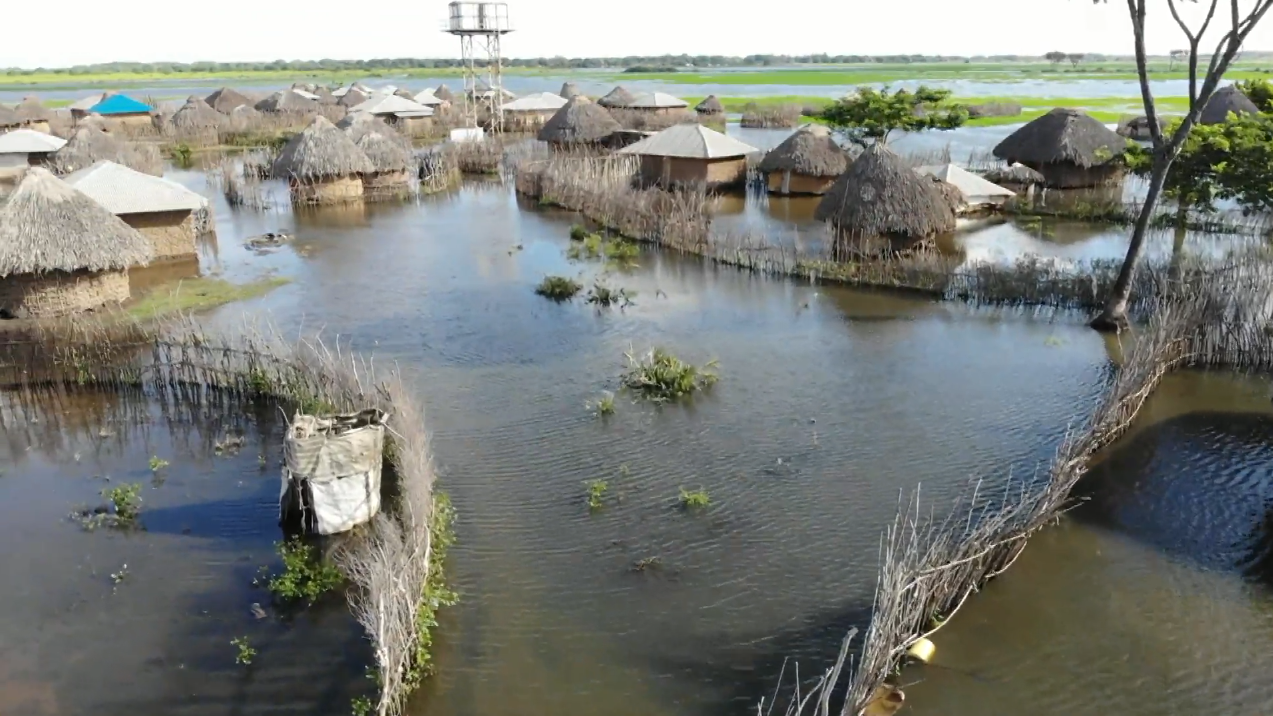
Over 3,000 families displaced by floods in Tarasaa, Tana Delta
Abstract
The displacement of over 3,000 families in Tarasaa, Tana Delta, due to floods highlights critical legal obligations of the Kenyan government under its Constitution and various statutes. This article examines the state's duties regarding human rights (housing, health, food, environment), disaster management, and internal displacement. It delves into the recently enacted National Disaster Risk Management Act, 2023, and the Prevention, Assistance and Protection to Internally Displaced Persons and Affected Communities Act, 2012, alongside relevant environmental legislation. Recent litigation against the government for negligence in flood response underscores the growing legal accountability for disaster-induced displacement and the imperative for proactive, rights-based approaches.
Introduction
The devastating floods in Tarasaa, Tana Delta, which have rendered over 3,000 families homeless, without access to food, healthcare, and basic sanitation, represent a profound humanitarian crisis with significant legal ramifications. This event is not an isolated incident but a recurring challenge in Kenya, exacerbated by climate change and often compounded by inadequate preparedness and response mechanisms. For legal professionals, this situation raises critical questions concerning the state's constitutional and statutory obligations to its citizens, particularly those made vulnerable by natural disasters.
This article aims to provide a comprehensive overview of the legal framework governing disaster response and internal displacement in Kenya, analyzing the duties of the national and county governments, and the rights of affected persons. It will explore the interplay between constitutional human rights, specific disaster management legislation, and environmental laws. Furthermore, it will consider recent judicial pronouncements and ongoing litigation that seek to hold state organs accountable for their actions and inactions in the face of such catastrophes.
The core thesis is that while Kenya possesses a robust constitutional and legislative framework designed to protect citizens' rights and manage disasters, implementation gaps and a historically reactive approach have often led to severe human rights violations during crises like the Tarasaa floods. The recent enactment of the National Disaster Risk Management Act, 2023, signals a legislative shift towards proactive measures, but its effectiveness will be tested by its practical application and the judiciary's role in enforcing accountability.
Background
Kenya's legal landscape for disaster management and human rights is primarily anchored in the Constitution of Kenya, 2010. Article 43 enshrines a suite of socio-economic rights crucial for displaced populations, including the right to the highest attainable standard of health, accessible and adequate housing, freedom from hunger and adequate food of acceptable quality, and clean and safe water in adequate quantities. Additionally, Article 42 guarantees every person the right to a clean and healthy environment. Article 21 places a fundamental duty on the State and every State organ to observe, respect, protect, promote, and fulfil the rights and fundamental freedoms in the Bill of Rights, with progressive realization expected for socio-economic rights.
Beyond the Constitution, several statutes form the backbone of Kenya's disaster response. The **Prevention, Assistance and Protection to Internally Displaced Persons and Affected Communities Act, 2012 (IDP Act)**, domesticates the Great Lakes Pact's Protocol on the Protection and Assistance to Internally Displaced Persons and incorporates the UN Guiding Principles on Internal Displacement. This Act obliges the government to establish prevention mechanisms, provide assistance, and create conditions for durable solutions for IDPs, including long-term safety, adequate living standards, access to livelihoods, and restoration of housing, land, and property. Furthermore, the **Environmental Management and Coordination Act (EMCA), 1999** (as amended), provides a framework for environmental protection, including provisions for environmental impact assessments and measures for flood prevention. The **Climate Change Act, 2016**, establishes a National Climate Change Council to guide climate change response, including adaptation and resilience measures, recognizing the increasing frequency of extreme weather events like floods.
Historically, Kenya's approach to disaster management has been largely reactive. However, the **National Disaster Risk Management Policy, 2017**, aimed to shift towards a proactive, integrated, and multi-hazard approach encompassing prevention, preparedness, response, and recovery. This policy laid the groundwork for a more robust legislative framework, culminating in the recent enactment of the **National Disaster Risk Management Act, 2023**. This new Act establishes the National Disaster Risk Management Authority and County Disaster Risk Management Committees, providing a comprehensive legal and institutional framework for coordinating disaster risk management activities at both national and county levels.
Analysis
The displacement in Tarasaa directly implicates the state's obligations under Article 43 of the Constitution. The failure to provide accessible and adequate housing, food, clean water, and healthcare to over 3,000 families constitutes a prima facie violation of these fundamental rights. Article 21 reinforces that the State has a fundamental duty to protect and fulfill these rights, meaning that both acts of commission (e.g., forced evictions without alternative provision) and omission (e.g., failure to implement early warning systems or robust flood mitigation) can lead to accountability.
The **National Disaster Risk Management Act, 2023**, represents a significant legislative advancement, moving beyond the reactive measures that have historically characterized Kenya's disaster response. Its emphasis on establishing a National Disaster Risk Management Authority and County Disaster Risk Management Committees aims to enhance coordination, early warning systems, and timely response. Legal practitioners will need to scrutinize how this new framework translates into tangible protections for vulnerable communities. The Act's provisions for evacuation and coordination of resources, as well as its mandate to advise national and county governments on risk reduction strategies, are crucial.
Furthermore, the **IDP Act, 2012**, provides a specific legal avenue for addressing the needs of internally displaced persons. Section 9, in particular, mandates the government to create conditions for durable solutions, including long-term safety, adequate living standards, and access to livelihoods. The failure to provide these to the Tarasaa families could be challenged under this Act. The UN Guiding Principles on Internal Displacement, incorporated into Kenyan law, also emphasize the right not to be arbitrarily displaced and the responsibility of national authorities to provide humanitarian assistance.
Recent litigation underscores the growing trend of holding the government accountable. The Kenya Human Rights Commission (KHRC) and the Law Society of Kenya (LSK) have filed lawsuits against government officials for negligence during recent floods, alleging violations of fundamental rights, including the right to life, access to information, property, and socio-economic rights. These cases seek declarations of rights violations, orders for comprehensive contingency and resettlement plans, and compensation for victims. A High Court ruling in October 2024, declaring previous flood-related evictions illegal and ordering compensation, sets an important precedent for challenging arbitrary displacement and demanding redress. The application of the UN Guidelines on Evictions as soft law, in the absence of specific domestic legislation, further strengthens the legal basis for challenging unlawful evictions.
From an environmental perspective, the **EMCA, 1999**, and the **Climate Change Act, 2016**, impose duties on the state to manage the environment sustainably and adapt to climate change impacts. The recurring nature of floods in areas like the Tana River basin suggests potential failures in environmental planning, land use management, and the implementation of climate adaptation measures. Legal challenges could argue that the government's failure to adequately implement these environmental laws contributes to the severity of flood impacts and, consequently, to human rights violations. The ongoing lawsuit concerning Lake Baringo, which explores state responsibility for climate change-induced flooding, exemplifies this emerging area of climate litigation in Kenya.
Conclusion
The displacement of families in Tarasaa serves as a stark reminder of the multifaceted legal challenges arising from natural disasters in Kenya. For legal practitioners, this situation presents numerous avenues for intervention, from advocating for immediate humanitarian relief to pursuing long-term accountability and systemic change. The constitutional guarantees of socio-economic rights, coupled with specific legislation like the IDP Act and the new National Disaster Risk Management Act, provide a strong legal basis for challenging government inaction or inadequate response.
Practitioners should be prepared to engage in public interest litigation to enforce constitutional rights, demand the implementation of disaster management plans, and seek compensation for victims of negligence. Furthermore, monitoring the effective implementation of the National Disaster Risk Management Act, 2023, at both national and county levels will be crucial to ensure a genuine shift towards proactive disaster risk reduction and resilience building. The increasing judicial willingness to scrutinize government actions in disaster contexts, as seen in recent flood-related lawsuits, offers a promising pathway for upholding human rights and fostering greater state accountability in Kenya.
Citations
- 1.Constitution of Kenya, 2010
- 2.National Disaster Risk Management Policy, 2017
- 3.Prevention, Assistance and Protection to Internally Displaced Persons and Affected Communities Act, 2012
- 4.Environmental Management and Coordination Act, 1999 (as amended)
- 5.Climate Change Act, 2016
- 6.National Disaster Risk Management Act, 2023
- 7.Kenya Human Rights Commission v Attorney General & Others, Constitutional Petition No. E245 of 2024 (Nairobi)
- 8.Law Society of Kenya v Attorney General & Others, Constitutional Petition No. E010 of 2024 (Nakuru)
- 9.Justice Ann Mogeni ruling, October 2024 (referencing evictions in April 2024)
- 10.UN Guiding Principles on Internal Displacement
- 11.KBC Kenya (Source of article prompt)
- 12.REPUBLIC OF KENYA NATIONAL DISASTER RISK MANAGEMENT POLICY 2017
- 13.NATIONAL POLICY FOR DISASTER MANAGEMENT IN KENYA - IFRC
- 14.Background | National Disaster Operation Center (NDOC)
- 15.The Republic of Kenya recognizes the right to food in the new Constitution (August 31 2010)
- 16.Kenya National Disaster Operation Centre - Grokipedia
- 17.A Human Rights-Based Approach to Food Security in Kenya and South Africa | APHRC
- 18.Kenya: A Right to Decent Housing - allAfrica.com (October 17 2012)
- 19.KENYA Housing Rights and Human Rights Briefs.docx - Habnet
- 20.The Enforceability of Health Rights in Kenya: An African Constitutional Evaluation (February 04 2019)
- 21.Review of the National Disaster Management Policies and Plans of Kenya and Uganda - | Avoidable Deaths Network
- 22.Kenya National Disaster Operation Centre (NDOC) | UN-SPIDER Knowledge Portal
- 23.Right to Health - Kenya - Action4Justice
- 24.National Policy for Disaster Management in Kenya | United Nations Network on Migration
- 25.1. Constitution of Kenya 2010 | Centre for Affordable Housing Finance in Africa - GitBook
- 26.National Disaster Risk Management Policy 2017 - KIPPRA Repository
- 27.Realising rights to health care - Commonwealth Foundation (October 30 2017)
- 28.43. Economic and social rights - Kenya Law Reform Commission (KLRC)
- 29.Kenya National Disaster Operation Centre - Wikipedia
- 30.URBAN FLOODING & ENVIRONMENTAL GOVERNANCE IN KENYA - Green Brief (March 09 2026)
- 31.Kenya - Food and Agriculture Organization of the United Nations
- 32.Environmental Management and Coordination (Amendment) Act (EMCA)
- 33.National Instruments on Internal Displacement
- 34.Vision and Mission | National Disaster Operation Center (NDOC)
- 35.National Disaster Risk Management Act - United Nations Network on Migration
- 36.Kenya | Global Health & Human Rights Database
- 37.Kenya's Constitutional Right to Housing | PDF - Scribd
- 38.Implementing The Right To Food Enshrined In Kenya's Constitution - The Star (January 20 2019)
- 39.Kenyan government officials sued over fatal flooding (May 16 2024)
- 40.Inside new disaster law that marks shift from reactive response to risk prevention following school fire tragedy | The Eastleigh Voice (May 29 2026)
- 41.Kenya's Internally Displaced: An Enduring Colonial Legacy - The Elephant (August 05 2022)
- 42.environmental displacement within kenya: a search for legal protection frameworks
- 43.Kenya's climate laws mask deep failures as counties struggle with floods, waste (May 24 2026)
- 44.ENVIRONMENTAL MANAGEMENT AND CO-ORDINATION ACT - eProcedures Kenya
- 45.National Climate Change Action Plan 2018 - 2022 - Regulatory Indicators for Sustainable Energy
- 46.Internal displacement in Kenya: the quest for durable solutions - Forced Migration Review
- 47.Right to housing – what does it mean? - Katiba Institute
- 48.How National Disaster Risk Management law will address gaps amid school fire outbreaks (May 29 2026)
- 49.Navigating Climate Resilience: Kenya's Battle with Recent Flooding – ACTS
- 50.Kenya: National Disaster Risk Management Bill 2021 - PreventionWeb.net
- 51.The National Disaster Risk Management Bill, 2021 - Parliament of Kenya
- 52.Kenya's flood evictions may violate the law - Global Development Institute Blog (May 20 2024)
- 53.How the Climate Crisis is Impacting Kenya (March 21 2025)
- 54.Climate change in Kenya - Wikipedia
- 55.Kenya's Floods Kill Because of Government Inaction - Jacobin (May 08 2026)
- 56.The lake and the case: How human rights are being used to hold states accountable for the impacts of climate change
- 57.Internally Displaced Person (IDPs) - Kenya National Commission on Human Rights
- 58.Press Release: Natural Justice Joins Kenya's Flooding Case as Interested Party (May 30 2024)
- 59.Vertic - Environmental Management and Co-ordination Act
How does this affect your business?
Get an AI analysis of this article grounded in your jurisdictions, practice areas, and any policy documents you've uploaded to Wansom.