
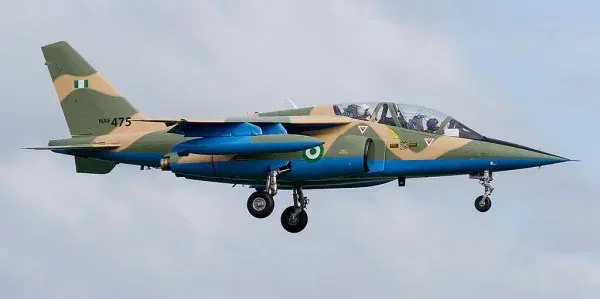
Oyo school abduction: NAF deploys surveillance aircraft
Abstract
The recent abduction of pupils and teachers from schools in Oyo State has prompted the Nigerian Air Force (NAF) to deploy surveillance aircraft, highlighting the escalating security crisis and the state's reliance on military intervention in internal security matters. This article examines the legal framework governing abductions in Nigeria, including federal and state anti-kidnapping laws, and the constitutional mandate for military aid to civil authorities. It delves into the legal basis for the NAF's involvement, the inherent challenges and criticisms associated with military deployment in civilian policing roles, and the broader implications for human rights and civil-military relations in a democratic setting. The incident underscores the urgent need for robust enforcement of existing laws and a re-evaluation of national security strategies.
Introduction
The abduction of pupils and teachers from schools in Yawota and Ahoro-Esinele communities in Oriire Local Government Area of Oyo State represents a grave escalation of Nigeria's persistent security challenges. In response to this distressing incident, the Nigerian Air Force (NAF) has deployed aerial surveillance aircraft to provide support for ongoing rescue operations. This deployment underscores the critical role the military is increasingly playing in internal security operations across Nigeria, often in situations that traditionally fall within the purview of civilian law enforcement agencies.
This article aims to provide a comprehensive legal analysis of the Oyo school abduction, focusing on the legal framework surrounding kidnapping in Nigeria and the constitutional and statutory provisions that permit military involvement in such internal security operations. It will explore the legal basis for the NAF's deployment, the complexities and potential legal ramifications of military aid to civil power, and the broader implications for the rule of law and human rights in the country. The ongoing crisis necessitates a critical examination of the adequacy of current legal and operational responses to safeguard citizens and maintain public order.
Background
Abduction, particularly kidnapping for ransom, has become a pervasive security threat across Nigeria. The legal framework addressing this crime is multi-layered, encompassing federal statutes and specific state legislation. At the federal level, the Criminal Code Act, applicable in the Southern States, and the Penal Code Act, applicable in the Northern States, criminalise various forms of abduction and kidnapping. For instance, Section 364 of the Criminal Code Act prescribes imprisonment for ten years for kidnapping. Similarly, the Penal Code Act, under Section 273, provides for imprisonment up to ten years for kidnapping or abduction.
Beyond these federal laws, many states have enacted dedicated anti-kidnapping legislation to impose harsher penalties. Oyo State, for example, passed the Kidnapping (Prohibition) Bill 2016, which stipulates penalties ranging from life imprisonment to death, particularly where a victim dies in captivity, and also provides for the forfeiture of property used in or derived from kidnapping. The Terrorism (Prevention and Prohibition) Act 2022 further classifies kidnapping and hostage-taking carried out with the intention of coercing a government, international body, or civilian population as acts of terrorism, attracting severe penalties including asset forfeiture. The role of the Nigerian Armed Forces, including the NAF, in internal security operations is primarily derived from Section 217(2)(c) of the Constitution of the Federal Republic of Nigeria 1999 (as amended), which empowers them to "suppress insurrection and act in aid of civil authorities to restore order when called upon to do so by the President, but subject to such conditions as may be prescribed by an Act of the National Assembly." The Nigerian Air Force was formally established by the Air Force Act 1964, charging it with the defence of the Federal Republic by air.
Analysis
The deployment of the Nigerian Air Force's surveillance aircraft in Oyo State, while a practical response to a dire security situation, operates within a complex legal and constitutional landscape. Section 217(2)(c) of the 1999 Constitution provides the primary legal basis for military aid to civil authorities. This provision, however, is qualified by the phrase "subject to such conditions as may be prescribed by an Act of the National Assembly." Critically, the National Assembly has not enacted a comprehensive framework detailing these conditions, leading to broad discretionary powers for the President, as Commander-in-Chief, to determine the operational use of the armed forces under Section 218(1) and (3) of the Constitution.
This lack of specific legislative guidance has often led to debates regarding the constitutional conformity and appropriateness of extensive military involvement in internal security operations, which are primarily the responsibility of the Nigeria Police Force under Section 224 of the Constitution and the Police Act 2020. While military intervention may be necessary in situations where civil authorities are overwhelmed, concerns have been raised about potential human rights abuses, extra-judicial killings, and the erosion of civil-military relations. The prolonged deployment of the military in such roles can also lead to fatigue and morale issues within the armed forces, potentially undermining their readiness for external defence.
The Oyo State Kidnapping (Prohibition) Bill 2016, with its stringent penalties including the death sentence for kidnappers where a victim dies, reflects a legislative attempt to deter these crimes. However, legal experts often argue that the challenge lies less in the adequacy of laws and more in their enforcement, political will, and the capacity of the criminal justice system. The reported demands by the abductors for a N1 billion ransom and the implementation of Sharia law in Oyo State introduce an ideological dimension, potentially elevating the incident beyond conventional criminality to a broader security challenge that could fall under the purview of the Terrorism (Prevention and Prohibition) Act 2022. This further complicates the legal and operational responses, requiring a coordinated approach that respects human rights while effectively combating terrorism and organised crime.
Conclusion
The Oyo school abduction and the subsequent deployment of NAF surveillance aircraft underscore the multifaceted legal and operational challenges confronting Nigeria's security architecture. For legal practitioners, this incident highlights the critical need to understand the interplay between federal and state criminal laws on abduction, the constitutional provisions governing military aid to civil power, and the human rights implications of such deployments. Advising clients, whether victims, affected communities, or even state actors, requires a nuanced appreciation of these complex legal frameworks.
Moving forward, practitioners should watch for potential legislative reforms aimed at clarifying the conditions for military involvement in internal security, as envisioned by Section 217(2)(c) of the 1999 Constitution. There is also a continuous call for strengthening civilian law enforcement agencies to reduce reliance on the military for routine policing. The effectiveness of current anti-kidnapping laws, despite their severity, remains a point of national debate, with calls for improved enforcement and judicial processes. Ultimately, a comprehensive and rights-respecting approach, combining robust law enforcement, intelligence gathering, inter-agency cooperation, and community engagement, is essential to address Nigeria's pervasive abduction crisis and ensure the safety and security of its citizens.
Citations
- 1.Constitution of the Federal Republic of Nigeria 1999 (as amended)
- 2.Criminal Code Act, Cap C38, Laws of the Federation of Nigeria 2004
- 3.Penal Code Act, Cap P3, Laws of the Federation of Nigeria 2004
- 4.Air Force Act 1964
- 5.Kidnapping (Prohibition) Bill 2016 (Oyo State)
- 6.Terrorism (Prevention and Prohibition) Act 2022
- 7.Police Act 2020
How does this affect your business?
Get an AI analysis of this article grounded in your jurisdictions, practice areas, and any policy documents you've uploaded to Wansom.