
Parliament Targets Overcrowding by Pushing to Repatriate foreign nationals from sa prisons
Abstract
In June 2026, the Parliamentary Portfolio Committee on Correctional Services raised major red flags over the rapid spike of foreign nationals held inside South Africa's severely overcrowded prison infrastructure. With annual fiscal spending totaling a staggering R11 billion, the growing inmate population has sparked urgent calls for structural legal adjustments. This article examines the latest statistical breakout of foreign detainees, the ongoing legislative bottleneck preventing prisoner transfers, and the enforcement frameworks being structured alongside regional neighboring states to mitigate the country's severe prison capacity crisis.
Introduction
The intersection of regional migration and criminal justice is putting immense stress on South Africa's national budget. Figures released by the Department of Correctional Services (DCS) in June 2026 reveal that South African correctional facilities are currently housing 27,880 foreign nationals.
Addressing the media, Kgomotso Ramolobeng, Chairperson of the Parliament's Portfolio Committee on Correctional Services, flagged this ongoing growth as a primary institutional concern. The financial burden of maintaining these inmates is immense, costing the state an estimated R11 billion annually at a time when the Department is already operating under strict budgetary constraints. To prevent a complete structural failure of the country's penal system, lawmakers are aggressively pushing to change the statutory mechanisms that govern how foreign offenders are handled
Background
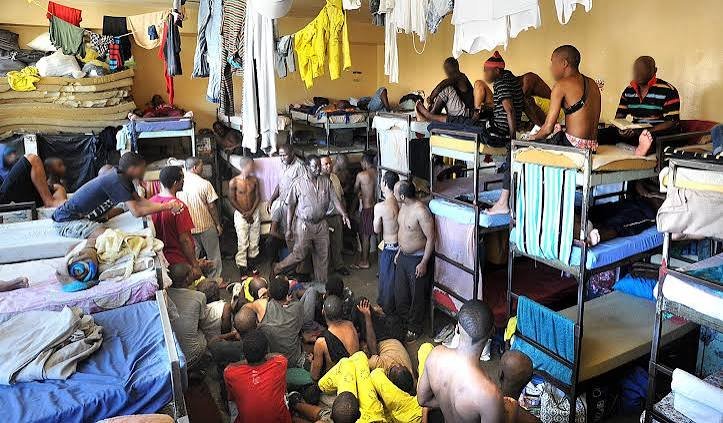
South Africa's prisons have historically battled severe overcrowding, with the national approved bed capacity capped at 107,346, while actual total inmate numbers consistently surge past 167,000. While foreign nationals historically hovered at around 11% to 12% of the overall prison populace in recent years, the massive backlog in the judicial system has rapidly skewed these dynamics.
The friction has been worsened by intense anti-immigrant sentiment and a heightened national focus on illegal immigration, which culminated in a massive cross-border repatriation push by the Border Management Authority (BMA) in mid-June 2026. While thousands of undocumented individuals are successfully processed and removed through standard administrative border operations, those who enter the criminal tracking system present a far more complex legal issue.
Analysis
The current operational challenge stems from a fundamental legal bottleneck within South Africa’s domestic statutory landscape. Under existing laws, any individual convicted and sentenced within South African borders must fulfill their entire punitive duration inside South African facilities. This statutory block creates a bizarre legal paradox:
1. The Treatment of Neighboring Treaties: South Africa recently signed a comprehensive, milestone prisoner transfer agreement with Botswana. This agreement was specifically built to create an institutional path to repatriate sentenced prisoners to their home environments. 2. The Legal Bottleneck: Despite the bilateral agreement being fully ratified, the DCS cannot actually transfer a single Botswana national back across the border. Doing so under the current unamended Correctional Services architecture would constitute an illegal release.
To bypass this roadblock, Parliament is fast-tracking a critical bill amendment to alter this requirement. Once passed, it will allow the DCS to systematically hand over sentenced foreign nationals to their original jurisdictions across the Southern African Development Community (SADC). Furthermore, data indicates that the operational backlog is heavily concentrated on the unconvicted side of the ledger. Out of the 27,880 foreign nationals currently held, 14,614 are awaiting-trial detainees, compared to 13,266 sentenced offenders. This means over half of the foreign prison population is locked in legal limbo, taking up vital bed spaces while awaiting formal prosecution or deportation clearance from the Department of Home Affairs
Conclusion
Clearing foreign national inmates from South African prisons is no longer just an immigration goal—it is a fiscal necessity. While the country’s law enforcement continues to tighten borders and clamp down on undocumented stays, the R11 billion annual drain on correctional infrastructure requires a swift, legislative response. If the seventh administration successfully updates the underlying laws and scales up SADC-wide prisoner transfer mechanisms, South Africa could significantly relieve prison overcrowding while shifting long-term correctional costs back to inmates' home countries.
Citations
- 1.Department of Correctional Services (DCS) Statistical Briefing, Inmate Breakdown Records (June 2026).
- 2.Parliamentary Portfolio Committee on Correctional Services, Committee Review Transcript (June 26, 2026).
- 3.Correctional Services Act 111 of 1998 (South Africa) — Restricting the transfer and out-of-country placement of active prisoners.
- 4.Republic of South Africa and Republic of Botswana Bilateral Prisoner Transfer Agreement (Ratified 2026).
- 5.Immigration Act 13 of 2002 ; Provisions regarding the detention, verification, and processing of illegal foreign nationals.