
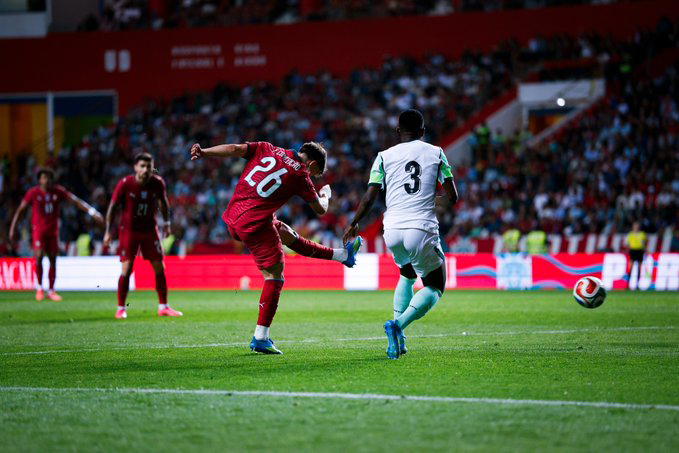
Portugal ends Super Eagles unbeaten run with 2-1 win
Abstract
The recent friendly match between Nigeria's Super Eagles and Portugal, resulting in a 2-1 defeat for Nigeria, while a purely sporting event, serves as a timely reminder of the intricate legal and regulatory landscape governing professional football in Nigeria. This article explores the multifaceted legal implications that such national team performances can trigger, particularly concerning contractual obligations, sports governance, and dispute resolution mechanisms within the Nigerian context. It highlights the critical role of robust legal frameworks in managing stakeholder expectations, ensuring accountability, and fostering the sustainable development of sports in the country.
Introduction
The outcome of international friendly matches, such as the recent 2-1 victory by Portugal over Nigeria's Super Eagles, typically garners attention for its sporting narrative and implications for team morale and future rankings. However, beneath the surface of athletic competition lies a complex web of legal and commercial arrangements that are profoundly impacted by team performance. For legal professionals advising stakeholders in Nigerian sports, every match, win or loss, underscores the necessity of a meticulous understanding of the prevailing legal frameworks.
This article delves into the often-overlooked legal ramifications that arise from the performance of national sports teams in Nigeria. It posits that while the match itself is not a legal dispute, it provides a crucial lens through which to examine the legal health of the Nigerian football ecosystem, encompassing aspects from player contracts and sponsorship agreements to the broader issues of governance and dispute resolution within the Nigeria Football Federation (NFF). The continuous evolution of sports law in Nigeria demands that practitioners remain vigilant to these interconnected dynamics.
Background
Sports in Nigeria are governed by a multi-layered legal framework, drawing from the Constitution of the Federal Republic of Nigeria 1999 (as amended), specific statutes, and the regulations of various sports federations. Key legislation includes the National Sports Commission Act (which has seen various iterations and reforms, including a 2023 revival) and the Nigeria Football Association Act, which provides a legal structure for football administration. The Ministry of Youth and Sports Development plays a central role in policy formulation and oversight.
The Nigeria Football Federation (NFF), as the governing body for football, operates under its own statutes, which must align with the regulations of international bodies like FIFA and CAF. This semi-autonomous status, however, has historically led to tensions, particularly concerning governmental interference, which has, on occasion, resulted in FIFA sanctions and suspensions. The legal landscape also encompasses general laws such as the Labour Act, which applies to athletes' contracts, and the Arbitration and Conciliation Act (now largely superseded by the Arbitration and Mediation Act 2023), which provides mechanisms for dispute resolution.
Analysis
The performance of the Super Eagles, even in a friendly, can have significant legal implications across several domains. Firstly, **contractual performance** is paramount. Sponsorship and endorsement agreements, which form a substantial part of the NFF's and individual players' revenue, often contain performance-related clauses. A dip in performance, or the end of an 'unbeaten run', could trigger reviews of these clauses, potentially impacting future negotiations or the value of existing deals. Furthermore, player and coach contracts are legally binding documents outlining terms of employment, compensation, and obligations. The recurring issue of unpaid wages for coaches and players in Nigerian football highlights the need for robust contract drafting and enforcement, with many disputes ultimately escalating to FIFA or the Court of Arbitration for Sport (CAS) for resolution.
Secondly, **governance and regulatory scrutiny** intensify with national team performance. The NFF, as a public-facing entity, faces constant scrutiny regarding its administration, financial management, and adherence to its own statutes and national laws. Allegations of corruption and misappropriation of funds, including FIFA and CAF grants, have led to legal battles and calls for greater transparency and accountability from stakeholders. Past instances of governmental interference in the NFF's affairs have drawn the ire of FIFA, leading to suspensions, underscoring the delicate balance between national sovereignty and international sports governance principles.
Finally, **dispute resolution mechanisms** are critical in managing conflicts that inevitably arise in the high-stakes world of professional sports. While internal NFF committees, such as the Player Status and Arbitration Committee, handle initial disputes, the Arbitration and Mediation Act 2023 provides a comprehensive framework for resolving sports-related conflicts through arbitration. For international disputes, the Court of Arbitration for Sport (CAS) serves as the ultimate arbiter, with its decisions generally binding and enforceable. Legal practitioners must navigate these various forums, understanding their respective jurisdictions and procedural requirements, to effectively represent their clients, whether they are players, coaches, clubs, or the federation itself.
Conclusion
The Super Eagles' recent friendly defeat, while a momentary setback on the field, serves as a potent reminder for legal professionals of the enduring and complex legal considerations underpinning Nigerian sports. The performance of national teams is not merely a matter of athletic prowess but is deeply intertwined with contractual integrity, transparent governance, and effective dispute resolution. Practitioners must be adept at drafting comprehensive contracts that anticipate performance fluctuations, advising sports bodies on compliance with national and international regulations, and navigating the various arbitration and judicial forums available for dispute resolution.
Moving forward, the Nigerian sports sector will continue to demand sophisticated legal expertise to foster growth, protect stakeholder interests, and uphold the integrity of the game. Attorneys should remain abreast of legislative developments, such as the ongoing evolution of the National Sports Commission Act and the application of the Arbitration and Mediation Act 2023, to provide proactive and strategic counsel. The call to action for legal professionals is clear: to contribute to building a robust and equitable legal environment that supports the aspirations of Nigerian athletes and sports organizations on the global stage.
Citations
- 1.Constitution of the Federal Republic of Nigeria 1999 (as amended)
- 2.National Sports Commission Act (various iterations, including 1971, 2011, and 2023 proposals/revivals)
- 3.Nigeria Football Association Act
- 4.Labour Act, Cap L1, Laws of the Federation of Nigeria 2004
- 5.Arbitration and Conciliation Act, Cap A18, Laws of the Federation of Nigeria 2004
- 6.Arbitration and Mediation Act 2023
- 7.FIFA Regulations on the Status and Transfer of Players (RSTP)
- 8.The Trusted Advisors. "Sports Law in Nigeria: Contracts, Sponsorships, and Athlete Rights."
- 9.The Trusted Advisors. "CONTRACTS, SPONSORSHIP, ATHLETE RIGHTS AND SPORTS LAW IN NIGERIA."
- 10.Beckley Nominees. "Sport Law."
- 11.BluePrint Attorneys LP. "SPORTS LAW IN NIGERIA: CONTRACTS, SPONSORSHIP, ATHLETES' RIGHTS, AND MORE."
- 12.Olisa Agbakoba Legal (OAL). "Analysis of the English FA Rule K, The Nigerian Arbitration and Mediation Act 2023; Making Sports Disputes Resolution Less of a Headache in Nigeria."
- 13.PolicyVault.Africa. "National Sports Commission Act."
- 14.PLAC - 2004 Laws of Nigeria. "NATIONAL INSTITUTE FOR SPORTS ACT."
- 15.PLAC BILLSTRACK. "National Sports Commission (ESTABLISHMENT, ETC.)."
- 16.Grokipedia. "National Sports Commission."
- 17.Wikipedia. "Nigeria Football Federation."
- 18.Punch Newspapers. "Corruption: Stakeholders engage NFF in fresh legal battle."
- 19.YouTube. "Unpaid Wages in Nigerian Football: Legal Rights of Coaches and Players."
- 20.TVC News. "Four Times NFF Board Caught In Managerial Controversy."
- 21.Playthegame.org. "FIFA suspends Nigeria over government interference."
- 22.PLAC BILLSTRACK. "nigeria sports bill, 2016."
- 23.Wikipedia. "National Sports Commission."
- 24.The Trusted Advisors Legal Practice. "Sports Arbitration & Dispute Resolution in Nigeria."
- 25.Mondaq. "Sports Arbitration & Dispute Resolution In Nigeria: What You Need To Know."
- 26.Pca-cpa.org. "Arbitration and Conciliation Act."
- 27.FAOLEX. "ARBITRATION AND CONCILIATION ACT."
- 28.Transcendent Law Group. "Top 7 Legal Issues for Non-Profits in 2026."
- 29.New Frontier Foundation. "NFF continues to drive serious, strategic conversations."
- 30.For Purpose Law Group (FPLG). "New Nonprofit Finance Fund Survey."
- 31.National Farmers' Federation. "NFF welcomes Govt review to extend unfair trading practices to small business."
- 32.ArentFox Schiff. "10 Legal Issues for Nonprofit and Association Leadership in 2024."
How does this affect your business?
Get an AI analysis of this article grounded in your jurisdictions, practice areas, and any policy documents you've uploaded to Wansom.