
PRSK Seeks to Standardize Public Relations & Communications Qualifications under KNQF
Abstract
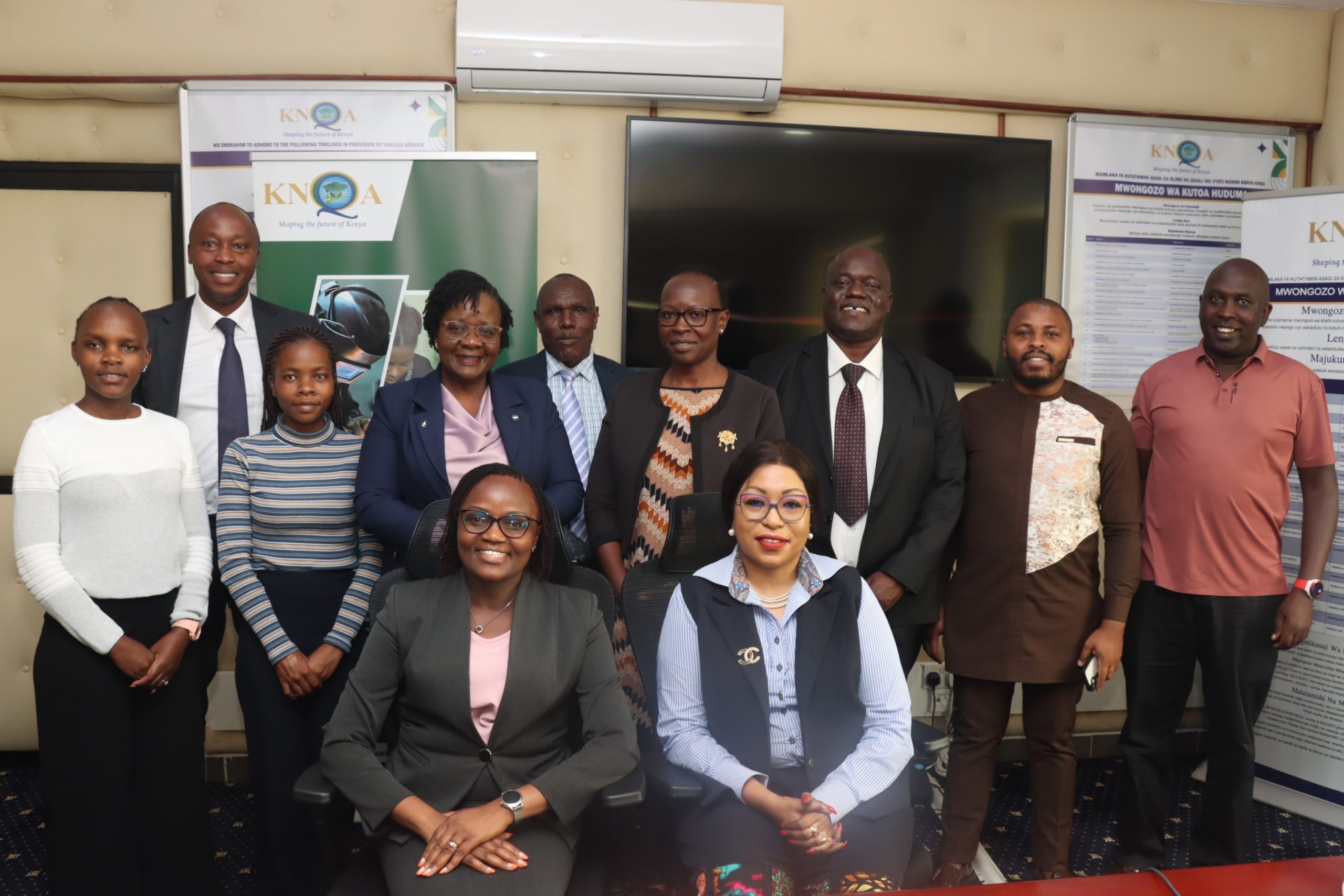
The Public Relations Society of Kenya (PRSK) has initiated formal discussions with the Kenya National Qualifications Authority (KNQA) to secure accreditation as a professional body and membership association under the Kenya National Qualifications Framework (KNQF). This strategic move aims to standardize public relations and communications qualifications in Kenya, providing a robust framework for professional development, quality assurance, and national recognition of PR certifications. The collaboration, rooted in the Kenya National Qualifications Framework Act, 2014, seeks to elevate the professional standing of the communications industry, ensure adherence to ethical standards, and create clear pathways for career progression, thereby safeguarding the profession from unaccredited certifications and enhancing its international comparability.
Introduction
The landscape of professional regulation in Kenya is undergoing significant evolution, with various sectors seeking to formalize and standardize their qualifications. In a pivotal development for the communications industry, the Public Relations Society of Kenya (PRSK) has embarked on formal discussions with the Kenya National Qualifications Authority (KNQA) to achieve accreditation as a professional body and membership association under the Kenya National Qualifications Framework (KNQF).
This initiative marks a crucial step towards institutionalizing and enhancing professional standards within the public relations and communications sector. For decades, the PR profession in Kenya has largely operated under self-regulation, with PRSK championing ethical practice and professional development. However, the absence of a statutory framework for qualifications has presented challenges in ensuring consistent standards and protecting the integrity of the profession. The proposed collaboration with KNQA aims to address these gaps by integrating PR qualifications into a nationally recognized and quality-assured system, thereby providing clarity for practitioners, employers, and educational institutions alike.
This article will delve into the legal and regulatory underpinnings of this collaboration, examining the mandates of both PRSK and KNQA, the implications of KNQF accreditation, and the broader impact on the professionalization of public relations and communications in Kenya.
Background
The Public Relations Society of Kenya (PRSK), established in 1971, serves as the national professional body uniting communication practitioners across the country. Its broad objective is to advance excellence in Public Relations and Communication Management in Kenya, promoting ethical practice and professional standards through training, research, and a robust network. PRSK has historically adopted international codes of ethics, such as the Code of Athens, to guide its members' conduct. Despite its long-standing efforts, the profession has lacked a comprehensive legislative framework to regulate practice, leading to calls for the transformation of PRSK into a statutory institute with powers to register and license practitioners.
The Kenya National Qualifications Authority (KNQA) was established under the Kenya National Qualifications Framework Act, No. 22 of 2014, which commenced on January 14, 2015. The primary object of this Act is to establish the KNQA and provide for the development of the Kenya National Qualifications Framework (KNQF). The KNQF is a 10-level, learning outcome-based framework designed to coordinate and harmonize education, training, assessment, and quality assurance of all qualifications awarded in Kenya. Its guiding principles include promoting access to and equity in education, quality and relevance of qualifications, evidence-based competence, and flexibility of access to education, training, assessment, and qualifications. The KNQA is mandated to develop an accreditation system for qualifications, set standards and benchmarks, maintain a national database of qualifications, and advise institutions responsible for awarding qualifications.
Analysis
The proposed collaboration between PRSK and KNQA finds its legal basis in the Kenya National Qualifications Framework Act, 2014, and the Kenya National Qualifications Framework Regulations, 2018. The Act mandates KNQA to develop a framework for an accreditation system on qualifications and to set standards and benchmarks for qualifications and competencies. Professional bodies wishing to be involved in education, training, and awarding qualifications must cooperate with relevant External Quality Assurance agencies and cannot function without KNQA accreditation and recognition of their qualifications. This means PRSK, in seeking to become a Qualification Awarding Body (QAB), must adhere to KNQA standards on quality assurance, assessment, and examination.
For PRSK to gain official recognition as a QAB, KNQA will assess its governance and management structures, operational sustainability, and adherence to prescribed legal functions. The accreditation process involves a self-assessment by the institution, validation by an expert panel appointed by KNQA, and subsequent gazettement of the accredited institution. Once accredited, PRSK would gain the authority to issue nationally recognized public relations certifications aligned with the KNQF. This integration into the KNQF will provide communication professionals with a clear pathway for career progression, protect the industry from unaccredited academic and professional certifications, and enhance the international comparability of Kenyan qualifications.
This initiative also aligns with broader legislative efforts to professionalize the public relations sector. The Public Relations and Communication Management Bill, 2024, currently before Parliament, seeks to establish the Institute of Public Relations and Communication Management, transforming PRSK into a statutory body with powers to register members, regulate professional conduct, and enforce ethical standards. The Bill also proposes the establishment of a Professional Examinations Board. KNQF accreditation would provide the foundational standards for the qualifications that this proposed Institute would oversee, ensuring that the statutory regulation is underpinned by a robust national qualifications framework. This synergy is crucial, as a recent High Court ruling emphasized the necessity for professional bodies to solely manage the accreditation of professional degree courses to ensure industry standards and relevance.
Furthermore, KNQA emphasizes the importance of role separation in the training and education arena, advising against one institution developing curricula, teaching, carrying out quality assurance, examining, and awarding qualifications. This principle ensures independence in assessment and maintains the integrity of qualifications. PRSK's collaboration with KNQA will need to carefully navigate these requirements, potentially involving partnerships with educational institutions for training while retaining its role in setting professional standards and awarding certifications under the KNQF. The framework's 10 levels, from basic skills to doctoral degrees, will allow for a comprehensive mapping of PR qualifications, ensuring that all levels of expertise are formally recognized.
Conclusion
The ongoing discussions between the Public Relations Society of Kenya and the Kenya National Qualifications Authority represent a landmark moment for the public relations and communications industry in Kenya. By seeking accreditation under the Kenya National Qualifications Framework, PRSK is not merely pursuing institutional recognition but is actively contributing to the establishment of a standardized, quality-assured, and globally comparable professional landscape. This move promises to bring much-needed clarity and integrity to PR qualifications, fostering a more professional and ethical practice environment.
Practitioners should closely monitor the progress of this accreditation process and the parallel legislative efforts, particularly the Public Relations and Communication Management Bill, 2024. The successful integration of PR qualifications into the KNQF will necessitate adherence to new standards for continuous professional development and certification, ultimately enhancing career pathways and protecting the public from unqualified practitioners. This strategic alignment is poised to elevate the standing of public relations professionals in Kenya, ensuring that the industry is equipped with competent and ethically grounded individuals capable of shaping national conversations and building trust.
Citations
- 1.Kenya National Qualifications Framework Act, No. 22 of 2014
- 2.Kenya National Qualifications Framework Regulations, 2018
- 3.Public Relations and Communication Management Bill, 2024
- 4.Public Relations Society of Kenya (PRSK) website
- 5.Kenya National Qualifications Authority (KNQA) website
- 6.PRSK Seeks to Standardize Public Relations & Communications Qualifications under KNQF, Kenya National Qualifications Authority (June 11, 2026)
- 7.PRSK Kenya — PR Training, Membership & Awards, Public Relations Society of Kenya (April 15, 2026)
- 8.Public Relations Society of Kenya (PRSK) - Devex
- 9.The Kenya National Qualifications Framework Act, NO. 22 OF 2014, The National Council for Law Reporting
- 10.KENYA NATIONAL QUALIFICATIONS FRAMEWORK ACT, KUCCPS
- 11.Professional Bodies in Kenya Overview, KNQA (Scribd document)
- 12.State moves to regulate PR, communication sector - The Star (March 22, 2024)
- 13.MINISTRY OF INFORMATION, COMMUNICATIONS AND TECHNOLOGY - KIPPRA PPR
- 14.NATIONAL STANDARDS AND GUIDELINES FOR ASSESSMENT OF NATIONAL QUALIFICATIONS IN KENYA, Africa Check
- 15.Kenya National Qualifications Framework, KNQA
- 16.Kenya — ACQF
- 17.Understanding KNQF Levels and What They Mean for Courses at Mitunguu National Polytechnic (January 18, 2026)
- 18.Kenya's Move Towards Regulating Professionals - MWC Legal (September 23, 2024)
- 19.Kenya National Qualifications Framework Act, 2014 | judy.legal
- 20.Regulatory Body Details - Wasomi Kenya
- 21.Kenya National Qualifications Classification Standards (KNQCS), KNQA
- 22.PROFESSIONAL BODIES AND ASSOCIATIONS IN KENYA This information is provided by KNQA regarding professional bodies and association, KNQA
- 23.KENYA Introduction and context The Kenyan Qualifications Framework (KQF) is currently being developed by the Kenya National Qu
- 24.The Public Relations And Communication Management Bill, 2024 - Parliament of Kenya (March 19, 2024)
- 25.Reasons Why Professional Bodies Should Solely Accredit Professional Degree Courses in Kenyan Universities and Colleges | Enhanced Education Group (August 13, 2024)
- 26.An Evaluation of Kenya's Public Relations Practitioners' Understanding of their Career's Ethical Issues (June 19, 2017)
- 27.Public Relations Society of Kenya - IP Kenya - WordPress.com (June 08, 2012)
- 28.New PRSK officials to push laws to guide public relations - The Star (July 05, 2023)
- 29.Registration Of Qualifications on NQD - Kenya National Qualifications Authority
- 30.How Kenyan Professional Bodies Shape Careers - IBN Immigration Solutions (June 18, 2025)
- 31.The purpose of the law-KNQF Act
How does this affect your business?
Get an AI analysis of this article grounded in your jurisdictions, practice areas, and any policy documents you've uploaded to Wansom.