
PS Omollo Says Sovereign Wealth Fund Will Secure Kenya’s Resource Wealth for Future Generations
Abstract
Kenya has enacted the Sovereign Wealth Fund Act, 2026, a landmark piece of legislation aimed at prudently managing the nation's natural resource wealth for both current and future generations. The Act establishes a multi-component fund, comprising a Stabilisation Fund, a Strategic Infrastructure Investment Fund, and a Future Generations Fund (Urithi Fund). A significant provision mandates that 30% of all petroleum and mineral revenues be channeled into the Future Generations Fund, ensuring intergenerational equity. This legal framework seeks to enhance fiscal management, cushion the economy against shocks, and finance strategic national development projects, marking a pivotal shift in Kenya's approach to resource governance.
Introduction
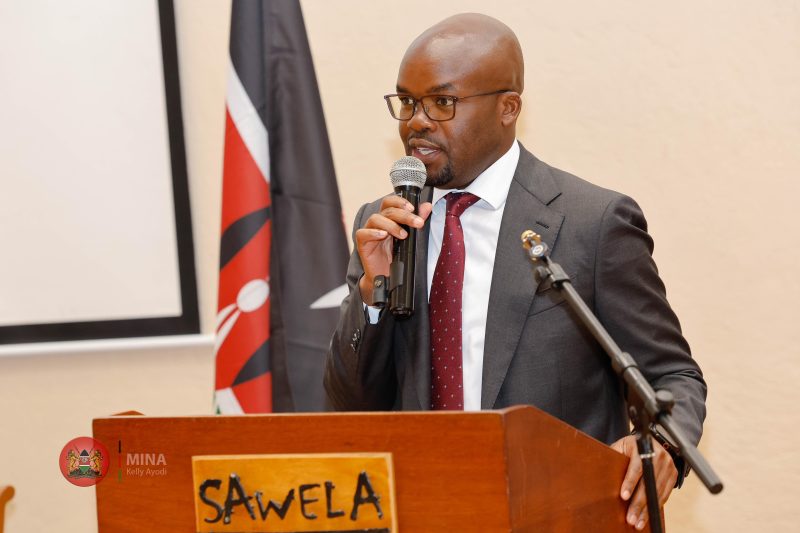
Kenya has taken a significant step towards securing its economic future with the recent enactment of the Sovereign Wealth Fund Act, 2026. This pivotal legislation, assented to by President William Ruto on July 8, 2026, establishes a comprehensive legal framework for managing the country's natural resource wealth. Interior Principal Secretary Raymond Omollo has lauded the new law, emphasizing its critical role in preserving a portion of proceeds generated from key natural resources, including minerals and petroleum, for the benefit of both present and future generations.
The establishment of this Sovereign Wealth Fund (SWF) addresses a long-standing gap in Kenya's resource management strategy, which previously lacked a structured mechanism to account for and preserve resource revenues sustainably. The Act is designed to strengthen fiscal management, safeguard national wealth, and support long-term economic growth by ensuring that the exploitation of natural assets translates into tangible, lasting benefits for all Kenyans. This article delves into the legal architecture of the new Act, its implications for resource governance, and the broader economic landscape.
Background
Historically, Kenya, like many resource-rich nations, has faced the challenge of translating finite natural resource endowments into sustainable economic development. While the country has engaged in the extraction of minerals and, more recently, petroleum, a dedicated and comprehensive legal framework for the intergenerational management of these revenues was absent. This lacuna often led to concerns regarding the equitable distribution of resource benefits and the potential for short-term consumption over long-term investment.
The new Sovereign Wealth Fund Act, 2026, seeks to rectify this by providing a robust legal and institutional framework. It operates in conjunction with existing statutes such as the Public Finance Management Act, which governs fiscal discipline, transparency, and accountability in public funds. Furthermore, the Act draws its revenue streams from provisions within the Petroleum Act, 2019, and the Mining Act, 2016, which define the government's share of profits, royalties, and other payments from upstream petroleum operations and mining activities. The fund is legally vested in the National Treasury, held in trust for the citizens of Kenya, and is mandated to be managed and invested for the benefit of current and future generations.
Analysis
The Sovereign Wealth Fund Act, 2026, establishes a multi-pronged approach to resource wealth management through three distinct components: the Stabilisation Fund, the Strategic Infrastructure Investment Fund, and the Future Generations Fund, also known as the Urithi Fund. The Stabilisation Fund is designed to provide a financial buffer, cushioning the national government and the economy from extraordinary macroeconomic shocks and revenue fluctuations, such as global economic downturns or pandemics. This aims to prevent external financial storms from escalating into national crises.
Concurrently, the Strategic Infrastructure Investment Fund is purposed to finance priority national development projects aligned with Kenya's long-term development agenda, thereby stimulating economic growth and job creation. This component is crucial for translating resource wealth into tangible improvements in public services and infrastructure. However, the cornerstone of the Act's intergenerational equity objective is the Future Generations Fund. This component is mandated to receive a substantial 30% of all petroleum and mineral revenues, a significant increase from an earlier proposed 10%, specifically to build a long-term savings base for future Kenyans, ensuring wealth endures beyond the depletion of natural resources.
To ensure prudent management and safeguard the fund's assets, the Act imposes strict investment restrictions. It explicitly prohibits investments in speculative derivatives, unlisted securities, real estate located in Kenya, private equity, art, commodities, and securities issued by Kenyan entities. These limitations aim to minimize financial risk and preserve the fund's capital for its intended long-term objectives. Furthermore, the Act mandates independent professional management, strong parliamentary oversight, transparent public reporting, and robust auditing by the Auditor-General, with legal penalties for misappropriation, thereby enhancing accountability and investor confidence. This governance structure aligns Kenya with best practices observed in other resource-rich nations with successful sovereign wealth funds, such as Norway and Botswana.
Conclusion
The enactment of the Sovereign Wealth Fund Act, 2026, represents a transformative moment for Kenya's economic governance and natural resource management. For legal practitioners, this new law introduces a complex yet vital framework that will influence investment in the extractive sector, public finance, and intergenerational wealth planning. Attorneys advising clients in mining, petroleum, and infrastructure development must now navigate the implications of the fund's revenue allocation mechanisms and investment restrictions, particularly concerning government participation and royalty payments.
Moving forward, key areas to watch include the operationalization of the fund, which is contingent on reaching an initial threshold of KSh 200 billion and the appointment of its governing board. The effectiveness of the parliamentary oversight and auditing mechanisms will be crucial in ensuring transparency and accountability. As Kenya embarks on this new chapter of resource wealth management, the Sovereign Wealth Fund Act, 2026, stands as a testament to the nation's commitment to sustainable development and intergenerational equity, promising a more secure and prosperous future for its citizens.
Citations
- 1.Sovereign Wealth Fund Act, 2026
- 2.Petroleum Act, 2019
- 3.Mining Act, 2016
- 4.Public Finance Management Act
How does this affect your business?
Get an AI analysis of this article grounded in your jurisdictions, practice areas, and any policy documents you've uploaded to Wansom.