
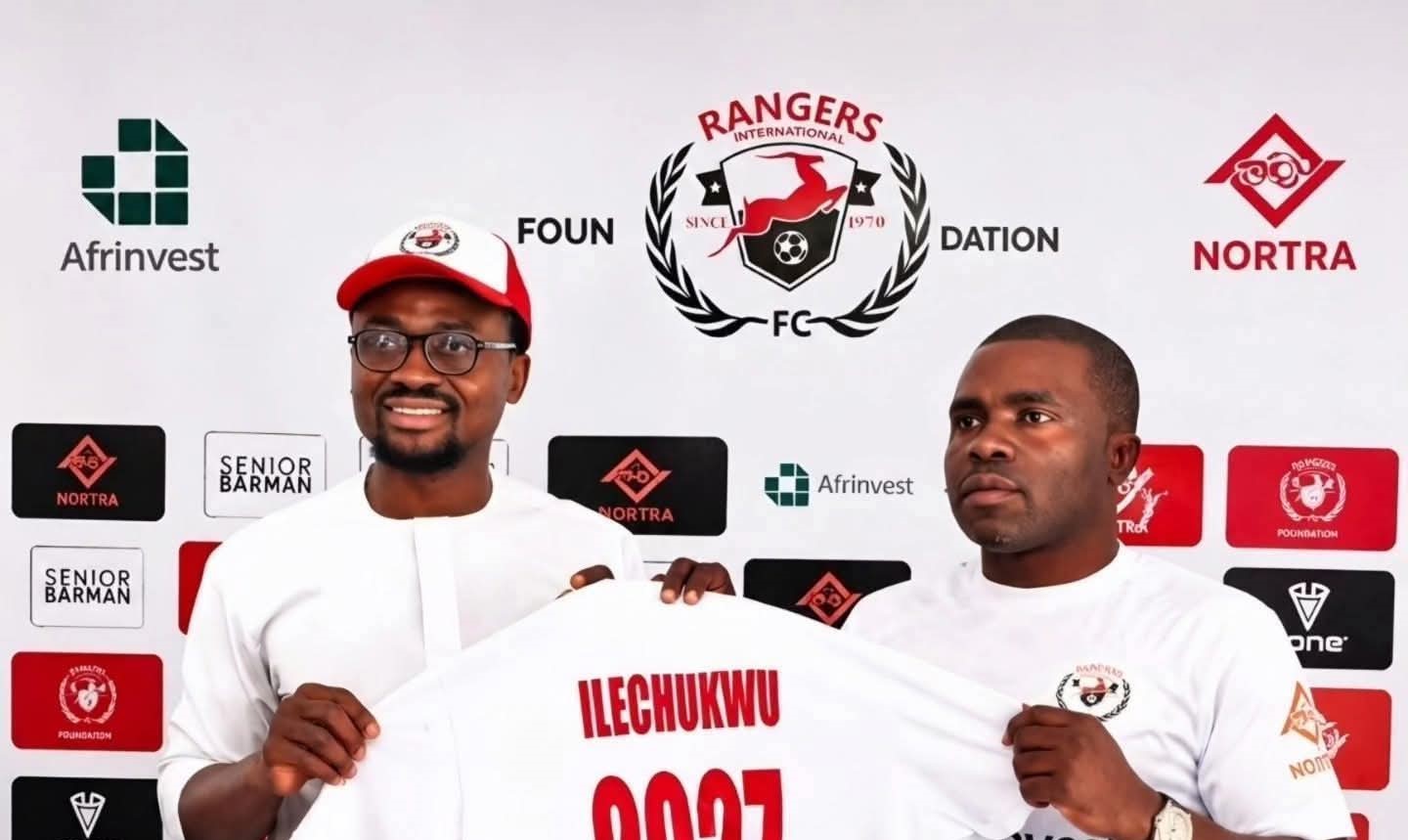
Rangers end speculation, extend Ilechukwu’s contract until 2027
Abstract
Enugu Rangers International FC's extension of Coach Fidelis Ilechukwu's contract until 2027 marks a significant development in Nigerian professional football, underscoring the increasing emphasis on contractual stability and adherence to formal employment agreements. This move reflects a growing trend towards professionalization within the Nigeria Premier Football League (NPFL) and highlights the legal frameworks governing fixed-term employment contracts for coaches. The extension provides a practical illustration of the interplay between general Nigerian contract law, the Labour Act, and specific sports regulations, particularly concerning the rights and obligations of parties in a professional coaching relationship. It also brings to the fore the mechanisms for dispute resolution in the event of contractual breaches, offering valuable insights for legal practitioners navigating the evolving landscape of sports law in Nigeria.
Introduction
The recent announcement by Enugu Rangers International FC confirming the extension of Coach Fidelis Ilechukwu’s contract until 2027 has resonated across Nigerian football circles. This development, which puts an end to speculation regarding the future of the title-winning coach, is more than just a routine administrative decision; it represents a crucial step in solidifying contractual professionalism within the Nigeria Premier Football League (NPFL). For legal practitioners, this event provides a timely opportunity to examine the legal underpinnings of employment contracts in professional sports, particularly in the Nigerian context.
Professional sports, by its very nature, thrives on stability and predictability, which are largely guaranteed through robust contractual agreements. A coach's contract, much like that of a player, is a cornerstone of this stability, defining the scope of duties, remuneration, duration, and conditions for termination or renewal. Ilechukwu's extension, therefore, is not merely a vote of confidence but a legally binding commitment that implicates various aspects of Nigerian law, including general contract principles, labour legislation, and specific sports regulations.
This article will delve into the legal framework governing such contracts in Nigeria, analyzing the implications of fixed-term employment for coaches, the enforceability of their terms, and the avenues for dispute resolution. By exploring these facets, we aim to provide legal professionals with a comprehensive understanding of the legal landscape surrounding coaching contracts in Nigerian football, highlighting both the progress made and the challenges that persist.
Background
Employment relationships in Nigeria are primarily governed by the Labour Act, Cap L1, Laws of the Federation of Nigeria 2004, which provides the foundational framework for different contract types, including fixed-term employment. While the Labour Act does not explicitly define a statutory limit on the maximum length or number of renewals for fixed-term contracts, it mandates that such contracts must have a predetermined end date and clearly outline terms such as job title, duties, salary, working hours, and termination procedures. Professional athletes and coaches are increasingly recognized as employees, bringing their contracts within the purview of labour law, which offers statutory protections, including the right to recover unpaid emoluments.
Beyond general labour law, professional football contracts in Nigeria are also subject to the specific regulations of the Nigeria Football Federation (NFF) and the Fédération Internationale de Football Association (FIFA) Regulations on the Status and Transfer of Players (RSTP). The NFF Statutes require professional football contracts to be in writing and adhere to FIFA rules, which dictate minimum contract requirements for duration and terms. Notably, FIFA introduced a new regulatory framework for coaches in December 2020, extending protections similar to those afforded to players, covering contract validity and termination. These multi-layered legal instruments collectively shape the contractual landscape for coaches like Fidelis Ilechukwu, ensuring that their engagements are not only commercially viable but also legally sound and enforceable.
Analysis
The contract extension for Coach Fidelis Ilechukwu exemplifies a fixed-term employment agreement, a common feature in professional sports. Such contracts, by their nature, have a defined duration and typically terminate automatically on the specified end date, though they may be renewed by mutual agreement. The sanctity of contracts, encapsulated in the Latin maxim *pacta sunt servanda*, is a fundamental principle of Nigerian contract law, meaning that valid agreements are binding on the parties. For a contract to be valid, it must include essential elements such as competent parties, a clear offer and acceptance, consideration, and a lawful purpose.
Historically, the enforceability and respect for coaches' contracts in Nigeria have been a point of concern, with many coaches reportedly working without formal, binding agreements, leading to arbitrary terminations. However, the increasing professionalization of Nigerian football, coupled with the influence of FIFA regulations, is gradually shifting this paradigm. A well-drafted coaching contract should explicitly detail the duration, compensation, performance obligations, image rights, and clear termination clauses to protect both the club and the coach.
In the event of a dispute, the legal avenues for redress are multi-faceted. The National Industrial Court of Nigeria (NICN) holds exclusive jurisdiction over employment disputes with an “employment flavour,” which includes professional sports contracts. While sports federations like the NFF have internal dispute resolution mechanisms, such as the Player Status and Arbitration Committee (PSAC), their jurisdiction over labour issues arising from sports contracts may be challenged in light of the NICN's constitutional authority. The FIFA RSTP also provides a framework for coaches' contracts, including provisions for termination with "just cause," such as a club's failure to pay a coach's salary for at least two months. However, the enforcement of FIFA RSTP for purely domestic disputes can be problematic if the NFF's National Dispute Resolution Chamber (NDRC) is not fully constituted. The Arbitration and Mediation Act 2023 further provides a general legal framework for arbitration in Nigeria, which is often preferred in sports for its specialized expertise and efficiency, though the independence and enforceability of arbitral awards within the Nigerian sports context remain areas requiring continuous reform.
Therefore, Ilechukwu's contract extension, if properly documented and compliant with all relevant laws and regulations, provides a strong legal basis for his continued employment. It underscores the importance of clear, written agreements in mitigating potential disputes and fostering a stable working environment, which is crucial for the sustained success of both the coach and the club. The terms of such an extension would typically be mutually agreed upon, reflecting the coach's performance and market value, and would be subject to the general principles of contract law regarding offer, acceptance, and consideration.
Conclusion
The extension of Coach Fidelis Ilechukwu’s contract by Enugu Rangers is a positive indicator of the evolving professional landscape in Nigerian football. It highlights a growing recognition of the importance of formal, legally sound employment contracts for coaches, moving away from the informal arrangements that have historically plagued the sector. For legal practitioners, this development reinforces the critical need for meticulous drafting and review of sports contracts, ensuring compliance with both the Labour Act and specific football regulations like the NFF Statutes and FIFA RSTP.
Practitioners advising clubs and coaches in Nigeria must emphasize the inclusion of clear terms regarding duration, compensation, performance incentives, and robust dispute resolution clauses. While internal arbitration mechanisms exist within the NFF, the ultimate jurisdiction of the National Industrial Court of Nigeria over employment-related disputes remains paramount. As Nigerian football continues its journey towards greater professionalization, the legal certainty provided by well-structured contracts will be indispensable for attracting and retaining talent, fostering stability, and ultimately enhancing the integrity and development of the sport. Stakeholders should remain vigilant regarding ongoing reforms in sports arbitration and the consistent application of contractual principles to safeguard the interests of all parties involved.
Citations
- 1.Labour Act, Cap L1, Laws of the Federation of Nigeria 2004
- 2.Arbitration and Mediation Act 2023
- 3.FIFA Regulations on the Status and Transfer of Players (RSTP)
- 4.Nigeria Football Federation (NFF) Statutes
- 5.Amarachi Ukaegbu -VS- Heartland Football Club & 4 ORS
- 6.Osiwa Igbuya v Delta State Football Association & Anor
- 7.Deputy Echeta v Rivers United FC & NFF (CAS 2025/A/11424)
How does this affect your business?
Get an AI analysis of this article grounded in your jurisdictions, practice areas, and any policy documents you've uploaded to Wansom.