
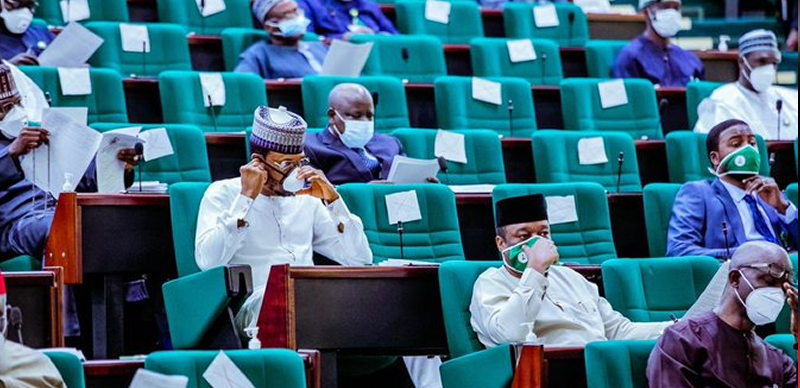
Reps to vote on State Police proposal tomorrow amid security push
Abstract
The Nigerian House of Representatives has advanced a critical constitutional amendment bill aimed at establishing state police, marking a significant legislative step towards decentralizing policing powers. This development comes amidst escalating insecurity across the nation, prompting renewed calls for a more localized and responsive security architecture. The proposed amendment seeks to revise key sections of the 1999 Constitution, moving policing from the Exclusive Legislative List to the Concurrent Legislative List, thereby empowering states to establish and operate their own police forces alongside the existing federal structure. This move is anticipated to enhance intelligence gathering, improve response times, and foster community policing, though it also raises complex legal and practical questions regarding funding, oversight, and potential for abuse of power by state authorities.
Introduction
Nigeria stands at a pivotal moment in its security and constitutional evolution, as the House of Representatives moves closer to a decisive vote on a constitutional amendment bill proposing the creation of state police. This legislative push, confirmed by House leaders, is a direct response to the nation's persistent and worsening security challenges, which include banditry, kidnapping, terrorism, and communal conflicts that have overwhelmed the centralized Nigeria Police Force (NPF). The proposed reform represents a fundamental shift from the current unitary policing system, enshrined in the 1999 Constitution, towards a decentralized model that proponents argue will bring law enforcement closer to the communities it serves, thereby improving effectiveness and accountability. This article delves into the legal framework surrounding this proposed amendment, examining its constitutional implications, the arguments for and against its implementation, and the critical considerations for legal practitioners as Nigeria contemplates this transformative change in its security architecture.
Background
The current policing structure in Nigeria is predominantly centralized, with the Nigeria Police Force (NPF) established as the sole national police force under Section 214(1) of the 1999 Constitution of the Federal Republic of Nigeria (as amended). This constitutional provision explicitly states that no other police force shall be established for the Federation or any part thereof, placing policing squarely on the Exclusive Legislative List, meaning only the National Assembly has the power to legislate on police matters. The historical roots of this centralized system can be traced back to the colonial era, where various regional police forces were eventually amalgamated in 1930 to form the Nigeria Police Force, primarily to serve colonial interests and maintain order, rather than protect the populace. Post-independence military regimes further solidified this centralization, abolishing regional police forces and consolidating power under the federal government.
Despite the enactment of the Nigeria Police Act 2020, which aimed to modernize the police service by embedding principles of accountability, transparency, and human rights, the fundamental centralized structure remained intact. However, the NPF, with an estimated strength of about 371,800 officers for a population exceeding 200 million, has been widely criticized for its inability to effectively address the diverse and localized security challenges across the country. This perceived inadequacy, coupled with issues of corruption, lack of trust, and human rights abuses, has fueled persistent calls from various stakeholders, including state governors, traditional rulers, and civil society organizations, for the establishment of state police as a more effective solution to Nigeria's security woes.
Analysis
The proposed constitutional amendment, titled "A Bill for an Act to Alter the Constitution of the Federal Republic of Nigeria 1999 to Provide for the Establishment of State Police; and for Related Matters (Sixth Alteration) Bill, 2026," represents a significant legal undertaking. For it to become law, it must pass through a rigorous constitutional amendment process, requiring a two-thirds majority vote in both the Senate and the House of Representatives, followed by ratification by at least two-thirds (24) of the 36 State Houses of Assembly, before receiving presidential assent. The bill specifically seeks to amend Sections 197, 214, and 215, among others, of the 1999 Constitution, crucially moving policing from the Exclusive Legislative List to the Concurrent Legislative List. This shift would legally empower state legislatures to enact laws establishing and regulating their own police forces.
The proposed two-tier policing structure envisions a Federal Police responsible for national security, interstate crimes, terrorism, and organized criminal networks, while State Police would handle localized security threats and maintain public order within their respective jurisdictions. To mitigate potential jurisdictional conflicts, the amendment outlines specific circumstances under which the Federal Police may intervene in state matters, such as a complete breakdown of law and order beyond the state police's capacity, a formal request for assistance from the governor, or when a state police force becomes inoperative due to administrative or financial challenges. The Federal Capital Territory (FCT) is proposed to remain under the exclusive jurisdiction of the Federal Police. The command structure would also be decentralized, with the Inspector-General of Police appointed by the President (on the advice of the National Police Council and National Assembly confirmation), and State Commissioners of Police appointed by governors (on the advice of the National Police Council and State House of Assembly confirmation). Governors would be empowered to issue lawful directives to their State Commissioners of Police on public safety and order.
However, the establishment of state police is fraught with complex challenges. A primary concern is funding, given the varying fiscal capacities of Nigerian states. Critics argue that many states already struggle to pay civil servant salaries and may lack the financial resources to adequately equip, train, and sustain a professional police force, potentially leading to poorly motivated personnel and increased corruption. Proposals for a dedicated funding mechanism, such as allocating three percent of the Federation Account to state police operations, have been put forward to address this. Another significant apprehension is the potential for abuse of power by state governors, who might weaponize state police against political opponents or for partisan purposes, echoing historical concerns from the First Republic. To counter this, the bill proposes safeguards including the establishment of independent State Police Service Commissions, federal oversight mechanisms, uniform national policing standards, strict constitutional procedures for the removal of state police leadership, and legislative confirmation of senior appointments.
Proponents, however, emphasize the compelling arguments for state police, citing improved local intelligence gathering, faster response times to emergencies, and the promotion of community policing through officers familiar with local terrain, language, and culture. They argue that decentralization would relieve the overstretched Federal Police, allowing it to focus on its core national mandate, and ultimately strengthen Nigeria's federal structure by ensuring a more equitable distribution of powers and responsibilities. Comparative federal systems, such as those in the United States, Canada, and Australia, demonstrate that decentralized policing can be effective when robust institutional safeguards, accountability mechanisms, and sustainable funding frameworks are in place. The success of this reform in Nigeria will heavily depend on the meticulous development and implementation of these crucial details, beyond merely altering the constitutional text.
Conclusion
The impending vote on the State Police proposal marks a critical juncture for Nigeria's security and federal system. While the House of Representatives has demonstrated overwhelming support, the journey to actualizing state policing is complex, requiring further legislative hurdles in the Senate and state assemblies, and meticulous planning for implementation. The success of this reform hinges not only on constitutional amendments but also on the establishment of robust, independent oversight bodies, transparent funding mechanisms, and clear jurisdictional boundaries to prevent abuse and ensure effective coordination between federal and state forces.
For legal practitioners, this development signals a significant shift in the legal landscape of law enforcement. They must prepare to navigate new legal frameworks, potential jurisdictional disputes, and an evolving body of human rights jurisprudence related to state policing. Monitoring the legislative process, particularly the details concerning funding, accountability, and the powers of state governors, will be crucial. The legal community has a vital role to play in advocating for robust safeguards and ensuring that the operationalization of state police genuinely serves the interests of public safety and justice, rather than becoming a tool for political manipulation. The coming months will reveal whether Nigeria can successfully decentralize its policing system to effectively address its pervasive security challenges while upholding democratic principles and the rule of law.
Citations
- 1.Constitution of the Federal Republic of Nigeria 1999 (as amended)
- 2.Nigeria Police Act 2020
- 3.Anadolu Ajansı (June 11 2026) Nigerian lawmakers approve constitutional amendment for state police
- 4.NALTF (June 11 2026) Reps pass State Police bill
- 5.Premium Times Nigeria (June 11 2026) UPDATED: Reps pass bill for establishment of state police
- 6.ICIR Nigeria (June 11 2026) Hope rises for state police as Reps approve constitutional amendment bill
- 7.Punch Newspapers (June 12 2026) State police closer as NASS defines federal, state powers
- 8.THISDAYLIVE (June 13 2026) Federal Authorities to Handle National Security, States to Control Local Policing
- 9.Vanguard News (June 16 2026) State police: We need constitutional safeguards against abuse —Shagari
- 10.Premium Times Nigeria (February 07 2026) Police Act 2020 reformed policing in Nigeria; citizens should know
- 11.AphriaPUB (November 05 2024) An examination of international instruments, the constitution, and other statutes governing the Nigeria police force
- 12.Legalnaija (September 25 2013) POWERS AND CONDUCT OF NIGERIAN POLICE
- 13.AphriaPUB (November 05 2024) NIGERIAN CENTRALIZED POLICE STRUCTURE AS AN ANTITHESIS OF COMMUNITY POLICING H.A. Ikedinma Department of Political Science, Obaf
- 14.Vanguard News (June 14 2026) Insecurity: Ex-VON DG urges dedication of 3% Federation Account to fund state police
- 15.Punch Newspapers (April 16 2024) State police: Police law amendment may take two years
- 16.AphriaPUB (June 27 2024) The Future Of State Police In Nigeria : A Focus On The Southeast
- 17.THISDAYLIVE (November 15 2020) History of Policing in Nigeria
- 18.Academia.edu (November 15 2020) HISTORY, CONTEXT AND CRISES OF THE POLICE IN NIGERIA1 Prof. Etannibi EO ALEMIKA Introduction Police are the most visible governm
- 19.Wikipedia (February 2026) Nigeria Police Force
- 20.BarristerNG.com (July 05 2025) Senate Admits Failure of Past Constitution Amendments, Calls for National Consensus on State Police, Power Devolution, and Governance Reform
- 21.Taylor & Francis (January 12 2026) Full article: Federalism and Policing in Nigeria: Colonial Continuities and Contemporary Complexities
- 22.Brickmans Law (June 18 2025) The Exclusive Legislative List and the Concurrent Legislative List – a case for restructuring or Constitutional defect?
- 23.The Guardian Nigeria News (April 12 2025) State police powers in the Nigerian constitution 1999 revealed
- 24.Nigerian Constitution (Second Schedule) Exclusive Legislative List
- 25.IDEAS/RePEc (July 14 2020) The Prospect of Local Policing Amid Security Breakdown in Nigeria
- 26.Walsh Medical Media (July 14 2020) Security Challenges and the Imperatives of State Police Eme, Okechukwu Innocent Email
- 27.Premium Times Nigeria (June 15 2026) Ex-VON DG Seeks 3% Of Federation Account For State Police
- 28.Punch Newspapers (June 12 2026) State police: Govs to bear more responsibility as N'Assembly passes bill
- 29.YouTube (January 24 2023) Towards the Implementation of Police Act, 2020
- 30.Constitute Project (1999) Nigeria 1999
- 31.Academia.edu (February 27 2026) Policing in Nigeria and the Role of Oversight: Towards Enhancing the National Security Framework in Nigeria
- 32.Stratfor (June 12 2026) Nigeria: Government Moves Toward State Police as Constitutional Amendment Clears House
- 33.BarristerNG.com (June 16 2026) COLUMN: State Police in Nigeria: Necessary Reform or Pandora's Box?
- 34.AphriaPUB (June 16 2026) THOUGHTS AND PERSPECTIVES ON POLICE FEDERALISM: CASE FOR STATE POLICE IN NIGERIA
- 35.Vanguard News (July 06 2025) SENATE: How state assemblies killed state police in Constitution amendments
- 36.PWAN (2020) Know Your Rights – A concise version of the Nigeria Police ACT 2020 in accordance with the Administrative Criminal Justice Act/Law
- 37.Senate (June 12 2026) Senate Advances State Police Bill, Sends Proposal to Constitution Review Committee
- 38.The Nigeria Police Force (2021) History of the Nigeria Police Force
- 39.Nigeria (June 04 2025) The Law on Police Use of Force
- 40.Dataphyte (February 27 2026) Operationalising State Police in Nigeria: Governance, Financing, and the Question of Trust
How does this affect your business?
Get an AI analysis of this article grounded in your jurisdictions, practice areas, and any policy documents you've uploaded to Wansom.