
Ruto cancelled Congo trip over ebola scare, Duale tells court
Abstract
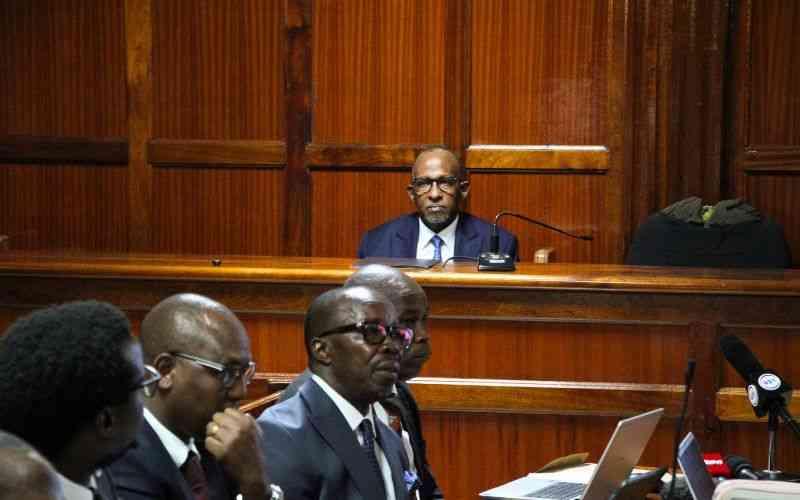
President William Ruto's planned visit to Congo-Brazzaville on May 26, 2026, was cancelled due to an Ebola scare, a revelation made by Health Cabinet Secretary Aden Duale in the Milimani High Court. Duale, appearing in a contempt of court mitigation hearing concerning an Ebola quarantine facility, stated that he advised the President against travel based on expert health advice, citing the mandatory 21-day quarantine Ruto would have faced upon return. This incident highlights the intricate balance between presidential diplomatic engagements, national security, and public health imperatives under Kenyan law. It underscores the executive's reliance on expert advice in managing public health crises and the judicial scrutiny that can arise even in matters touching on high-level state functions, particularly when public health protocols and court orders intersect.
Introduction
Fresh details have emerged regarding the cancellation of President William Ruto's planned presidential visit to Congo-Brazzaville on May 26, 2026. This information came to light during a High Court proceeding where Health Cabinet Secretary Aden Duale was appearing for mitigation after being found in contempt of court. Duale informed the Milimani High Court that the President's trip was shelved due to an Ebola outbreak in the region and the potential requirement for a mandatory 21-day quarantine upon his return to Kenya.
This incident provides a critical lens through which to examine the interplay of executive authority, public health policy, and national security in Kenya. The disclosure in a judicial setting, specifically during a contempt of court hearing related to a controversial Ebola quarantine facility, underscores the legal and constitutional frameworks that govern such high-level decisions. This article will delve into the statutory and doctrinal context surrounding presidential travel, public health emergencies, and the role of Cabinet Secretaries in advising the Head of State, offering insights for legal practitioners navigating similar complex scenarios.
The core thesis of this article is that while presidential prerogative in foreign affairs is significant, it is increasingly constrained and guided by domestic public health legislation, international health regulations, and the constitutional mandate for Cabinet Secretaries to provide professional advice. The judicial revelation of the cancellation demonstrates the accountability mechanisms, both direct and indirect, that apply to executive actions, even those seemingly purely diplomatic or national security-related.
Background
The legal framework governing presidential actions in Kenya is primarily rooted in the Constitution of Kenya, 2010. Article 132 outlines the functions of the President, which include receiving foreign diplomatic and consular representatives, and ensuring that the international obligations of the Republic are fulfilled through the actions of relevant Cabinet Secretaries. While the Constitution does not explicitly detail presidential foreign travel, such engagements fall under the broader executive functions and foreign policy objectives of the nation. Kenya's recently approved Foreign Policy 2024 further articulates the strategic objectives guiding the nation's international relations, including protecting sovereignty, promoting economic prosperity, and enhancing regional peace.
Crucially, the role of Cabinet Secretaries is defined by Article 153(2) of the Constitution, which mandates them to provide professional guidance to the President on matters falling within their dockets. This constitutional provision formed the basis of Health Cabinet Secretary Aden Duale's advice to President Ruto. The Public Health Act (Cap 242) is the primary statute governing public health administration in Kenya, empowering health authorities to take measures for preventing and suppressing infectious diseases, including provisions for isolation and quarantine. Furthermore, Kenya is a State Party to the International Health Regulations (2005) (IHR), a legally binding global framework that mandates countries to build and sustain core public health capacities for prevention, preparedness, detection, and response to public health emergencies, aiming to prevent the international spread of disease while avoiding unnecessary interference with international traffic and trade.
National security considerations, often intertwined with public health and foreign policy, are governed by the National Security Council Act, 2012, which elaborates on the functions of the National Security Council established under Article 240 of the Constitution. This Council is responsible for integrating domestic, foreign, and military policies relating to national security, providing a comprehensive approach to safeguarding the nation's interests, including against health threats.
Analysis
The revelation by Health Cabinet Secretary Aden Duale in the Milimani High Court on June 23, 2026, that President Ruto's Congo-Brazzaville trip was cancelled due to Ebola concerns, provides a compelling case study on the practical application of legal and policy frameworks in Kenya. Duale's testimony occurred during his mitigation after being found in contempt of court for allegedly continuing construction of an Ebola quarantine facility at Laikipia Airbase despite court orders. This context is vital, as it demonstrates how public health decisions, even those at the highest executive level, can become subject to judicial scrutiny, particularly when they intersect with other legal obligations or public interest litigation.
Duale explicitly stated that his advice to the President was given in line with Article 153(2) of the Constitution, which mandates Cabinet Secretaries to provide professional guidance. This highlights the constitutional duty of Cabinet Secretaries to offer expert counsel, even if it means advising against a presidential foreign engagement. The Public Health Act (Cap 242) provides the statutory basis for implementing measures such as quarantine to prevent the spread of infectious diseases. Sections of the Act empower health authorities to isolate individuals exposed to infection, a measure that would have applied to the President upon his return from an Ebola-affected region.
The decision to cancel the trip and subject the advance team to a 21-day quarantine aligns with Kenya's obligations as a State Party to the International Health Regulations (2005). The IHR emphasizes the need for proportionate public health responses to international disease spread, aiming to avoid unnecessary interference with international traffic while safeguarding public health. The government's actions, as described by Duale, reflect a commitment to these international standards and domestic public health laws, demonstrating a proactive approach to preventing disease importation.
This incident also touches upon the concept of executive prerogative in foreign affairs. While the President holds significant powers in international relations, as outlined in Article 132 of the Constitution, these powers are not absolute. They are implicitly balanced by the constitutional duties of Cabinet Secretaries and the overarching legal framework for public health and national security. The fact that the President accepted the advice and delivered his address virtually, and that his advance team underwent quarantine, underscores a deference to expert health advice and adherence to public health protocols, even for the highest office.
From a comparative law perspective, many jurisdictions grapple with similar challenges in balancing diplomatic travel with public health security during pandemics. The Kenyan scenario illustrates a robust application of domestic and international health regulations, demonstrating a willingness to prioritize national health security over high-profile diplomatic engagements. The court's role in this context, albeit indirectly through the contempt proceedings, serves as a reminder of the judiciary's ultimate oversight function over executive actions, particularly where fundamental rights or statutory compliance are at stake.
Conclusion
The cancellation of President Ruto's Congo-Brazzaville trip due to an Ebola scare, as revealed in court, offers valuable lessons for legal practitioners advising government entities and private clients on matters intersecting executive functions, public health, and international relations. It underscores the critical importance of adhering to the Public Health Act (Cap 242) and the International Health Regulations (2005) in managing cross-border health risks. Practitioners should note that even presidential travel is not immune to public health protocols, and expert advice from Cabinet Secretaries, grounded in constitutional mandates, plays a decisive role in such high-stakes decisions.
For attorneys, this case highlights the potential for judicial scrutiny of executive actions, even those related to foreign policy or national security, particularly when they involve compliance with domestic laws or court orders. The incident reinforces the need for robust legal and policy frameworks that allow for agile and responsible decision-making during public health emergencies, while maintaining accountability. Going forward, legal professionals should monitor developments in public health legislation and international health regulations, as well as the evolving jurisprudence on executive powers and judicial oversight, to effectively advise on the complex interplay of these critical areas of law. The emphasis on transparency and adherence to established protocols, even in the face of diplomatic pressures, remains paramount.
Citations
- 1.Constitution of Kenya, 2010
- 2.Public Health Act (Cap 242)
- 3.National Security Council Act, 2012
- 4.International Health Regulations (2005)
- 5.Kenya Foreign Policy 2024