
Rwanda and Israel Turn Shared History into New Education and Innovation Pact
Abstract
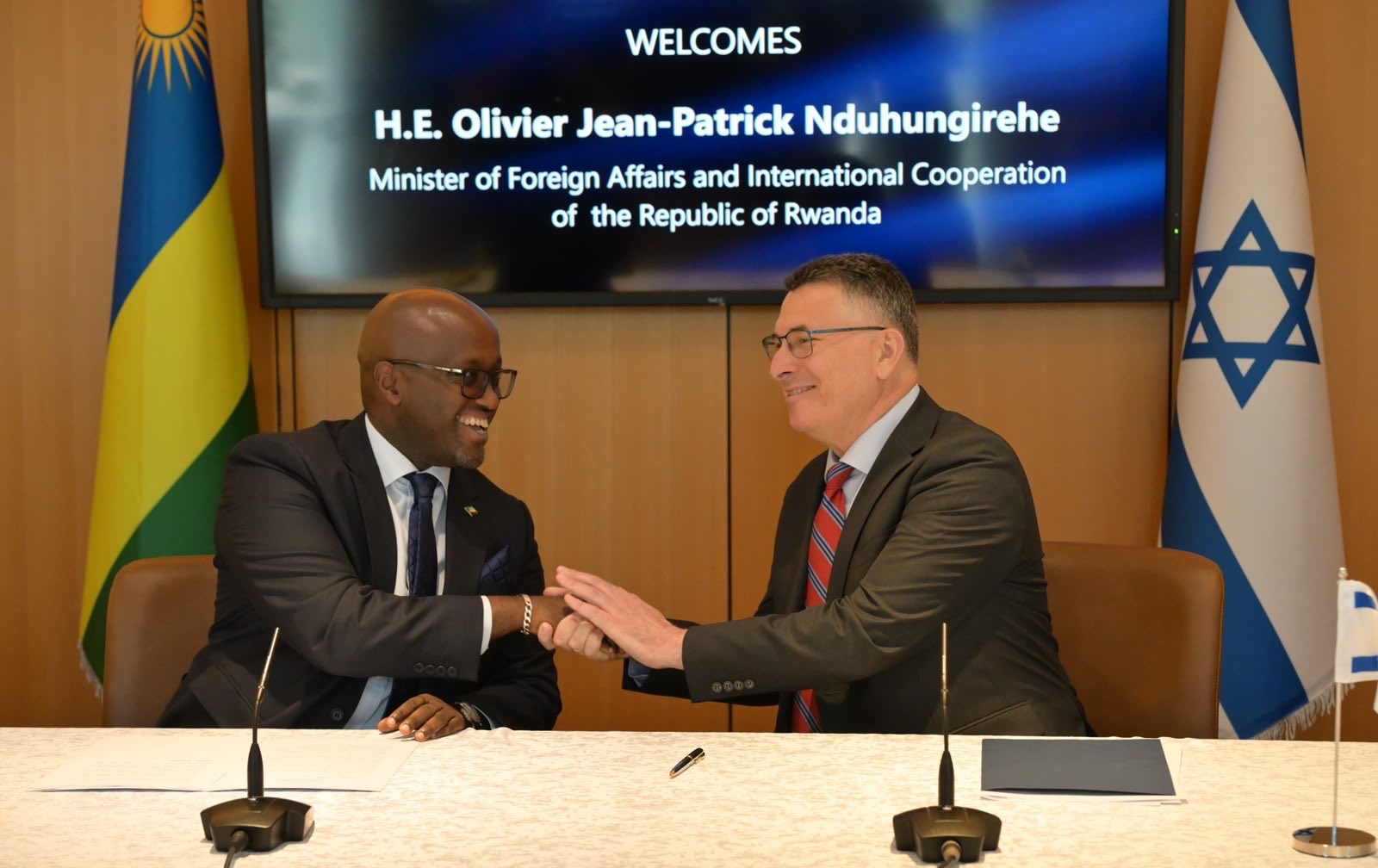
Rwanda and Israel have formalized a significant advancement in their bilateral relations by signing two pivotal agreements focused on education and development. Signed in Jerusalem on July 6, 2026, by Rwanda's Minister of Foreign Affairs and International Cooperation, Olivier Nduhungirehe, and Israel's Minister of Foreign Affairs, Gideon Sa'ar, these memoranda of understanding aim to transform a relationship historically rooted in shared experiences of resilience into a forward-looking partnership centered on innovation and human capital. The agreements specifically target cooperation in basic education, Information and Communication Technology (ICT), Technical and Vocational Education and Training (TVET), higher education, and scientific research. Additionally, a second MoU links Israel's international development agency, MASHAV, with the Rwanda Cooperation Initiative to bolster development programs and capacity building, signaling a strategic move towards fostering knowledge-based economies in both nations.
Introduction
In a significant diplomatic move, Rwanda and Israel have deepened their bilateral ties through the signing of two comprehensive agreements on education and development. The accords, inked in Jerusalem on July 6, 2026, by Rwandan Minister of Foreign Affairs and International Cooperation, Olivier Nduhungirehe, and his Israeli counterpart, Gideon Sa'ar, underscore a strategic shift in their relationship from one built on shared historical narratives to a future-oriented partnership focused on innovation, knowledge exchange, and the development of the next generation.
These agreements are poised to foster extensive collaboration across critical sectors, including basic education, ICT, vocational training, higher education, and scientific research. A separate memorandum of understanding also establishes a framework for development cooperation between Israel's international development agency, MASHAV, and the Rwanda Cooperation Initiative, aiming to enhance capacity building and development programs. This article will delve into the legal frameworks underpinning these agreements, analyze their implications for the education and innovation landscapes in both Rwanda and Israel, and discuss the broader context of international cooperation in these vital areas.
Background
Both Rwanda and Israel possess robust legal and policy frameworks governing their respective education and innovation sectors, which provide the foundation for such international collaborations. In Rwanda, the right to education is enshrined in Article 20 of its Constitution. The country's commitment to educational advancement is further articulated in its Education Sector Policy of 2015, the Education Sector Strategic Plan (2018-2024), and a new Education Law approved in 2020. For innovation, Rwanda's National Science, Technology and Innovation Policy, first published in 2005 and updated in 2020, aims to integrate science, technology, and research into national development. Institutions like the National Council for Science and Technology (NCST), established by an Act of Parliament in 2017, and the Rwanda Development Board (RDB), responsible for licensing and investment incentives, play crucial roles in this ecosystem. Furthermore, Rwanda's Intellectual Property Law of 2009 and its accompanying policy, approved in 2010, aim to create an environment where local innovations are protected and international technologies are optimally utilized for national prosperity.
Israel's educational system is governed by the Compulsory Education Law of 1949, which mandates schooling for children aged 3 to 17, and the State Education Law of 1953, which outlines the objectives and principles of state-provided education. In the realm of innovation, the Israel Innovation Authority (IIA), formerly the Office of the Chief Scientist, is a statutory authority established under the Law for the Encouragement of Industrial Research and Development, 1984 (the R&D Law). The IIA is tasked with promoting technological innovation and R&D to stimulate economic growth. Israel's AI Policy, published in December 2023, emphasizes "responsible innovation" and a sector-based regulatory approach, while the Protection of Privacy Law of 1981 (with Amendment 13 effective August 2025) provides a framework for data protection, particularly relevant for AI applications. Both nations are also signatories to international instruments, such as the Convention against Discrimination in Education, which Rwanda ratified in 1975 and Israel in 1961, underscoring their commitment to global educational standards.
Analysis
The recently signed agreements between Rwanda and Israel take the form of Memoranda of Understanding (MoUs), which, while generally less formal than treaties, establish significant political and moral commitments between the signatory states. The first MoU specifically targets cooperation in various educational tiers, from basic education to higher education and scientific research, alongside critical areas like ICT and TVET. This broad scope indicates a comprehensive approach to human capital development. The second MoU, linking MASHAV and the Rwanda Cooperation Initiative, focuses on practical development programs and capacity building, suggesting a hands-on approach to knowledge transfer and skill enhancement.
From a legal perspective, the domestic effect of these MoUs in both jurisdictions will largely depend on their incorporation into national law. In Israel, while the executive branch can sign international agreements, their full binding nature domestically, especially if requiring changes in existing laws or significant budgetary allocations, often necessitates ratification by the Knesset. Similarly, Rwanda's legal framework for international agreements would dictate the process for integrating these MoUs into its domestic legal system. The agreements align well with Rwanda's Vision 2050 and its Education Sector Strategic Plan, which prioritize building a knowledge-based economy and strengthening human capital. For Israel, the pacts resonate with its national innovation policy, which leverages international collaborations to maintain its technological leadership.
Several legal considerations will be paramount during the implementation phase. Collaboration in scientific research and innovation, for instance, will necessitate meticulously drafted intellectual property (IP) agreements to delineate ownership, usage rights, and benefit-sharing mechanisms, particularly given Israel's advanced innovation ecosystem and Rwanda's evolving IP landscape. Furthermore, any exchange of educational or research data, especially within ICT and AI initiatives, must strictly adhere to the data protection laws of both countries, including Israel's Protection of Privacy Law. Ensuring regulatory harmonization in areas such as curriculum standards and vocational training will also be crucial to facilitate seamless academic and professional exchanges. The success of these MoUs will ultimately hinge on the development of detailed legal instruments that address funding, accountability, and dispute resolution for joint projects, thereby translating political intent into tangible legal obligations and practical outcomes.
Conclusion
The education and innovation pact between Rwanda and Israel represents a forward-looking strategic partnership, leveraging shared histories of resilience to build a future focused on knowledge and technological advancement. These agreements are not merely symbolic; they lay the groundwork for concrete collaborations that promise to enhance human capital and foster innovation in both nations. The emphasis on basic education, ICT, TVET, higher education, and scientific research, coupled with direct development cooperation, signifies a comprehensive approach to sustainable growth.
For legal practitioners in Rwanda and Israel, these agreements open new avenues and present specific challenges. Lawyers will be instrumental in drafting the detailed implementation protocols, advising on complex intellectual property rights arising from collaborative research, ensuring compliance with evolving data protection laws, and structuring cross-border investment in educational and technological ventures. The need for expertise in international law, education law, intellectual property law, and technology law will be paramount. Practitioners should closely monitor the development of subsidiary agreements, funding mechanisms, and regulatory adjustments that will inevitably follow, as these will define the practical and legal landscape for future engagement and provide significant opportunities for legal advisory services in this burgeoning partnership.