
Rwanda Turns to Kenya for Petroleum Products, Sealing New Energy Agreement
Abstract
Rwanda has entered into a significant energy agreement with Kenya, marking a strategic pivot in its petroleum supply chain from Tanzania to Kenya. This landmark Government-to-Government (G2G) framework, comprising a Memorandum of Understanding, a Tripartite Agreement, and a Transport and Storage Agreement, will enable Rwanda to import bulk refined petroleum products through Kenya’s Northern Corridor. The shift is poised to enhance Rwanda’s energy security, streamline logistics, and reduce supply chain vulnerabilities, while simultaneously bolstering Kenya’s position as a regional petroleum logistics hub. This development carries substantial implications for regional trade dynamics, infrastructure utilization, and competition within the East African Community (EAC) framework, potentially influencing future energy cooperation and investment strategies among member states.
Introduction
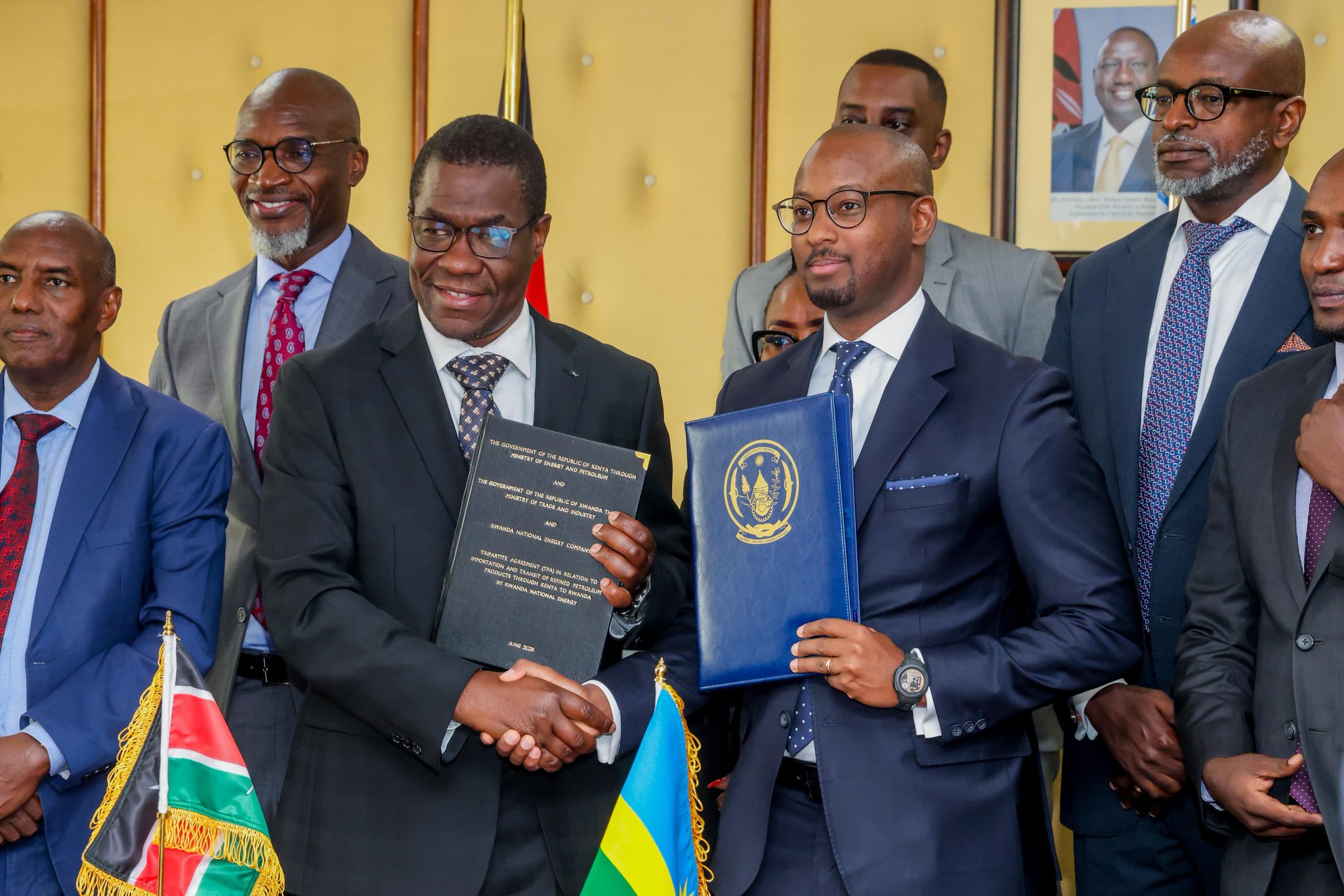
A pivotal shift in East Africa's energy landscape is underway, as Rwanda formally seals a comprehensive energy agreement with Kenya, redirecting its petroleum product imports from the traditional Tanzanian route. This strategic move, formalized through a suite of Government-to-Government (G2G) agreements signed on June 29, 2026, in Nairobi, establishes a new framework for Rwanda to leverage Kenya's robust port and pipeline infrastructure for its bulk refined petroleum needs.
The agreements, which include a Memorandum of Understanding, a Tripartite Agreement, and a Transport and Storage Agreement, are designed to enhance Rwanda's energy security, optimize supply chain efficiency, and mitigate logistical bottlenecks that have historically characterized its reliance on the Central Corridor via Tanzania. For Kenya, this development significantly reinforces its ambition to become the preeminent petroleum logistics hub in the East African region, promising a substantial increase in transit volumes through the Port of Mombasa and the Kenya Pipeline Company (KPC) network. This article delves into the legal and economic ramifications of this strategic realignment within the broader context of East African Community (EAC) integration and regional energy policy.
Background
The East African Community (EAC) operates under a foundational legal framework designed to foster regional economic integration, notably through the Protocol on the Establishment of the East African Customs Union, signed in 2004 and implemented in 2005, and the Protocol on the Establishment of the East African Community Common Market, which came into force in 2010. These protocols aim to liberalize intra-regional trade, eliminate non-tariff barriers, and promote the free movement of goods, persons, services, labour, and capital among member states. However, despite these overarching frameworks, the EAC currently lacks a unified common energy policy, with energy cooperation often pursued through bilateral agreements or regional strategies focused on specific aspects like renewable energy access.
Historically, landlocked Rwanda has predominantly relied on the Port of Dar es Salaam in Tanzania for the importation of its petroleum products, utilizing the Central Corridor. Tanzania's petroleum sector is primarily governed by the Petroleum Act, 2015, which repealed earlier legislation and regulates the importation, exportation, transportation, and distribution of petroleum products. The Port of Dar es Salaam has traditionally served several landlocked countries, including Rwanda, and has been undergoing significant expansion to boost its oil storage and handling capacity. Concurrently, Kenya's Port of Mombasa, a major gateway to East and Central Africa, boasts extensive petroleum handling facilities, including the Kipevu Oil Terminal (KOT), and is supported by the Kenya Pipeline Company (KPC), a state corporation (now partially privatized) responsible for transporting and storing petroleum products across the region. Rwanda's own energy policy, notably the 2025 Energy Policy, emphasizes sustainable development, energy security, and reducing vulnerability to global petroleum price fluctuations.
Analysis
The recent G2G energy agreement between Rwanda and Kenya represents a significant exercise of sovereign prerogative within the EAC framework, leveraging bilateral cooperation to address national energy security concerns. While the EAC Customs Union and Common Market Protocols promote regional trade liberalization, they do not preclude member states from entering into specific bilateral agreements that align with their strategic interests, provided such agreements do not contravene the broader community law. The nature of these G2G agreements, specifically the MoU, Tripartite Agreement, and Transport and Storage Agreement, suggests a structured approach to procurement, logistics, and infrastructure use, which is permissible under the principle of variable geometry within the EAC, allowing for different paces and forms of integration.
From a competition law perspective, the East African Community Competition Act, 2006, establishes the East African Community Competition Authority (EACA) to promote fair competition across the region. While the direct G2G nature of the agreement might be seen as a state-led initiative, its operationalization through entities like the Kenya Pipeline Company (KPC) – which, despite recent privatization, retains significant government influence – could raise questions regarding market access and fair competition for private sector players in the petroleum logistics chain. The substantial increase in projected volumes through the Northern Corridor (over tenfold) will undoubtedly impact the competitive landscape, potentially drawing business away from the Central Corridor and the Port of Dar es Salaam, which has been actively investing in its own capacity expansion.
Furthermore, the agreement highlights the ongoing strategic competition between the ports of Mombasa and Dar es Salaam for regional transit cargo. Tanzania's significant investment in its port infrastructure, aimed at reducing vessel turnaround times and increasing storage capacity, underscores its commitment to maintaining its regional hub status. Rwanda's decision, therefore, reflects a strategic evaluation of logistical efficiency, cost-effectiveness, and supply reliability offered by the Kenyan route. The legal implications extend to the need for seamless regulatory coordination between Kenya and Rwanda, particularly concerning customs procedures, transit fees, and quality control standards for petroleum products, to ensure the smooth implementation of the agreements and adherence to EAC trade facilitation principles. The Rwandan Law on Petroleum and Kenya's regulatory framework for KPC will be critical in governing the operational aspects of this new supply chain.
Conclusion
Rwanda's strategic pivot to Kenya for its petroleum product imports marks a significant development in East African regional trade and energy security. For practitioners, this signals a need to closely monitor the evolving dynamics of regional logistics and energy supply chains. Legal professionals advising clients in the energy, logistics, and trade sectors within the EAC must be acutely aware of these shifts, particularly regarding compliance with both national and EAC-level regulations, including competition law and trade protocols. The increased utilization of the Northern Corridor will likely spur further infrastructure development and investment opportunities in Kenya, while potentially necessitating a re-evaluation of business strategies for those historically reliant on the Central Corridor.
Looking ahead, it will be crucial to observe how this bilateral agreement influences broader EAC energy policy discussions and potentially catalyzes further regional infrastructure integration or, conversely, intensifies competition among member states for transit trade. Practitioners should anticipate potential regulatory adjustments, particularly in areas of customs, tariffs, and energy sector licensing, as the new framework becomes fully operational. The success of this G2G arrangement could serve as a blueprint for other landlocked EAC members seeking to diversify their supply routes, underscoring the importance of robust, well-structured bilateral agreements within the multilateral framework of the East African Community.
Citations
- 1.East African Community Competition Act, 2006
- 2.East African Community Competition (Merger and Acquisition notification fees) Regulations, 2024
- 3.East African Community Competition (Mergers and Acquisitions) Regulations 2025
- 4.East African Community Competition (Sharing of Mergers and Acquisitions Notification Fees) Regulations 2025
- 5.East African Community Competition Regulations 2010
- 6.Kenya Pipeline Company Limited was established on 6th September, 1973 under the Companies Act (CAP 486) of the Laws of Kenya
- 7.Law N°52/2018 modifying Law Nº 21/2011 Governing Electricity in Rwanda
- 8.Memorandum of Understanding (MoU)
- 9.Petroleum Act, Act No 4 of 2008 (Tanzania)
- 10.Petroleum Act, 2015 (Tanzania)
- 11.Prime Minister's Order determining RURA as regulatory authority for the trade of petroleum, petroleum products and its additional responsibilities
- 12.Protocol on the Establishment of the East African Common Market
- 13.Protocol on the Establishment of the East African Customs Union
- 14.Rwanda Energy Policy 2025
- 15.State Corporations Act (Cap 446) of 1986 (Kenya)
- 16.Transport and Storage Agreement (TSA)
- 17.Tripartite Agreement (TPA)
How does this affect your business?
Get an AI analysis of this article grounded in your jurisdictions, practice areas, and any policy documents you've uploaded to Wansom.