
SC holds no compensation under MV Act without causal link, Indian court rules
Summary
- Indian Supreme Court rules that compensation under Motor Vehicle Act requires a causal link between vehicle and alleged harm.
- Causal link must be proven to claim compensation; mere association or coincidence is not sufficient.
- Lawyers advising clients on MV Act claims must now establish a clear causal link between vehicle and alleged harm.
What Happened
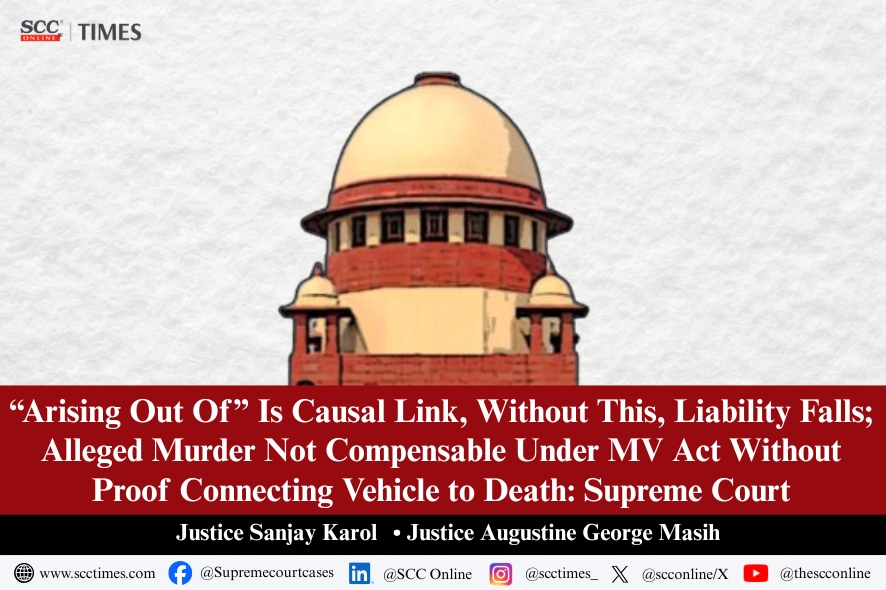
The court held that although the expression 'arising out of' receives a broad interpretation and compensation proceedings are governed by the standard of preponderance of probabilities, the existence of some link whatsoever between the car, and the death had to be established.
In a landmark ruling, the Indian Supreme Court has clarified that compensation under the Motor Vehicle Act (MV Act) cannot be claimed without establishing a causal link between the vehicle and the alleged harm. The court's decision was made in response to a case where a person was murdered by another individual who had used their car as a getaway vehicle. Despite the broad interpretation of the phrase 'arising out of', which is often used in MV Act cases, the court held that some link between the car and the death must be proven.
The court's ruling has significant implications for lawyers advising clients on potential compensation claims under the MV Act. They will now need to ensure that a clear causal link between the vehicle and the alleged harm is established, or risk having their claim dismissed.
Legal Context
The Motor Vehicle Act governs compensation proceedings in India, which are based on the standard of preponderance of probabilities. However, the court's ruling makes it clear that a causal link between the vehicle and the alleged harm is essential for claiming compensation under the MV Act. This means that mere association or coincidence will not suffice.
The court's decision is consistent with existing case law, which has emphasized the importance of establishing a causal link in MV Act cases. However, this ruling provides much-needed clarity on the issue and sets a precedent for future cases.
Why It Matters
This ruling has far-reaching implications for individuals seeking compensation under the Motor Vehicle Act. Without a clear causal link between the vehicle and the alleged harm, claims will be dismissed, leaving victims and their families without recourse. The court's decision also highlights the need for lawyers to carefully evaluate the evidence in each case and ensure that a causal link is established before proceeding with a claim.
The ruling also underscores the importance of establishing a clear causal link in MV Act cases, which will have implications for future cases and help prevent frivolous claims from being filed.
Practical Implications
This ruling means that Indian lawyers advising clients on potential compensation claims under the Motor Vehicle Act must now ensure that a clear causal link between the vehicle and the alleged harm is established, or risk having their claim dismissed.
Source
Source: Original reporting via SCC Times
How does this affect your business?
Get an AI analysis of this article grounded in your jurisdictions, practice areas, and any policy documents you've uploaded to Wansom.