
Senate rejects motion to probe ₦1.3 billion vote for so-called PFIPC in 2026 budget
Abstract
The Nigerian Senate recently rejected a motion to independently investigate a controversial ₦1.3 billion allocation to the purported Presidential Foreign Intervention Promotion Council (PFIPC) in the 2026 Appropriation Act. Despite widespread concerns regarding the entity's existence and the integrity of the budget process, the upper legislative chamber opted to defer to an ongoing investigation by the Independent Corrupt Practices and Other Related Offences Commission (ICPC), which was initiated by the Presidency. This decision has sparked debate among legal professionals and the public concerning the scope of parliamentary oversight, the separation of powers, and the mechanisms for ensuring accountability in public finance management. The Senate's stance implies a reliance on executive-led anti-corruption efforts, raising questions about the legislature's proactive role in scrutinising budgetary allocations and safeguarding public funds.
Introduction
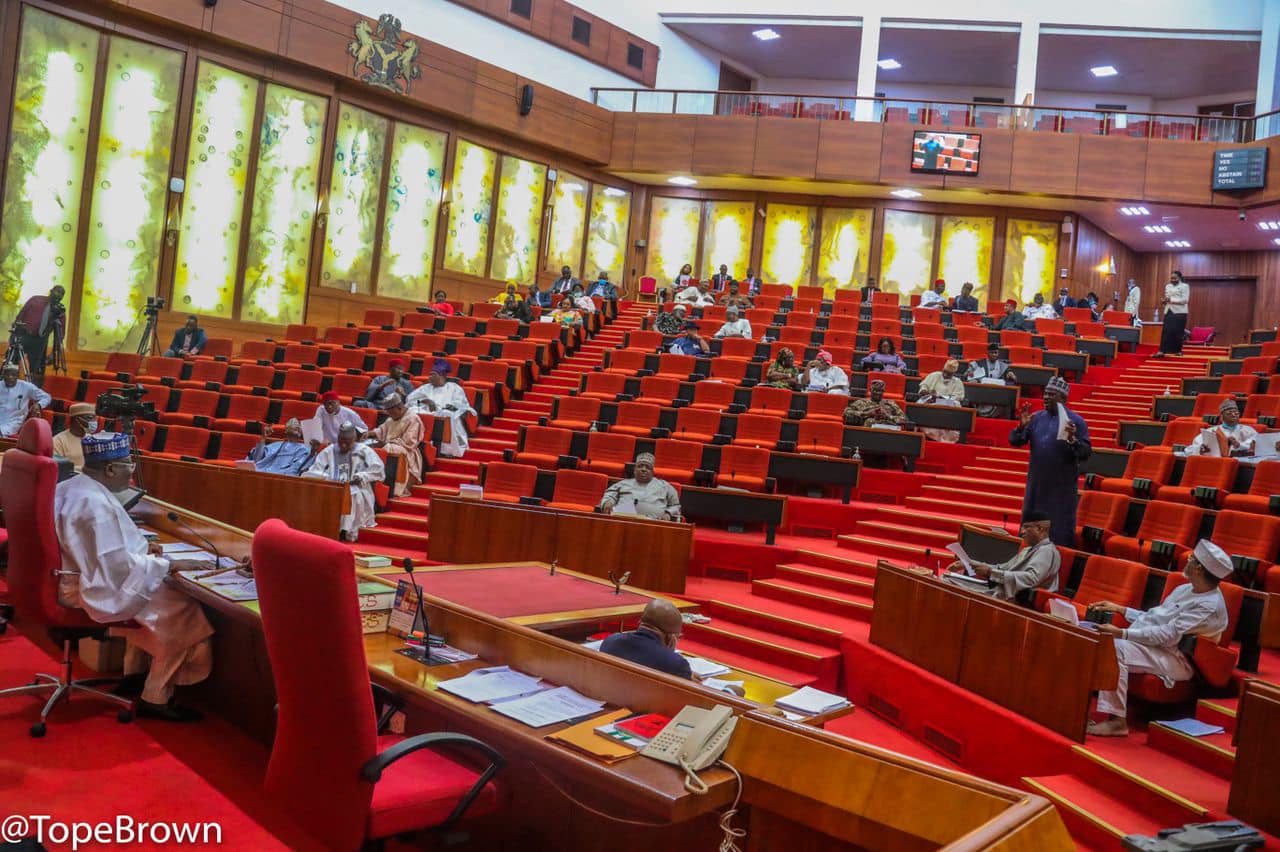
Nigeria's democratic governance framework is predicated on a system of checks and balances, with the National Assembly playing a crucial oversight role, particularly in the appropriation of public funds. A recent development, however, has brought this constitutional responsibility into sharp focus. The Nigerian Senate, on Wednesday, July 8, 2026, rejected a motion seeking to launch a legislative probe into a contentious ₦1.3 billion allocation earmarked for the so-called Presidential Foreign Intervention Promotion Council (PFIPC) in the 2026 national budget.
This decision, which saw the Senate opt to await the report of an investigation already initiated by the Presidency through the Independent Corrupt Practices and Other Related Offences Commission (ICPC), has ignited significant discussion within legal and governance circles. The controversy surrounding the PFIPC, an entity which the Presidency itself has reportedly disowned as non-existent, yet received a substantial budgetary allocation, underscores critical questions about budget integrity, transparency, and the effectiveness of institutional oversight. This article delves into the legal and practical implications of the Senate's deferral, examining the interplay between legislative oversight and executive anti-corruption mandates in Nigeria.
Background
The legal framework for public finance in Nigeria is primarily enshrined in the Constitution of the Federal Republic of Nigeria, 1999 (as amended). Sections 80 to 82 of the Constitution establish the Consolidated Revenue Fund and mandate that no money can be withdrawn from it without parliamentary authorisation through an Appropriation Act. The National Assembly, comprising the Senate and the House of Representatives, is vested with the "power of the purse," meaning it approves budgets via joint committees on finance and appropriations and conducts oversight through sector committees.
Beyond appropriation, Sections 88 and 89 of the 1999 Constitution empower the National Assembly to conduct investigations into any matter or thing with respect to which it has power to make laws, or to expose corruption, inefficiency, or waste in the execution or administration of laws. This broad investigative power is a cornerstone of legislative oversight. Complementing this, the Independent Corrupt Practices and Other Related Offences Commission (ICPC), established by the Corrupt Practices and Other Related Offences Act 2000, is a key anti-corruption agency. Its mandate includes receiving and investigating reports of corruption, prosecuting offenders, and examining corruption-prone systems in public bodies. The current controversy arises from the alleged allocation of ₦1.3 billion to the PFIPC in the 2026 budget, an entity that the Presidency has publicly stated does not exist.
Analysis
The Senate's decision to reject a motion for an independent legislative probe, choosing instead to await the ICPC's report, presents a complex interplay of constitutional powers and practical governance. While the ICPC is a statutory body with a clear mandate to investigate corruption, its investigation in this instance was initiated by the Presidency, the executive arm of government. This raises questions about the independence and comprehensiveness of an investigation into a budgetary anomaly that implicates the executive's budget formulation process and the legislature's approval process.
The National Assembly's constitutional powers under Sections 88 and 89 are expansive, allowing it to summon persons and procure evidence for the purpose of exposing corruption. The inclusion of a purportedly non-existent entity like the PFIPC with a ₦1.3 billion allocation in the Appropriation Act, which the National Assembly itself passed, points to a potential breakdown in legislative scrutiny during the budget approval stage. By deferring to the ICPC, the Senate might be perceived as abdicating its primary oversight responsibility to independently investigate how such a significant anomaly bypassed its own internal checks and balances.
Furthermore, while the ICPC's role is crucial, its focus is primarily on criminal investigation and prosecution. A parliamentary probe, on the other hand, could delve into systemic failures in the budget preparation and approval process, identify administrative lapses, and recommend legislative reforms to prevent future occurrences, which might fall outside the typical scope of a criminal investigation. The argument that no formal petition was submitted to the Senate, as cited by some lawmakers, or that the matter is sub judice, appears to be a secondary justification, as the core reason for rejection was the ongoing ICPC investigation. However, the very public nature of the controversy, with the Presidency disowning the entity, could arguably serve as sufficient grounds for the Senate to initiate its own inquiry to uphold its integrity and constitutional mandate.
The risk associated with this deferral is that the ICPC report, while valuable, may not fully address the systemic issues within the legislative budget process itself. If the executive-initiated investigation focuses solely on individual culpability, the broader institutional weaknesses that allowed a 'fake' entity to receive funding in the national budget might remain unaddressed. This could undermine public confidence in both the budgetary process and the National Assembly's oversight functions.
Conclusion
The Senate's decision to defer its probe into the ₦1.3 billion allocation for the 'so-called PFIPC' to the ICPC highlights a critical juncture in Nigeria's accountability framework. While cooperation between arms of government is essential, the unique nature of this controversy—where an allegedly non-existent entity received substantial budgetary allocation—demands robust and independent legislative scrutiny. Legal practitioners must keenly observe the outcome of the ICPC investigation, particularly its scope and recommendations, to assess whether it adequately addresses both criminal culpability and systemic governance failures.
For legal professionals advising public institutions or engaging in public interest litigation, this incident underscores the importance of advocating for greater transparency and accountability in the budget process. It also reinforces the need for the National Assembly to assert its constitutional oversight powers proactively, even when executive agencies are involved. Future developments will reveal whether this deferral strengthens or weakens the institutional checks and balances designed to safeguard public funds and uphold the integrity of Nigeria's democratic governance. Practitioners should remain vigilant for any legislative responses or reforms that may emerge following the ICPC's findings, as these could significantly impact public financial management and anti-corruption efforts.
Citations
- 1.Constitution of the Federal Republic of Nigeria, 1999 (as amended)
- 2.Corrupt Practices and Other Related Offences Act 2000
- 3.Independent Corrupt Practices and Other Related Offences Commission (ICPC) website
- 4.Premium Times Nigeria, 'Senate rejects motion to probe ₦1.3 billion vote for so-called PFIPC in 2026 budget', July 8, 2026
- 5.Punch Newspapers, 'Why lawmakers can't intervene in PFIPC budget scandal - Senate', July 7, 2026
- 6.P.M. News, 'Editorial: The PFIPC controversy cannot be swept aside', July 6, 2026
- 7.The Sun Nigeria, 'BREAKING: PFIPC: Senate adopts motion on Presidency scandal, vows probe after ICPC report', July 8, 2026
- 8.The Whistler Newspaper, 'Senate Blocks Motion To Probe N1.3bn PFIPC Budget Scandal', July 8, 2026
- 9.THISAGE, 'Fearing Embarrassment, Senate Rejects PFIPC Budget Probe, Supports Tinubu's ICPC Investigation', July 8, 2026
- 10.YouTube, 'Non-Existent' PFIPC Gets ₦1.3 Billion Allocation in 2026 Budget - YouTube', July 1, 2026