
Senator Seriake Dickson — NG Legal Update
Abstract
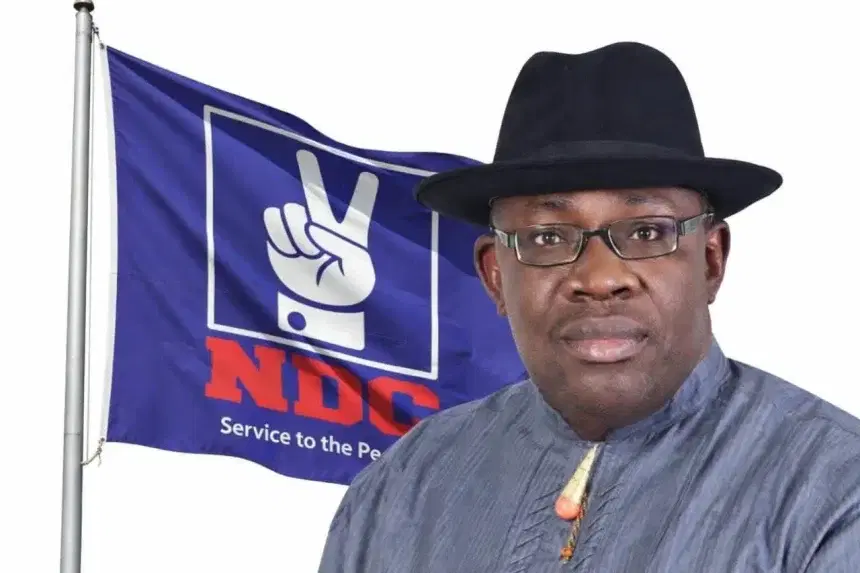
The Federal High Court in Lokoja recently set aside its earlier judgment that had directed the Independent National Electoral Commission (INEC) to register the Nigeria Democratic Congress (NDC) as a political party. This decision, delivered by Justice Isah Dashen, was predicated on the finding that the initial judgment was constitutionally defective due to the non-joinder of the Peace Movement Party (PMP), which claimed ownership of the logo used by the NDC. The ruling effectively nullifies all actions taken pursuant to the December 2025 judgment and restores the status quo. Despite this, Senator Seriake Dickson, a national leader of the NDC, insists the party remains validly registered and has vowed to challenge the court's decision at the Court of Appeal, arguing that the initial judgment had been fully complied with and the window for appeal had closed.
Introduction
The landscape of Nigeria's multi-party democracy has once again been stirred by a significant judicial pronouncement concerning the registration status of a political entity. The Federal High Court sitting in Lokoja, Kogi State, recently delivered a ruling that set aside its own earlier judgment, which had compelled the Independent National Electoral Commission (INEC) to register the Nigeria Democratic Congress (NDC) as a political party. This development has ignited a fresh legal battle, with the NDC asserting the continued validity of its registration and declaring its intention to appeal the decision.
This article delves into the intricacies of the Lokoja Federal High Court's ruling, examining the legal grounds for setting aside a judgment and its immediate implications for the NDC. It further explores the broader context of political party registration and deregistration in Nigeria, drawing on constitutional provisions, electoral laws, and relevant judicial precedents. The ongoing dispute highlights critical questions regarding due process, the finality of court judgments, and the regulatory powers of INEC, all of which are pivotal to the integrity of the nation's electoral system, especially as the 2027 general elections draw closer.
Background
The registration and regulation of political parties in Nigeria are governed primarily by the Constitution of the Federal Republic of Nigeria, 1999 (as amended), and the Electoral Act, 2022. Section 40 of the Constitution guarantees the right to freedom of association, which forms the bedrock for the formation of political parties. However, this right is not absolute, as Sections 221 to 229 of the Constitution, along with the Electoral Act, stipulate stringent conditions that political associations must meet to be registered and to continue functioning as political parties.
INEC is the statutory body empowered to register political associations as parties and also to deregister them if they fail to meet prescribed requirements. Section 225A of the 1999 Constitution (as amended) specifically grants INEC the power to deregister political parties, particularly for failing to win elections or secure a certain percentage of votes. This power has been consistently affirmed by the Supreme Court, notably in cases such as *National Unity Party (NUP) v. Independent National Electoral Commission (INEC)*, where the apex court upheld INEC's deregistration of numerous parties for their inability to meet electoral performance thresholds. The Electoral Act 2022 (and subsequent amendments) further details the procedural aspects of party registration, including timelines and conditions, and has seen changes such as the removal of 'deemed registration' and increased administrative fees.
Analysis
The recent ruling by the Federal High Court in Lokoja, presided over by Justice Isah Dashen, represents a significant turn in the legal status of the Nigeria Democratic Congress (NDC). The court set aside its own judgment of December 10, 2025, which had previously ordered INEC to register the NDC. The primary ground for this reversal was the court's finding that the earlier judgment was "constitutionally defective" due to the non-joinder of the Peace Movement Party (PMP). The PMP had applied to the court, asserting that the NDC's registration was based on a logo that the PMP had previously submitted to INEC, making the PMP a necessary party whose rights were adversely affected by the initial judgment.
Justice Dashen's ruling effectively nullified all actions taken in reliance on the December 2025 judgment, including the recognition of the NDC and the issuance of its certificate of registration, and ordered a restoration of the status quo ante. The substantive suit is now slated for a fresh hearing, with INEC, PMP, and NDC all joined as parties. This emphasizes the fundamental principle of fair hearing, which dictates that all parties whose rights or obligations may be affected by a judicial decision must be given an opportunity to be heard.
However, the NDC, through its national leader Senator Seriake Dickson and National Chairman Moses Zuwoghe, has vehemently rejected the ruling, insisting that the party remains validly registered. They argue that the December 2025 judgment had been fully complied with by INEC, leading to the party undertaking extensive political activities, including membership registration, congresses, conventions, and primaries. The NDC contends that the window for appealing the original judgment had closed, and that attempting to overturn it via a motion by an allegedly unregistered association (PMP) constitutes an abuse of court process. This argument raises questions about the finality of judgments and the procedural avenues available for challenging decisions where a necessary party was initially omitted. While the Supreme Court has affirmed INEC's power to deregister parties, it has also, in some instances, considered the process of deregistration, emphasizing adherence to due process.
The broader context of this legal tussle cannot be ignored. There have been increasing concerns about attempts to deregister opposition parties ahead of the 2027 general elections, with some observers viewing such judicial interventions as potentially narrowing Nigeria's multi-party democratic space. INEC itself has, in other instances, opposed moves by external bodies to deregister parties, asserting that its powers are strictly governed by law and not susceptible to political pressure. The NDC's decision to appeal the Lokoja ruling to the Court of Appeal will undoubtedly test these principles further, particularly concerning the balance between judicial review, party autonomy, and INEC's regulatory mandate.
Conclusion
The Federal High Court's decision to set aside its earlier judgment recognising the Nigeria Democratic Congress (NDC) as a political party creates immediate uncertainty for the party and its stakeholders. While the ruling underscores the judiciary's commitment to the principle of fair hearing and the inclusion of all necessary parties in litigation, it simultaneously plunges the NDC into a renewed legal battle over its fundamental right to exist as a political platform. The restoration of the status quo ante means that, for now, the NDC's registration is effectively nullified, halting its political activities that had commenced in reliance on the earlier judgment.
Practitioners should closely monitor the NDC's appeal to the Court of Appeal, as the outcome will have significant implications for electoral jurisprudence in Nigeria. The appellate court's decision will likely clarify the interplay between the finality of judgments, the doctrine of necessary parties, and the procedural integrity of political party registration processes. This case, alongside other ongoing challenges to opposition parties, highlights the critical role of the judiciary in safeguarding Nigeria's multi-party democracy and ensuring that the regulatory powers of INEC are exercised within the confines of the law, free from undue influence, especially as the nation prepares for the 2027 general elections.
Citations
- 1.Constitution of the Federal Republic of Nigeria, 1999 (as amended)
- 2.Electoral Act, 2022
- 3.National Unity Party (NUP) v. Independent National Electoral Commission (INEC)
How does this affect your business?
Get an AI analysis of this article grounded in your jurisdictions, practice areas, and any policy documents you've uploaded to Wansom.