
Six Homebuyers Take Noah Real Estate to Court
Abstract
Six homebuyers have initiated a significant lawsuit against Noah Real Estate Plc at the Federal High Court in Ethiopia, seeking 50 million Birr for alleged breaches related to undelivered apartments in the Noah Victory tower. The core of the dispute centers on the developer's practice of charging buyers for common areas subsequently added to title deeds by the municipal Land Bureau and the application of a contractual 10% tolerance margin for price adjustments based on final land registration. This case highlights critical issues of consumer protection, contractual interpretation, and regulatory oversight within Ethiopia's rapidly evolving real estate sector, particularly concerning off-plan property sales and developer accountability for project delays and cost variations.
Introduction
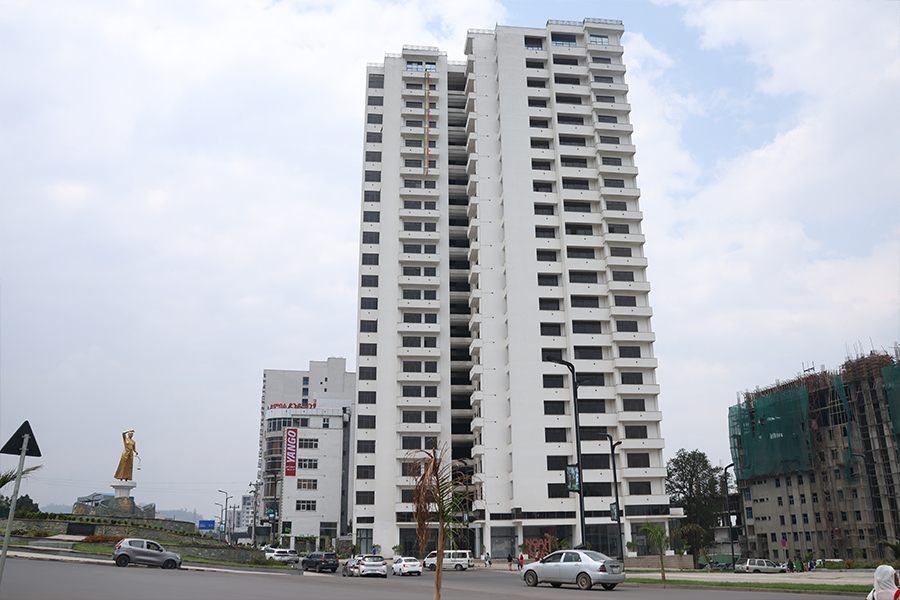
A pivotal legal battle has commenced in Ethiopia's Federal High Court, where six aggrieved homebuyers are suing Noah Real Estate Plc for 50 million Birr. The dispute stems from the protracted delay in the delivery of apartments in the 19-storey Noah Victory tower, a project that reportedly took six years to complete, significantly exceeding its initial 36-month timeline. This lawsuit is not merely a private contractual disagreement; it casts a spotlight on broader systemic challenges within the Ethiopian real estate market, including developer accountability, the adequacy of consumer protection mechanisms, and the interpretation of contractual terms in the face of regulatory changes and market fluctuations.
The case's central contentions revolve around Noah Real Estate's alleged practice of charging buyers for common areas that were later incorporated into title deeds by the municipal Land Bureau, and the developer's reliance on a contractual clause permitting a 10% tolerance margin for upward price adjustments tied to final land registration. The failure of court-referred mediation underscores the complexity and high stakes involved, pushing the matter towards a formal judicial hearing. This article will delve into the relevant Ethiopian legal framework, analyze the potential arguments and implications of this case, and offer insights for legal practitioners navigating the intricacies of real estate development and consumer rights in the country.
Background
Ethiopia's real estate sector operates within a unique and evolving legal landscape, primarily governed by the 1960 Civil Code, as there has historically been no single, comprehensive real estate law. The Civil Code distinguishes between a contract for the sale of an existing immovable property and a contract for the construction of a property that does not yet exist. Article 2876 of the Civil Code classifies an undertaking to deliver a house or flat that is not yet extant as a "contract of work and labour relating to immovables," rather than a contract of sale. This distinction is crucial, as it dictates which specific provisions of the Civil Code apply, with Title XVIII (Articles 3019–3040) governing construction contracts.
Formal requirements for real estate transactions are stringent. Article 1723(1) of the Civil Code mandates that contracts creating or assigning rights in immovable property must be in writing and registered with a court or notary to be legally effective. However, for off-plan construction contracts, while a detailed written agreement is essential for evidentiary purposes, notary authentication may not be strictly required for validity, a point clarified by the Federal Supreme Court in Cassation Case No. 32222. Furthermore, all land in Ethiopia is constitutionally owned by the state and the people, with individuals and entities obtaining land use rights through leasehold arrangements.
In recent years, recognizing the need for enhanced regulation and consumer protection, Ethiopia has introduced new legislation. The Trade Competition and Consumers Protection Proclamation No. 813/2013, which came into force in 2014, provides a general framework for consumer rights and fair trade practices applicable to businesses offering services in Ethiopia. More specifically, a new "Real Estate Development and Real Property Marketing and Valuation Proclamation" was enacted (likely in 2024 or 2025), aiming to introduce stricter rules for pre-sale transactions and developer obligations. This new framework includes provisions requiring developers to secure land ownership and construction permits before collecting payments, mandating the use of secured bank accounts for client funds, and restricting property transfers before 80% completion, unless explicitly consented to by the buyer.
Analysis
The lawsuit against Noah Real Estate presents a multifaceted legal challenge, drawing upon principles of contract law, consumer protection, and the specific nuances of real estate development in Ethiopia. The homebuyers' claims of undelivered apartments and the developer's alleged overcharging for common areas, coupled with the significant delay in project completion, directly engage the provisions of the Civil Code concerning contractual performance and remedies. Under the Civil Code, a party's failure to perform its contractual obligations, or performing them defectively, can lead to claims for specific performance, damages, or contract termination. Given that the Noah Victory tower project took six years instead of the promised 36 months, the homebuyers likely have strong grounds for claiming damages due to delay.
The dispute over charging for common areas and the 10% tolerance margin for price adjustments will require careful scrutiny of the original contracts. While developers often include clauses for price adjustments, their enforceability depends on clarity, fairness, and adherence to good faith principles. The new Real Estate Development and Real Property Marketing and Valuation Proclamation, though potentially applying primarily to future developments, sets a benchmark for acceptable developer conduct by prohibiting misleading advertisements and requiring transparency. This legislative intent to protect buyers against opaque practices could influence judicial interpretation of older contracts.
A highly relevant precedent is the 2013 Federal High Court case involving May Real Estate Development Plc, where the court ordered the developer to refund 24 million Birr to 28 clients for delayed delivery and unauthorized price increases. Crucially, the court in that case rejected the developer's force majeure defense based on price increments and inability to perform, stating that price fluctuations are normal in business. While the court did not compel specific performance (completion of construction) or transfer of the site to the buyers, it ordered a refund with interest and additional costs for completion. This suggests that while specific performance might be difficult to obtain, substantial monetary remedies, including compensation for completion costs, are within the court's purview.
Furthermore, the Trade Competition and Consumers Protection Proclamation No. 813/2013 offers a legal avenue for addressing unfair trade practices and protecting consumer rights. Homebuyers could argue that the prolonged delays, unexpected charges for common areas, and the alleged unilateral application of price adjustments constitute unfair practices. The fact that formal court-referred mediation failed indicates the depth of disagreement and the parties' inability to find a common ground outside of judicial determination. The Federal Supreme Court Cassation Division's interpretations are binding on lower courts, providing a degree of predictability in the application of laws, particularly concerning land rights and contractual matters.
Conclusion
The lawsuit against Noah Real Estate Plc serves as a critical test case for consumer protection and developer accountability in Ethiopia's burgeoning real estate market. For legal practitioners, this case underscores the paramount importance of meticulously drafted real estate contracts, particularly for off-plan sales, which must clearly define delivery timelines, pricing mechanisms, and provisions for common areas. The outcome will likely influence how developers structure their agreements and how courts interpret existing contractual clauses in light of evolving regulatory standards and consumer expectations.
Practitioners should advise clients, both developers and homebuyers, to conduct thorough due diligence, understand the distinction between contracts of sale and contracts of work and labor, and be aware of the implications of the new Real Estate Development and Real Property Marketing and Valuation Proclamation, even if its full retroactive application remains to be clarified. The *May Real Estate* precedent suggests that courts are willing to grant significant monetary relief for contractual breaches and delays, even if specific performance is not always ordered. As Ethiopia continues to refine its real estate legal framework, vigilance regarding new regulations and judicial interpretations will be essential for safeguarding interests and promoting a more transparent and accountable housing market.
Citations
- 1.Civil Code of Ethiopia of 1960
- 2.Trade Competition and Consumers Protection Proclamation No. 813/2013
- 3.Federal Courts Proclamation No. 454/2005
- 4.Federal Courts Proclamation No. 1234/2021
- 5.Addis Fortune, "Six Homebuyers Take Noah Real Estate to Court" (July 5, 2026)
- 6.Addis Fortune, "Parliament Passes Sweeping Real Estate Law to Regulate Distressed Property Market" (undated, likely 2024 or 2025)
- 7.Addis Fortune, "Real Estate's Misconduct Harms Homebuyers" (July 4, 2026)
- 8.Addis Fortune, "flushed with trouble" (April 6, 2025)
- 9.Addis Fortune, "Buyers Air Grievances Over Incomplete Homes Delivered By Noah, Adey Abeba" (June 8, 2024)
- 10.Ethiopian Legal Information Portal, "Court Rules May Real Estate to Pay 24m Br" (January 29, 2013)
- 11.Shega Media, "As Ethiopia Tightens Real Estate Rules, Developers Embrace Arbitration" (January 22, 2026)
- 12.YouTube, "Understanding Ethiopian Real Estate Law – A Comprehensive Guide for Property Buyers" (April 18, 2026)
- 13.YouTube, "Ethiopian Immovable Property Sales and Contracts: Core Principles and Legal Framework" (July 6, 2025)
- 14.YouTube, "Immovable Property Contracts | Ethiopian Civil Code Art. 1723 Explained" (June 7, 2026)
- 15.YouTube, "New Real Estate Regulation in Ethiopia: Pre-Sale Rules and Developer Obligations Explained" (October 12, 2024)
- 16.Dablo Law Firm, "Issues in Real Estate Pre-Sale Agreements in Ethiopia" (July 15, 2024)
- 17.Link to Justice Law Office, "A NEW ERA FOR REAL ESTATE IN ETHIOPIA" (September 28, 2025)
- 18.Medium, Hawi Dadhi, "Ethiopian real estate and construction laws" (February 18, 2018)
- 19.Record Of Law, "Ethiopian Federal Cassation Decision No. 1105491 A case about Land Holding rights and Sale of Land" (September 5, 2025)