
South Africa's Top Court Rules Edgar Lungu Will Be Buried in South Africa, Hands Victory to Family
Abstract
South Africa's Supreme Court of Appeal (SCA) has delivered a landmark ruling affirming the primacy of family autonomy and the deceased's wishes in burial disputes, even when a foreign state asserts a claim. The court overturned a High Court decision that would have allowed the Zambian government to repatriate the remains of former President Edgar Lungu for a state funeral in Lusaka. The SCA held that in the absence of a binding agreement, the constitutional rights to dignity, privacy, and family autonomy of the deceased's family outweighed the state's interest in determining burial arrangements, thereby granting the family the right to bury Lungu in South Africa as per his stated wishes. This judgment clarifies the legal hierarchy in such sensitive matters, particularly in a cross-border context.
Introduction
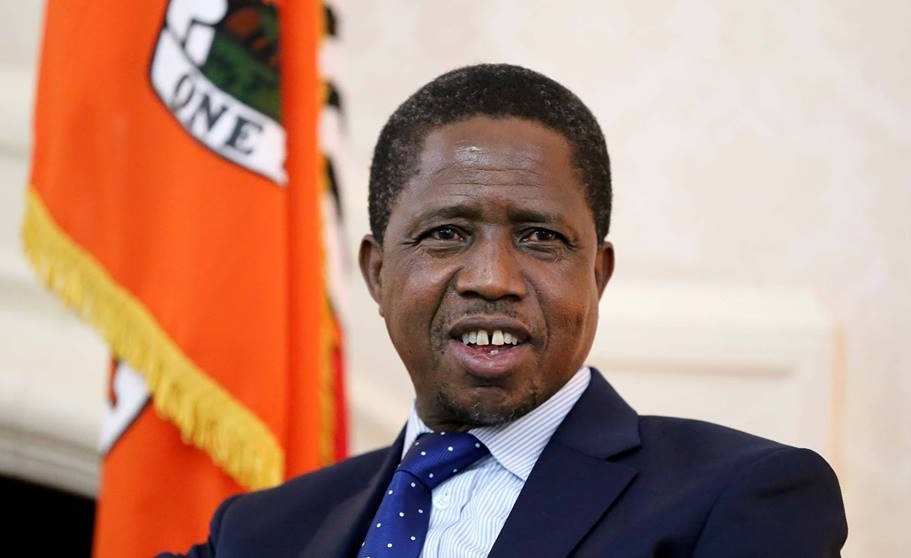
In a highly anticipated decision with significant implications for both private and international law, South Africa's Supreme Court of Appeal (SCA) has ruled that former Zambian President Edgar Lungu will be buried in South Africa, handing a decisive victory to his family. This judgment overturns an earlier High Court ruling that would have compelled the repatriation of his remains to Zambia for a state funeral. The SCA's decision underscores the robust protection afforded to individual and family rights concerning the disposal of a deceased person's remains under South African law, even when confronted with claims from a sovereign state.
The dispute arose following President Lungu's passing in South Africa, with his family asserting his wish to be interred locally, explicitly to avoid involvement from his political rival and successor, President Hakainde Hichilema. Conversely, the Zambian government sought to repatriate the body for a state funeral in Lusaka. The SCA's pronouncement clarifies the legal framework governing burial rights, particularly in complex scenarios involving foreign nationals and competing state interests, reaffirming the paramountcy of the deceased's wishes and the family's autonomy.
Background
The legal framework governing the disposal of human remains in South Africa is primarily rooted in common law, supplemented by statutory provisions and constitutional principles. While a deceased person no longer possesses legal rights, the law protects their body and regulates its disposal based on the rights of the living, particularly the feelings and dignity of the family and community. The common law position dictates that the right to attend to a deceased person's funeral and determine the place of burial generally vests in the person nominated by the deceased, whether through a will or even verbally.
In the absence of such a nomination, this right typically devolves upon the deceased's heirs. South African courts have consistently upheld this principle, recognising the surviving spouse as often having the primary authority, especially in intestate successions, over other family members like children or parents. Statutory instruments, such as the Administration of Estates Act 66 of 1965, govern the broader administration of deceased estates, including the appointment of an executor who is responsible for carrying out the deceased's testamentary instructions. Furthermore, the National Health Act 61 of 2003 and its Regulations Relating to the Management of Human Remains (R.363 of 22 May 2013) provide detailed regulations concerning the handling, transportation, and disposal of human remains, including requirements for burial orders and permits for cross-border movement.
Analysis
The SCA's decision to allow former President Lungu's burial in South Africa hinged on a critical interpretation of common law principles and constitutional rights. The High Court had initially sided with the Zambian government, reasoning that it could not bar a sovereign state from repatriating one of its own citizens. However, the SCA found this approach to be flawed.
Central to the SCA's reversal was the emphasis on the deceased's expressed wishes and the family's constitutional rights to dignity, privacy, and family autonomy. Judge Raylene Keightley, delivering the judgment, noted that the Zambian government's failure to establish a right under either common law or contract to override the family's burial decision was fatal to its case. This aligns with established South African jurisprudence, where the deceased's wishes, even if expressed informally, are given significant weight. Cases such as *Human v Human 1975 (2) SA 251 (E)* and *Saiid v Schatz and Another 1972 (1) SA 491 (T)* illustrate the courts' inclination to respect the deceased's intentions and the rights of those closest to them.
The SCA effectively distinguished between the honour of a state funeral and the fundamental right to determine the place and manner of burial. It recognised that the family's assertion of President Lungu's desire to be buried in South Africa, particularly given his strained relationship with the current Zambian administration, constituted a legitimate exercise of their autonomy and his dignity. The court implicitly acknowledged that while a state might have an interest in honouring a former leader, this interest does not automatically supersede the private rights of the deceased and their family, especially when those rights are rooted in constitutional values. The judgment in *P.N and Others v P.N (104659/2022) [2024] ZAGPJHC 924 (18 September 2024)*, which affirmed the surviving spouse's stronger rights in burial decisions based on the deceased's wishes, provides a domestic parallel to the SCA's reasoning, albeit in a different factual matrix.
Furthermore, the SCA's ruling implicitly addressed the jurisdictional aspect by asserting the South African courts' authority to adjudicate such a dispute, given that the remains were within its jurisdiction and the family sought relief under South African law. The court's decision reinforces the principle that where a conflict arises, and no overriding public policy or statutory provision dictates otherwise, the personal rights and wishes of the deceased, as championed by their family, will prevail. This is a crucial clarification in an increasingly interconnected world where cross-border disputes over personal matters are becoming more common.
Conclusion
The Supreme Court of Appeal's ruling in the matter of former President Edgar Lungu's burial serves as a vital precedent for legal practitioners navigating disputes over deceased persons' remains, particularly those with an international dimension. It firmly establishes that in the absence of a clear, legally binding agreement to the contrary, the wishes of the deceased and the autonomy of their immediate family, underpinned by constitutional rights to dignity and privacy, will take precedence over state claims or other competing interests.
Practitioners should advise clients on the critical importance of clear testamentary directives regarding burial wishes, as these can significantly streamline the process and mitigate potential family or state disputes. This judgment also highlights the need for careful consideration of conflict of laws principles in cross-border estate planning and disputes. The decision reinforces South Africa's commitment to upholding fundamental human rights, even in the sensitive context of death and burial, and signals a robust judicial approach to protecting individual and family autonomy against broader state interests. Legal professionals should closely monitor how this precedent influences future cases involving international figures or complex family dynamics across borders.