
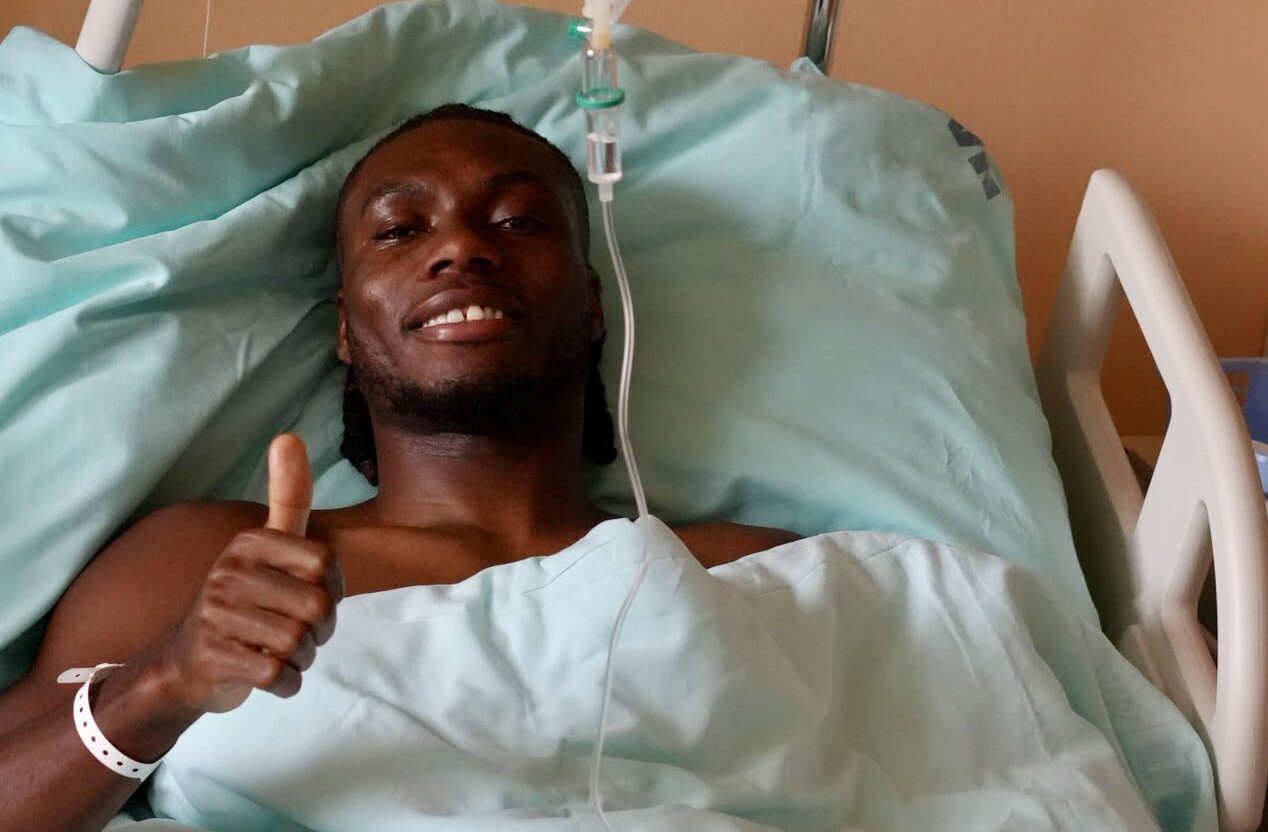
Super Eagles’ Igoh Ogbu undergoes Achilles surgery, faces three-month layoff
Abstract
The recent Achilles surgery sustained by Super Eagles defender Igoh Ogbu, necessitating a three-month layoff, highlights critical legal considerations for professional athletes and their clubs in Nigeria. This incident underscores the interplay between general Nigerian labour law, specifically the Employees' Compensation Act 2010, and the specialized contractual frameworks governing professional football, including FIFA Regulations on the Status and Transfer of Players. The article examines the club's obligations regarding medical care, salary continuation, and compensation during injury, emphasizing that injury does not constitute a just cause for contract termination under international football jurisprudence. It further explores the avenues for dispute resolution and the importance of robust contractual provisions to safeguard the interests of both parties.
Introduction
The news of Super Eagles centre-back Igoh Ogbu undergoing Achilles surgery and facing an estimated three-month recovery period brings to the fore complex legal questions surrounding professional athlete employment in Nigeria. While the immediate focus is on the player's recovery and return to the pitch, the incident carries significant implications for his club, the player's contractual rights, and the broader legal landscape governing sports employment in the country. Such long-term injuries necessitate a careful examination of the obligations of football clubs and the entitlements of players under Nigerian law and international football regulations. This development serves as a timely reminder for legal practitioners to understand the intricate intersection of general labour statutes and sports-specific contractual frameworks.
Background
The legal framework for employment in Nigeria is primarily governed by the Labour Act, Cap L1, Laws of the Federation of Nigeria (LFN) 2004, which outlines general terms and conditions of employment, including the employer's duty to provide a safe working environment and pay wages. However, for workplace injuries and occupational diseases, the Employees' Compensation Act (ECA) 2010 is the paramount legislation. The ECA repealed the erstwhile Workmen's Compensation Act and established a no-fault compensation scheme for employees who suffer injury, disease, or death arising out of or in the course of employment. Under the ECA, employers are mandated to contribute 1% of their total monthly payroll to the Employees' Compensation Fund, managed by the Nigeria Social Insurance Trust Fund (NSITF), ensuring that injured employees are entitled to compensation from the first working day after a disabling injury. Professional football contracts in Nigeria operate within this general legal framework but are also heavily influenced by the specific regulations of football's global governing body, FIFA, particularly the FIFA Regulations on the Status and Transfer of Players (RSTP), and the rules of the Nigeria Football Federation (NFF). These specialized regulations often dictate terms concerning player transfers, contractual stability, and dispute resolution, adding layers of complexity to standard employment law principles.
Analysis
A professional football player's contract is a specialized employment agreement, typically outlining salary, bonuses, duration, and obligations of both the player and the club. Crucially, these contracts must also address provisions for medical care and treatment in the event of injuries sustained during employment. Under the ECA 2010, Igoh Ogbu's Achilles injury, sustained in the course of his employment, would entitle him to compensation, including medical treatment and rehabilitation, without the need to prove employer negligence. The club is primarily responsible for ensuring access to necessary medical care, a responsibility often explicitly stated in player contracts and reinforced by the ECA's provisions for healthcare and disability support. A significant aspect for practitioners is the principle of contractual stability enshrined in FIFA RSTP. Article 13 of the FIFA RSTP states that a contract between a professional and a club may only be terminated upon expiry of the term or by mutual agreement. FIFA jurisprudence consistently holds that a player's injury does not constitute a 'just cause' for a club to unilaterally terminate an employment contract. This means that despite Ogbu's three-month layoff, his club remains obligated to honour the terms of his contract, including salary payments, throughout his rehabilitation period. Any attempt to terminate the contract on the basis of injury could lead to significant legal repercussions for the club, including compensation payments and sporting sanctions. While the ECA provides a safety net for compensation, the specific terms of the player's contract will dictate the extent of salary continuation and other benefits during the layoff. Many professional contracts include clauses for injury insurance, which can mitigate the financial burden on clubs. The Nigerian Football Federation has also explored comprehensive insurance schemes for national team players, indicating a growing awareness of these risks. However, the Nigerian sports law landscape is still considered underdeveloped, with challenges such as weak enforcement, ambiguous contracts, and overlapping jurisdictions, which can complicate dispute resolution. Disputes arising from player injuries, contract breaches, or inadequate welfare provisions are often referred to specialized bodies like the NFF Player Status and Arbitration Committee or, at the international level, the Court of Arbitration for Sport (CAS). The case of Mbetobong Ibanga, a former U-17 player who reportedly received minimal compensation after a career-ending injury, serves as a stark reminder of the practical gaps that can exist between legal entitlements and actual player welfare.
Conclusion
The injury to Igoh Ogbu serves as a crucial case study for legal professionals advising stakeholders in Nigerian football. It underscores the dual importance of adhering to the Employees' Compensation Act 2010, which provides a statutory safety net for all employees, including professional athletes, and ensuring that individual player contracts are robust and compliant with both national labour laws and international football regulations, particularly the FIFA RSTP. Practitioners must ensure that player contracts explicitly detail provisions for medical treatment, rehabilitation, salary continuation during periods of injury, and clear dispute resolution mechanisms. Clubs must be aware that player injury does not typically constitute a just cause for contract termination and that failure to meet contractual and statutory obligations can lead to significant financial penalties and sporting sanctions. For players, understanding their rights under the ECA and their individual contracts is paramount to securing appropriate care and compensation. Moving forward, a concerted effort to strengthen the enforcement of existing laws and promote clearer, more comprehensive contractual practices will be vital for the sustainable development of professional sports in Nigeria and the protection of its athletes.
Citations
- 1.Labour Act, Cap L1, Laws of the Federation of Nigeria 2004.
- 2.Employees' Compensation Act 2010.
- 3.FIFA Regulations on the Status and Transfer of Players.
- 4.Osiwa Igbuya v Delta State Football Association & Anor (NIC/EN/01/2008).
- 5.FIFA Dispute Resolution Chamber Decision, 13th May 2005, No 55230.
- 6.FIFA Dispute Resolution Chamber Decision, 2nd November 2007, No. 31113.
- 7.FIFA Dispute Resolution Chamber Decision, 26th November 2004, No. 114534.
- 8.FIFA Dispute Resolution Chamber Decision, 28th July 2005, No 75975.
How does this affect your business?
Get an AI analysis of this article grounded in your jurisdictions, practice areas, and any policy documents you've uploaded to Wansom.