
Supreme Court allows Texas to enforce law requiring age verification and parental consent on apps
Abstract
The Supreme Court has temporarily allowed Texas to enforce its App Store Accountability Act, also known as Senate Bill 2420 (SB 2420), which mandates age verification for app store users and requires parental consent for minors to download apps or make in-app purchases. This decision, issued through brief, unsigned orders, overturns preliminary injunctions previously granted by a federal district court in Austin and subsequently stayed by the U.S. Court of Appeals for the Fifth Circuit. The law, set to take effect on January 1, 2026, faces challenges from groups like the Computer and Communications Industry Association (CCIA) and Students Engaged in Advancing Texas (SEAT), who argue it violates the First Amendment by imposing content-based restrictions on speech. While not a ruling on the merits, the Supreme Court's action signals a complex and ongoing legal battle over digital age verification, parental rights, and free speech online, with significant implications for app developers, platforms, and users nationwide.
Introduction
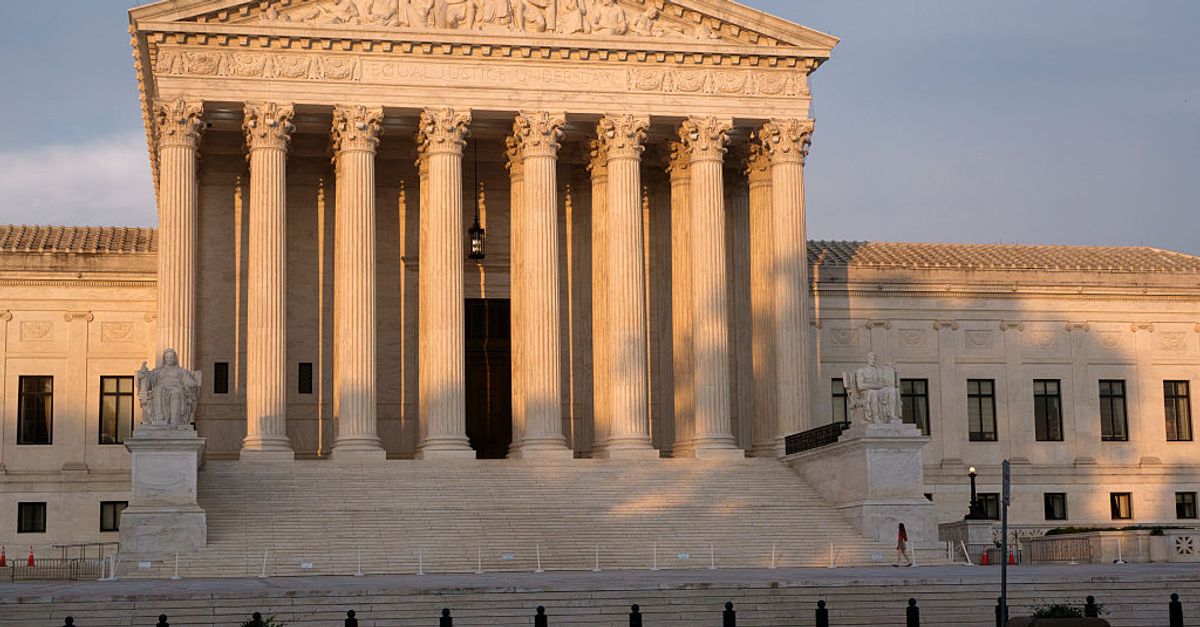
The landscape of digital regulation in the United States has been significantly shaped by a recent, albeit temporary, intervention from the Supreme Court. On Monday, the nation's highest court permitted Texas to enforce its controversial App Store Accountability Act, Senate Bill 2420 (SB 2420), a law designed to impose age verification requirements on app store users and necessitate parental consent for minors' app downloads and in-app purchases. This decision, conveyed through concise, unsigned orders, effectively reinstates the law while litigation challenging its constitutionality continues.
Background
The Texas App Store Accountability Act, codified at Chapter 121 of the Texas Business & Commerce Code, was enacted with the stated purpose of empowering parents to supervise their children's digital engagement and protect minors from potentially harmful online content. The law, which became effective on January 1, 2026, requires app stores operating in Texas to implement "commercially reasonable methods" to verify a user's age and categorize them into specific age groups: child (under 13), younger teenager (13-15), older teenager (16-17), and adult (18+). For users identified as minors, the law mandates that their accounts be linked to a verified parent or guardian account, and explicit parental consent must be obtained for each app download or in-app purchase. Furthermore, app developers are required to assign age ratings to their applications and disclose content information to app stores, with violations of these provisions classified as deceptive trade practices.
Analysis
The legal battle over SB 2420 began in federal court, where two separate groups of challengers, the Computer and Communications Industry Association (CCIA) and Students Engaged in Advancing Texas (SEAT), filed lawsuits arguing that the law infringes upon First Amendment rights. U.S. District Judge Robert Pitman initially granted preliminary injunctions, blocking the law from taking effect. Judge Pitman concluded that SB 2420 likely violated the First Amendment by imposing content-based restrictions on speech and failed to meet the strict scrutiny standard, which requires the state to demonstrate a compelling governmental interest and narrowly tailored means. He likened the law to requiring every bookstore to verify the age of customers and obtain parental consent for minors to browse or purchase books, an analogy suggesting its overbreadth.
However, the U.S. Court of Appeals for the Fifth Circuit subsequently stayed these injunctions pending appeal, concluding that Texas had made a strong showing of likely success on the merits. The Fifth Circuit reasoned that app store listings primarily propose commercial transactions, thus subjecting the Act to intermediate scrutiny rather than strict scrutiny. Under intermediate scrutiny, the court found that the law likely survives as a reasonable fit to advance the state's substantial interest in protecting children's data, safety, and privacy. This shift in the standard of review is critical, as intermediate scrutiny is a less demanding test for content-based regulations than strict scrutiny.
The Supreme Court's recent decision to allow the law to be enforced, at least for now, does not represent a final judgment on the constitutionality of SB 2420. Instead, it means the Court declined to reinstate the lower court's injunctions, permitting the Fifth Circuit's stay to remain in effect while the appellate process continues. This procedural move indicates that a majority of the justices did not find sufficient grounds to halt the law's implementation at this stage, potentially signaling a recognition of the state's asserted interest in protecting minors. The case draws parallels to previous Supreme Court decisions concerning online content and minors, such as *Reno v. American Civil Liberties Union*, 521 U.S. 844 (1997), which struck down provisions of the Communications Decency Act for being overly broad and suppressing adult speech, and *Ashcroft v. American Civil Liberties Union*, 535 U.S. 564 (2002), which addressed the Child Online Protection Act. More recently, *Brown v. Entertainment Merchants Association*, 564 U.S. 786 (2011), affirmed that video games are protected speech under the First Amendment, striking down a California law restricting their sale to minors. These precedents highlight the judiciary's consistent skepticism towards broad restrictions on speech, even when aimed at protecting children, emphasizing the need for narrowly tailored measures and less restrictive alternatives.
The practical implications of SB 2420 are substantial for app stores and developers. The law necessitates significant technical infrastructure for age verification and parental consent mechanisms, raising concerns about data privacy and the potential chilling effect on speech. Critics argue that such broad age-gating could restrict minors' access to a vast array of protected and beneficial content, including educational and informational apps, and could also burden adults by requiring them to undergo verification. The law's requirements for age ratings and content disclosures also present compliance challenges, particularly given the dynamic nature of app content and functionality.
Conclusion
The Supreme Court's decision to allow Texas to enforce SB 2420 marks a critical juncture in the ongoing debate over online child safety and First Amendment rights. While the law is now enforceable, the underlying constitutional challenges are far from resolved, and the case will proceed through the appellate courts. This development underscores a growing trend of states enacting laws to regulate online platforms, often leading to a patchwork of differing requirements and legal challenges.
For legal practitioners, this case highlights the imperative of closely monitoring evolving state-level digital regulations and their interplay with federal constitutional protections. Attorneys advising app developers, app stores, and other online platforms must consider the technical and legal complexities of implementing age verification and parental consent systems, while also navigating potential First Amendment challenges. The ultimate outcome of the litigation surrounding SB 2420 will significantly influence the future of online content regulation, setting important precedents for how digital speech, parental rights, and child protection are balanced in the digital age.
Citations
- 1.Computer & Communications Industry Association v. Paxton, No. 1:25-cv-01660 (W.D. Tex. Dec. 23, 2025).
- 2.Students Engaged in Advancing Texas v. Paxton, No. 1:25-cv-01662 (W.D. Tex. Dec. 23, 2025).
- 3.Texas Business & Commerce Code Chapter 121, App Store Accountability Act.
- 4.Reno v. American Civil Liberties Union, 521 U.S. 844 (1997).
- 5.Ashcroft v. American Civil Liberties Union, 535 U.S. 564 (2002).
- 6.Brown v. Entertainment Merchants Association, 564 U.S. 786 (2011).