
Supreme Court seeks CBSE response to plea seeking compartment exams for class XII students in Gulf countries
Abstract
The Supreme Court of India has sought responses from the Union government and the Central Board of Secondary Education (CBSE) regarding a plea filed by Class XII students in Gulf and West Asian countries. These students are seeking an opportunity to appear in compartment examinations, a facility currently available to their counterparts in India. The petition highlights that the 2026 board examinations in the region were disrupted by geopolitical conflict, leading CBSE to implement a special assessment scheme. Students contend that this scheme has resulted in lower marks, adversely affecting their prospects for higher education. The Court's intervention underscores a critical examination of educational equity and administrative fairness in extraordinary circumstances, with a hearing scheduled for July 14.
Introduction
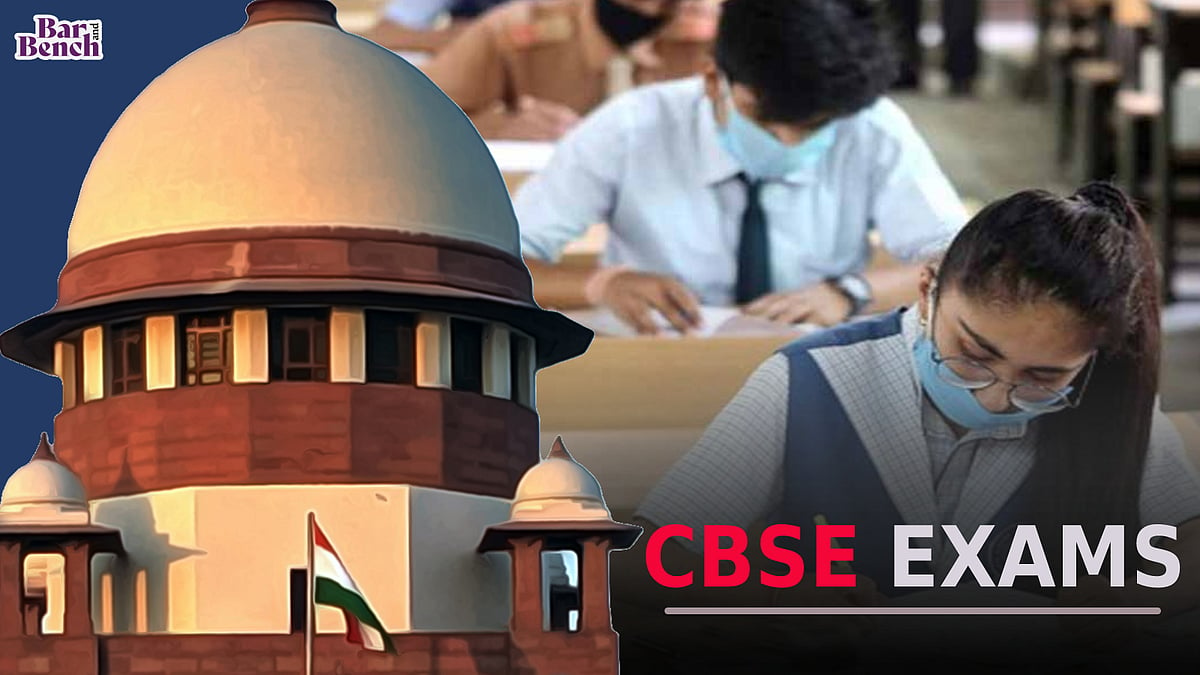
The Supreme Court of India has recently taken cognizance of a significant matter concerning the academic future of Class XII students affiliated with the Central Board of Secondary Education (CBSE) in Gulf and West Asian countries. A Bench comprising Justices K.V. Viswanathan and Alok Aradhe issued notice to the Union government and CBSE on a petition seeking the right for these students to appear in compartment examinations. This development arises from the disruption of board examinations in the region due to geopolitical conflict, specifically referencing the US-Iran war, which necessitated the implementation of a special assessment scheme by CBSE.
The core of the petitioners' grievance is the perceived disparity in treatment: while CBSE has announced a schedule for compartment examinations commencing July 28 for students within India, no corresponding provision has been made for those in the Gulf Cooperation Council (GCC) and West Asian countries. This oversight, the students argue, not only denies them a crucial second chance but also exacerbates the challenges already faced due to the extraordinary circumstances that led to the cancellation of several papers. This article delves into the legal framework, the students' constitutional arguments, and the broader implications of the Supreme Court's intervention for educational policy and equity for Indian students abroad.
Background
The Central Board of Secondary Education (CBSE) is a national board of education in India, responsible for conducting public examinations for Class X and Class XII. Its Examination Bye-laws govern the conduct of these examinations, including provisions for compartment examinations, which offer students who fail in one or two subjects an opportunity to re-appear and pass, thereby saving an academic year.
In the academic session of 2025-26, an unprecedented situation arose in Gulf and West Asian countries where CBSE-affiliated schools operate. Geopolitical tensions and security concerns led to the disruption and cancellation of several Class XII board examinations. In response, CBSE issued a special assessment scheme on March 27, 2026, to evaluate students who could not take the cancelled examinations. This scheme relied on internal school assessments, including quarterly, half-yearly, and pre-board examinations, to determine marks for the affected subjects. While this ad-hoc measure aimed to provide a pathway for results, many students found their scores to be significantly lower than anticipated, impacting their eligibility for higher education, particularly under schemes like Direct Admission of Students Abroad (DASA) and Children of Indian Workers in Gulf Countries (CIWG), which often require a minimum aggregate of 75% marks.
Analysis
The petition before the Supreme Court, titled *Adithian Rajmohan Nair & Ors. v. Union of India & Ors.*, raises fundamental questions of equality and the right to education. The students contend that the denial of compartment examination opportunities, which are available to students in India, constitutes arbitrary and discriminatory treatment, violating Article 14 of the Constitution of India. Article 14 guarantees equality before the law and equal protection of the laws, prohibiting the State from denying any person these rights and safeguarding against arbitrary state action. The petitioners argue that there is no reasonable classification to differentiate between students in India and those in Gulf countries when it comes to providing a second chance to improve their academic standing.
Furthermore, the plea implicitly invokes the broader right to education, which, while explicitly guaranteed for children aged 6-14 under Article 21A, has been interpreted by the Supreme Court as flowing from Article 21 (Right to Life) for higher education as well, as established in landmark cases such as *Mohini Jain v. State of Karnataka* and *Unni Krishnan J.P. v. State of Andhra Pradesh*. Denying a fair and equitable opportunity to complete their Class XII education, especially when their initial examinations were disrupted by external factors beyond their control, could be seen as an infringement on this fundamental right. The students' plea for a 'better-of-two' policy, moderation/grace marks, and relaxation in DASA/CIWG eligibility criteria reflects a desire for restorative justice to mitigate the adverse effects of the special assessment scheme.
It is pertinent to note that the CBSE's own assessment scheme, notified on March 27, 2026, contained a provision for a fresh examination for students dissatisfied with their assessment, subject to 'conducive conditions and feasibility.' The petitioners are essentially asking the CBSE to operationalize this very clause, arguing that conditions are now conducive for conducting such examinations. While CBSE may cite administrative challenges in conducting exams across multiple international locations, the Court will likely weigh these against the students' constitutional rights and the principle of non-arbitrariness. The fact that a separate policy was formulated and accepted by the Supreme Court for *private* candidates in the Gulf region whose exams were cancelled, as noted in a previous disposal on June 22, 2026, further strengthens the argument for equitable treatment for *regular* students.
The urgency of the matter is underscored by the impending July 14 hearing and the general compartment examination schedule, which typically commences around July 28. Any delay in formulating a specific schedule for Gulf students could lead to them losing an entire academic year, severely impacting their higher education and career trajectories. The Court's decision will therefore have significant implications for how educational bodies manage examinations and student welfare during unforeseen crises, particularly for the large Indian diaspora.
Conclusion
The Supreme Court's decision to seek responses from the Union government and CBSE marks a critical juncture for Class XII students in Gulf countries. The outcome of this petition will not only determine the immediate academic future of these students but also set a precedent for how educational institutions address the rights and challenges of students affected by extraordinary circumstances, especially those residing abroad. Practitioners should closely monitor the proceedings, particularly the Court's interpretation of equality under Article 14 and the scope of the right to education under Article 21 and 21A in the context of administrative discretion and international operations.
This case highlights the imperative for educational boards to develop robust and equitable contingency plans that ensure fairness and prevent discrimination, regardless of geographical location or unforeseen disruptions. A balanced approach that acknowledges administrative realities while upholding fundamental rights will be crucial. The Court's directives could lead to the formulation of clearer guidelines for conducting supplementary examinations for overseas students, potentially including provisions for special examination centres, a 'better-of-two' result option, or a more transparent grievance redressal mechanism, thereby safeguarding the academic progression of a vulnerable student population.
Citations
- 1.Constitution of India, Article 14
- 2.Constitution of India, Article 21
- 3.Constitution of India, Article 21A
- 4.Mohini Jain v. State of Karnataka, (1992) 3 SCC 666
- 5.Unni Krishnan J.P. v. State of Andhra Pradesh, (1993) 1 SCC 645
- 6.CBSE Examination Bye-laws
- 7.CBSE Notification dated March 27, 2026 (Special Assessment Scheme)
- 8.Adithian Rajmohan Nair & Ors. v. Union of India & Ors.