
The 2025-26 term by the numbers
Abstract
The 2025-26 term of the U.S. Supreme Court marked a significant increase in ideological division, with a notable rise in 6-3 decisions aligning along conservative-liberal lines. Compared to the previous term, both the percentage of 6-3 votes and ideologically split decisions rose substantially, indicating a more polarized Court. However, the term's final week presented a nuanced picture, highlighted by the landmark case of *Trump v. Barbara*, which concerned birthright citizenship. Despite the prevailing trend, this decision saw an unusual alignment, with all three liberal justices joining the majority to uphold the constitutional guarantee of birthright citizenship, demonstrating that ideological fissures, while pronounced, are not always absolute.
Introduction
The recently concluded 2025-26 term of the United States Supreme Court has provided legal practitioners with a complex and, at times, contradictory landscape of judicial decision-making. While the term was largely characterized by an intensification of ideological polarization, culminating in a significant increase in 6-3 rulings along predictable conservative-liberal lines, the final weeks introduced a fascinating deviation from this pattern. This evolving dynamic demands careful attention from attorneys, as it impacts the predictability of outcomes and the strategic considerations in high-stakes litigation before the nation's highest court. This article will delve into the statistical realities of the 2025-26 term, examining the pronounced ideological divides and analyzing the implications of key decisions, particularly the unexpected alignment in *Trump v. Barbara*, a pivotal case concerning birthright citizenship.
Background
The ideological composition of the U.S. Supreme Court, currently featuring a 6-3 conservative majority, has profoundly shaped its jurisprudence in recent terms. This alignment has often led to outcomes reflecting a consistent conservative judicial philosophy, particularly in areas such as abortion rights, affirmative action, and the scope of federal agency power. Landmark decisions like *Dobbs v. Jackson Women's Health Organization*, 597 U.S. 215 (2022), which overturned *Roe v. Wade*, and *Students for Fair Admissions v. President and Fellows of Harvard College*, 600 U.S. 1 (2023), which limited affirmative action, exemplify the impact of this majority. These cases frequently saw the six Republican-appointed justices in the majority and the three Democratic-appointed justices in dissent, establishing a discernible pattern for legal professionals to consider. The principle of birthright citizenship, central to the *Trump v. Barbara* case, is rooted in the Fourteenth Amendment to the U.S. Constitution, which states, “All persons born or naturalized in the United States, and subject to the jurisdiction thereof, are citizens of the United States and of the State wherein they reside.” This constitutional provision has been consistently interpreted by the Supreme Court, most notably in *United States v. Wong Kim Ark*, 169 U.S. 649 (1898), which affirmed that individuals born in the U.S. are citizens regardless of their parents' nationality, with very limited exceptions.
Analysis
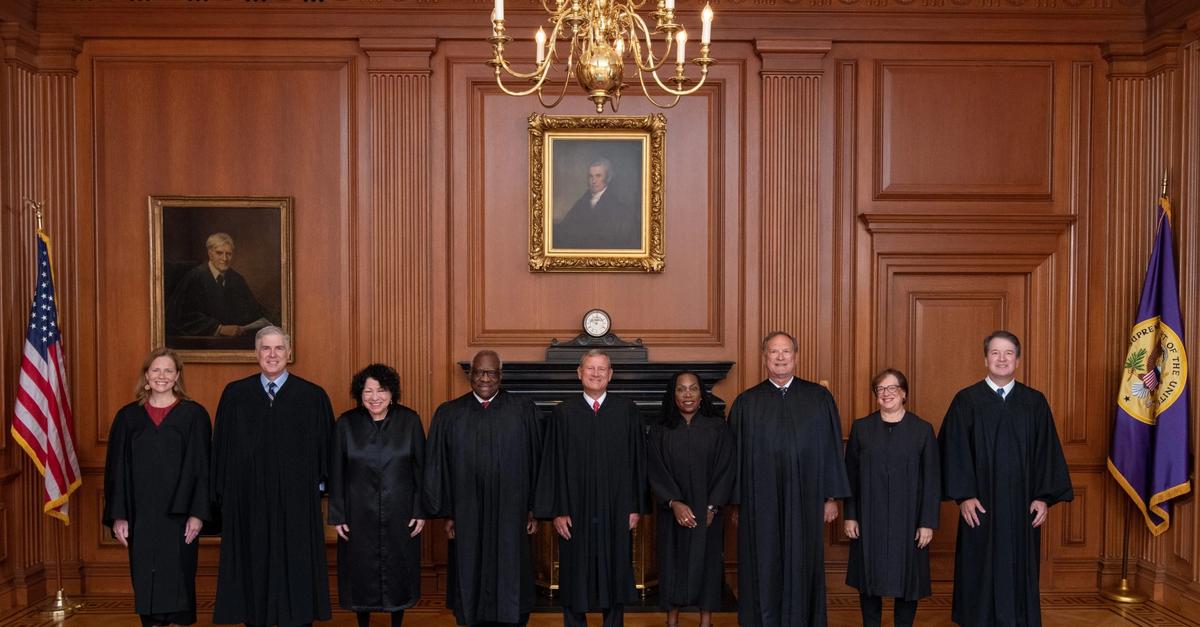
The 2025-26 Supreme Court term demonstrated a marked escalation in ideological division compared to its immediate predecessor. Data indicates that 28.8% of the Court’s decisions were decided by a 6-3 vote, a significant increase from 15.2% in the previous term. More strikingly, 22.7% of all decisions in the 2025-26 term were 6-3 ideological splits, nearly tripling the 9% figure from the prior term. This trend was further underscored by the liberal justices dissenting together in 24.2% of cases, up from 15% previously. These statistics suggest a Court increasingly bifurcated along predictable ideological lines, making outcomes in politically charged cases more foreseeable for many practitioners. However, the final week of the term introduced a compelling counter-narrative. While seven of nine decisions in the second-to-last week followed the 6-3 ideological split, only four of seven did so in the final week. Perhaps the most illuminating example of this nuanced dynamic was *Trump v. Barbara*, 609 U.S. ___ (2026), a case challenging an executive order (Executive Order 14160) that sought to restrict birthright citizenship for children born in the U.S. to parents without U.S. citizenship or permanent residency. The Court, in a 6-3 decision, struck down President Trump's executive order, reaffirming the constitutional guarantee of birthright citizenship. Chief Justice John Roberts authored the majority opinion, and crucially, all three liberal justices—Justices Sotomayor, Kagan, and Jackson—joined the majority, alongside conservative Justice Amy Coney Barrett. This alignment, where liberal justices were in the majority in three of the final week's non-ideological split decisions, including *Trump v. Barbara*, complicated the broader narrative of polarization. The outcome in *Trump v. Barbara* was broadly anticipated, given the long-standing precedent of *United States v. Wong Kim Ark* and the clear language of the Fourteenth Amendment. However, the specific alignment of justices, particularly the inclusion of liberal justices in a majority that also included conservative members, signaled a potential for cross-ideological coalitions on issues deemed fundamental or where precedent is exceptionally strong. This contrasts sharply with the rigid 6-3 splits observed in cases like *Dobbs* and *SFFA*, where the conservative majority decisively reshaped legal doctrine. For legal professionals, this suggests that while a dominant ideological trend persists, the Court is not entirely monolithic, and the potential for unexpected alliances, particularly around foundational constitutional principles, remains a critical factor in litigation strategy.
Conclusion
The 2025-26 Supreme Court term, while statistically demonstrating heightened ideological division, also offered glimpses of a more complex judicial landscape. Practitioners must acknowledge the significant increase in 6-3 ideological splits, which will likely continue to define outcomes in many contentious areas of law. However, the *Trump v. Barbara* decision serves as a powerful reminder that even in a highly polarized era, the Court can still forge unexpected coalitions, particularly when foundational constitutional principles and long-standing precedents are at stake. Attorneys should therefore remain vigilant, analyzing not only the ideological leanings of individual justices but also the potential for issue-specific alliances and the persuasive power of established legal doctrine. The ability to anticipate these nuanced dynamics will be crucial for effective advocacy in the terms to come, as the Court navigates an increasingly complex legal and political environment.
Citations
- 1.Fourteenth Amendment to the U.S. Constitution
- 2.United States v. Wong Kim Ark, 169 U.S. 649 (1898)
- 3.Dobbs v. Jackson Women's Health Organization, 597 U.S. 215 (2022)
- 4.Students for Fair Admissions v. President and Fellows of Harvard College, 600 U.S. 1 (2023)
- 5.Trump v. Barbara, 609 U.S. ___ (2026)
How does this affect your business?
Get an AI analysis of this article grounded in your jurisdictions, practice areas, and any policy documents you've uploaded to Wansom.