
The Law to examine defamation suits against journalists
Abstract
Defamation suits against journalists in Ghana represent a critical intersection of freedom of expression and the right to reputation. While Ghana decriminalized libel in 2001, shifting it from a criminal offense to a civil tort, media practitioners continue to face significant legal challenges. This article examines the current legal framework, including the common law principles governing defamation, constitutional guarantees of free speech, and the available defenses for journalists. It also highlights the persistent concerns regarding the application of other criminal laws, such as those related to the publication of false news, which can still exert a chilling effect on investigative journalism and public discourse. The discussion underscores the importance of responsible reporting and robust legal defense mechanisms in safeguarding media freedom in Ghana.
Introduction
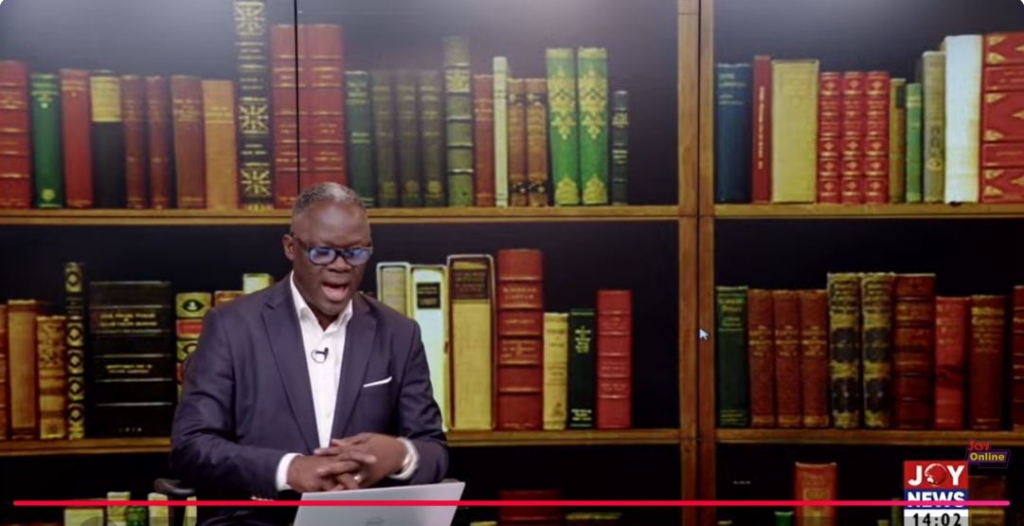
The upcoming edition of JoyNews' 'The Law' focusing on defamation suits against journalists brings to the fore a perennial and critical issue within Ghana's legal and media landscape. Defamation actions, whether civil or, in some instances, quasi-criminal, pose substantial risks to media practitioners, potentially stifling investigative journalism and public interest reporting. The increasing frequency of such suits necessitates a comprehensive understanding of the legal principles, available defenses, and the broader implications for press freedom and democratic accountability in Ghana.
Ghana's journey towards a vibrant media environment has been marked by significant reforms, most notably the repeal of criminal libel laws. However, the transition has not eliminated the legal perils faced by journalists. The delicate balance between protecting individual reputations and upholding the constitutional right to freedom of expression, enshrined in Article 21(1)(a) of the 1992 Constitution, remains a contentious area. This article aims to provide legal professionals with an in-depth analysis of the current state of defamation law in Ghana, particularly as it impacts journalists, offering insights into the legal requirements for a claim, available defenses, and the broader context of media regulation.
The thesis of this article is that while the repeal of criminal libel was a landmark achievement for press freedom in Ghana, the continued prevalence of civil defamation suits, coupled with the application of other criminal provisions, still presents a complex and challenging environment for journalists. Navigating this landscape requires a nuanced understanding of both substantive law and procedural safeguards, emphasizing the critical role of legal counsel in advising and defending media practitioners.
Background
Defamation law in Ghana is primarily governed by common law principles, supplemented by customary law, although the common law regime is generally preferred by legal practitioners due to its broader scope and recognition of libel. Under common law, defamation is categorized into libel (defamation in a permanent form, such as writing or online publications) and slander (defamation in a transient form, typically spoken words). To establish a claim for defamation, a plaintiff must generally prove three core elements: that the statement was defamatory, that it referred to the plaintiff, and that it was published to a third party.
A pivotal development in Ghana's media law history was the passage of the Criminal Code (Repeal of the Criminal and Seditious Laws – Amendment) Act 2001. This Act unanimously repealed the criminal libel and seditious laws, which had historically been used to incarcerate journalists and suppress critical reporting. The repeal was widely hailed as a significant victory for press freedom and democratic consolidation, ending a century-old repressive legislative regime and fostering a more robust and critical media environment.
Following this repeal, libel cases in Ghana transitioned to the realm of civil tort actions, where remedies typically involve damages, injunctions, retractions, and apologies, rather than imprisonment. However, despite the decriminalization of libel, journalists in Ghana still face legal threats from other statutory provisions. Notably, Section 208 of the Criminal Offences Act, 1960 (Act 29), which criminalizes the publication of false news likely to cause fear and alarm to the public, and Section 76 of the Electronic Communications Act (Act 775), concerning false communications, have been increasingly invoked against journalists and media personalities. These provisions, particularly the vaguely worded Section 208 of Act 29, have raised concerns about their potential to be misused and to create a chilling effect akin to the former criminal libel laws.
Analysis
The legal landscape for journalists in Ghana is characterized by a continuous tension between the constitutional guarantee of freedom of speech and expression under Article 21(1)(a) of the 1992 Constitution and the necessity to protect individual reputations, as permitted by Article 164. While freedom of expression is fundamental, it is not absolute and is subject to limitations necessary to respect the rights and freedoms of others, including their reputational interests. This inherent tension often plays out in defamation suits, where courts are tasked with balancing these competing rights.
Journalists facing defamation claims can rely on several established common law defenses. The most robust defense is **truth** or **justification**, where the defendant proves that the defamatory statement is substantially true. Another crucial defense is **fair comment**, which protects expressions of opinion on matters of public interest, provided the comment is honestly held and based on true facts, without malice. The Supreme Court in *Duffour v Bank of Ghana and Another* affirmed the principles of fair comment. Additionally, **privilege**, both absolute and qualified, can shield journalists. Absolute privilege applies to statements made in certain contexts, such as parliamentary proceedings or judicial pronouncements, irrespective of malice. Qualified privilege applies to statements made on a reasonable occasion in the discharge of a public or private duty, or where there is a common interest, but this defense can be defeated by proof of malice.
Despite these defenses, journalists in Ghana continue to face significant challenges. The repeal of criminal libel in 2001, while celebrated, did not entirely remove the threat of criminal prosecution for certain types of publications. The use of Section 208 of the Criminal Offences Act, 1960 (Act 29), which criminalizes the publication of false news, has become a tool for arresting and prosecuting journalists, raising concerns about a potential return to a 'culture of silence.' Critics argue that this provision is vague and easily abused, especially when civil remedies for defamation are readily available. The Electronic Communications Act (Act 775) also contains provisions criminalizing false communications, though it is considered more aligned with modern democratic laws due to its clearer definition and limited scope.
Recent case law illustrates the complexities. In 2020, journalist Abdul Malik Kweku Baako successfully sued a Member of Parliament, Kennedy Agyapong, for defamation, securing significant damages and an order for retraction and apology. This case demonstrated the efficacy of civil defamation actions in protecting journalists' reputations. However, a contrasting outcome was seen in 2023, when investigative journalist Anas Aremeyaw Anas's defamation suit against the same MP was dismissed, with the High Court judge making strong, critical remarks about the journalist. This latter case sparked concerns from media freedom advocates, highlighting the potential for judicial interpretations to impact journalistic practice and the perception of media integrity. These cases underscore the unpredictable nature of defamation litigation and the critical importance of meticulous fact-checking, ethical reporting, and robust legal preparation for journalists.
Conclusion
For legal practitioners, understanding the intricacies of defamation law in Ghana is paramount, particularly when advising journalists or media houses. The shift from criminal to civil libel has placed a greater emphasis on civil remedies, but the lingering threat of criminal charges under 'false news' provisions demands careful attention. Lawyers representing journalists must be adept at deploying defenses such as truth, fair comment, and privilege, emphasizing the professional standards of verification and lack of malice in their clients' reporting.
Journalists, on their part, must be continuously educated on their legal rights and obligations, prioritizing accuracy, fairness, and the responsible framing of information to mitigate liability. The ongoing debate surrounding the application of Section 208 of Act 29 and Section 76 of Act 775 against media practitioners warrants close monitoring by legal professionals and civil society. Future legislative reforms or judicial pronouncements that clarify the scope and application of these laws will be crucial in ensuring that they do not unduly restrict legitimate journalistic inquiry and public discourse. Ultimately, a robust and free press is indispensable to Ghana's democracy, and the legal profession plays a vital role in upholding this freedom while ensuring accountability.
Citations
- 1.Criminal Code (Repeal of the Criminal and Seditious Laws – Amendment) Act 2001
- 2.Criminal Offences Act, 1960 (Act 29)
- 3.Electronic Communications Act (Act 775)
- 4.Constitution of Ghana, 1992, Article 21(1)(a)
- 5.Constitution of Ghana, 1992, Article 164
- 6.Abdul Malik Kweku Baako v. Kennedy Agyapong (2020) (Ghana High Court)
- 7.Anas Aremeyaw Anas v. Kennedy Agyapong (2023) (Ghana High Court)
- 8.Duffour v Bank of Ghana and Another
- 9.Owusu-Domena v Amoah
- 10.Quacoe v Dadson [1960] 1 GLR 9
- 11.Atiase v Abbobtey [1969] C.C. 149
- 12.Ampong v Aaboraa [1934] 3 WALR 396