
The limits of the Second Amendment
Abstract
The Second Amendment's guarantee of the right to keep and bear arms, while affirmed as an individual right in *District of Columbia v. Heller*, is not without its limitations. This article delves into two critical categories of permissible firearm regulation explicitly acknowledged in *Heller* and subsequently re-examined through the lens of *New York State Rifle & Pistol Association, Inc. v. Bruen*: "sensitive places" where firearms may be prohibited, and the disqualification of certain individuals, such as felons and the mentally ill, from firearm possession. Recent Supreme Court decisions, including *Wolford v. Lopez* and *United States v. Rahimi*, have further shaped the application of *Bruen*'s historical-tradition test to these enduring questions, creating both clarity and ongoing challenges for legal practitioners navigating the evolving landscape of Second Amendment jurisprudence.
Introduction
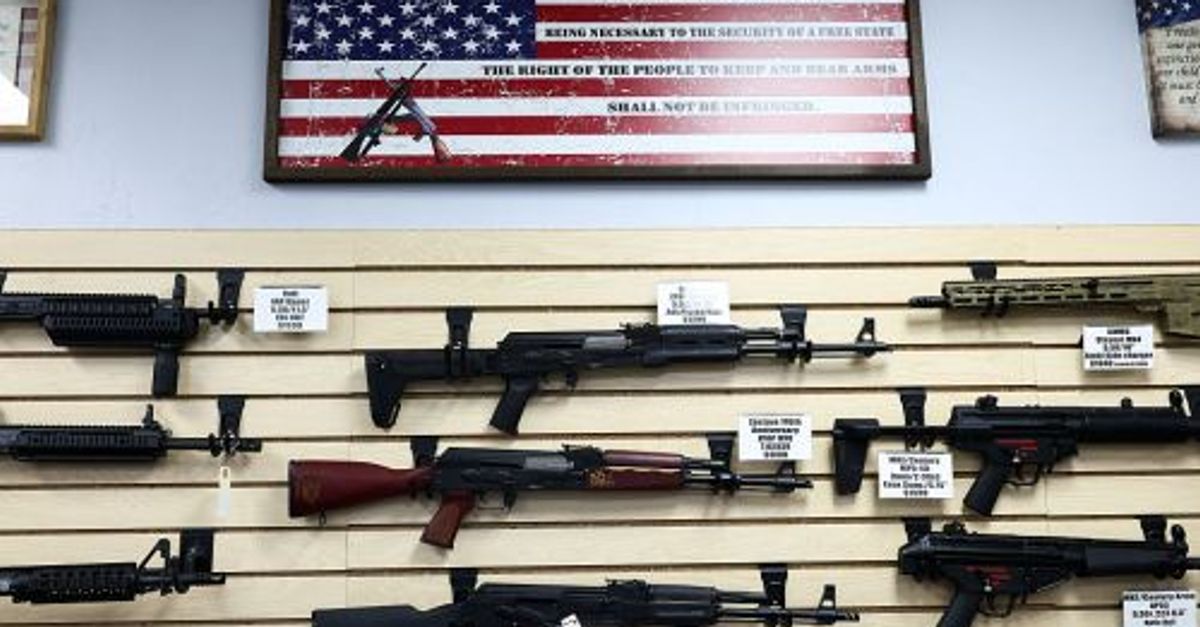
The Second Amendment to the United States Constitution, declaring that "[a] well regulated Militia, being necessary to the security of a free State, the right of the people to keep and bear Arms, shall not be infringed," has been a perennial subject of intense legal and public debate. While the Supreme Court's landmark decision in *District of Columbia v. Heller*, 554 U.S. 570 (2008), firmly established an individual right to possess firearms for self-defense, it simultaneously acknowledged that this right is not unlimited. Justice Antonin Scalia, writing for the majority in *Heller*, explicitly stated that the opinion should not "be taken to cast doubt on longstanding prohibitions on the possession of firearms by felons and the mentally ill, or laws forbidding the carrying of firearms in sensitive places such as schools and government buildings."
These two categories – "sensitive places" and "disqualified persons" – represent critical boundaries to the Second Amendment right, yet their precise contours have remained largely undefined by the Supreme Court for years. The subsequent decision in *New York State Rifle & Pistol Association, Inc. v. Bruen*, 597 U.S. 1 (2022), introduced a new analytical framework, mandating that firearm regulations be consistent with the nation's historical tradition of firearm regulation. This shift has compelled courts to re-evaluate existing prohibitions and the *Heller* dicta through a rigorous historical lens. This article explores the evolution and current understanding of these limitations, considering the impact of *Bruen* and recent cases like *Wolford v. Lopez*, 602 U.S. ___ (2026), and *United States v. Rahimi*, 602 U.S. 680 (2024), on the scope of the Second Amendment.
Background
Prior to *Heller*, the prevailing interpretation of the Second Amendment often viewed it as primarily protecting a collective right related to militia service, rather than an individual right to firearm possession. This understanding shifted dramatically with *Heller*, which, for the first time in decades, undertook an in-depth examination of the Second Amendment's meaning and concluded that it protects an individual's right to possess a firearm for traditionally lawful purposes, such as self-defense in the home.
Two years later, in *McDonald v. City of Chicago*, 561 U.S. 742 (2010), the Supreme Court incorporated the Second Amendment right against the states through the Fourteenth Amendment's Due Process Clause, making it applicable to state and local governments. While *Heller* and *McDonald* established the individual nature and applicability of the right, they also explicitly preserved the notion that the right is not absolute and that certain "longstanding prohibitions" were presumptively constitutional. This created a two-tiered approach in lower courts, often involving some form of means-end scrutiny to evaluate gun laws.
The jurisprudential landscape was fundamentally altered by *Bruen* in 2022. The Court rejected the intermediate scrutiny approach previously used by many lower courts, establishing a new "text-and-history" test. Under *Bruen*, when the Second Amendment's plain text covers an individual's conduct, the government must demonstrate that the regulation is consistent with this Nation's historical tradition of firearm regulation. This historical inquiry, rather than a balancing of interests, became the sole method for evaluating the constitutionality of modern firearm laws, profoundly impacting how "sensitive places" and "disqualified persons" prohibitions are now assessed.
Analysis
The *Bruen* decision's historical-tradition test has significantly reshaped the analysis of Second Amendment limitations, particularly concerning "sensitive places" and prohibitions on firearm possession by felons and the mentally ill. Regarding "sensitive places," *Heller* initially offered examples such as schools and government buildings. *Bruen* elaborated on this, noting that the historical record yields relatively few 18th- and 19th-century "sensitive places" where weapons were altogether prohibited, citing legislative assemblies, polling places, and courthouses as examples. Crucially, *Bruen* rejected New York's attempt to broadly define "sensitive places" to include all places of public congregation, emphasizing that such modern restrictions must have historical analogues.
This historical inquiry was recently applied in *Wolford v. Lopez*, where the Supreme Court struck down a Hawaii law that made it a crime for licensed concealed-carry permit holders to bring a handgun onto private property open to the public without express permission. The Court found that this "no-carry" default rule for private property open to the public flipped the traditional common-law default, which allowed entry unless specifically turned away, and thus lacked sufficient historical support. This decision underscores the strictness of *Bruen*'s historical test, indicating that even private property open to the public may not automatically qualify as a "sensitive place" without a strong historical analogue.
Concerning "disqualified persons," federal law, specifically 18 U.S.C. § 922(g), prohibits firearm possession by various categories of individuals, including convicted felons and those adjudicated as mentally defective or committed to mental institutions. While *Heller* explicitly stated that these prohibitions were "longstanding" and not in doubt, *Bruen*'s historical test has prompted lower courts to scrutinize the historical basis for disarming all felons, particularly non-violent ones. This has led to some divergence in lower court rulings, with some circuits upholding the ban for all felons, while others have found it unconstitutional as applied to individuals with old, nonviolent convictions.
The Supreme Court provided further clarification in *United States v. Rahimi*, upholding 18 U.S.C. § 922(g)(8), which prohibits firearm possession by individuals subject to domestic violence restraining orders. Chief Justice Roberts, writing for the majority, clarified that *Bruen*'s test does not require a "historical twin" but rather that the challenged regulation be "consistent with the principles that underpin our regulatory tradition." The Court found a historical tradition of disarming individuals who pose a credible threat of physical violence to others, thereby affirming the principle of disarming "dangerous" individuals. This decision offers a pathway for upholding prohibitions on felons and the mentally ill by focusing on the historical principle of disarming dangerous individuals, rather than requiring exact historical analogues for every modern category of prohibited person.
Conclusion
The landscape of Second Amendment jurisprudence continues to evolve rapidly, driven by the Supreme Court's decisions in *Heller*, *McDonald*, and most notably, *Bruen*. The shift to a historical-tradition test has introduced a new layer of complexity, requiring governments to demonstrate that modern firearm regulations, including those pertaining to "sensitive places" and "disqualified persons," are consistent with historical analogues from the Founding era. While *Heller*'s dicta provided initial assurances regarding the constitutionality of such prohibitions, *Bruen* demands a more rigorous historical justification.
For practitioners, navigating this terrain requires a deep understanding of historical firearm regulations and the ability to draw relevant analogies to modern laws, as articulated in *Rahimi*. The *Wolford v. Lopez* decision highlights the challenges in broadly defining "sensitive places," while *Rahimi* provides a framework for upholding prohibitions on dangerous individuals based on historical principles. Future litigation will undoubtedly continue to refine the scope of "sensitive places" and the precise criteria for disarming various categories of individuals, particularly concerning the definition of "dangerousness" and the historical justification for disarming non-violent felons or those with certain mental health conditions. Attorneys must remain vigilant in monitoring these developments, as the Supreme Court's ongoing engagement with the Second Amendment promises further clarification and potential shifts in the permissible limits of firearm regulation.
Citations
- 1.18 U.S.C. § 922(g)
- 2.District of Columbia v. Heller, 554 U.S. 570 (2008)
- 3.McDonald v. City of Chicago, 561 U.S. 742 (2010)
- 4.New York State Rifle & Pistol Association, Inc. v. Bruen, 597 U.S. 1 (2022)
- 5.United States v. Rahimi, 602 U.S. 680 (2024)
- 6.Wolford v. Lopez, 602 U.S. ___ (2026)
How does this affect your business?
Get an AI analysis of this article grounded in your jurisdictions, practice areas, and any policy documents you've uploaded to Wansom.