
The Nation Malawi — MW Legal Update
Abstract
South Africa and Malawi have jointly repatriated approximately 15,000 Malawian nationals, many of whom were undocumented or fleeing escalating anti-immigrant tensions in South Africa. This significant movement, occurring ahead of a June 30 deadline set by vigilante groups, highlights the complex interplay between national immigration enforcement, regional human mobility protocols, and fundamental human rights. The repatriation underscores the challenges faced by host states in managing irregular migration amidst socio-economic pressures and xenophobic sentiments, while simultaneously obliging states of origin to receive and reintegrate their citizens. For legal practitioners, this event necessitates a nuanced understanding of domestic immigration laws, international human rights instruments, and bilateral cooperation frameworks governing the movement and return of persons within the Southern African Development Community (SADC) region.
Introduction
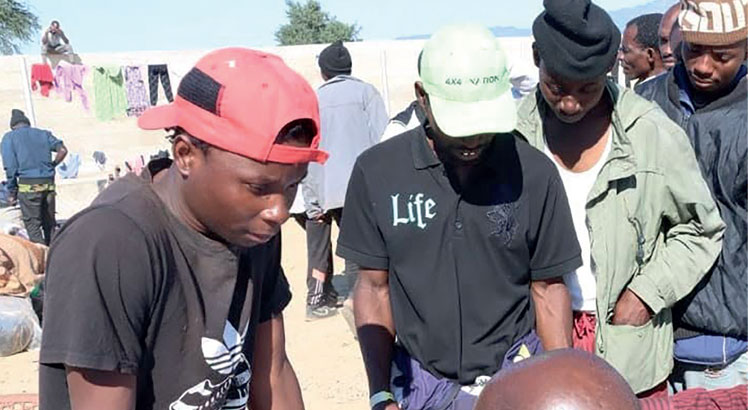
The recent joint repatriation of approximately 15,000 Malawian nationals from South Africa represents a critical juncture in regional migration dynamics, driven by a confluence of factors including undocumented status and heightened anti-immigrant sentiment. This large-scale movement, facilitated by both the Malawian and South African governments, occurred against a backdrop of intensifying anti-immigrant attacks and a looming June 30 deadline imposed by vigilante groups such as March and March and Operation Dudula. These groups have accused undocumented immigrants of exacerbating local unemployment, thereby fueling tensions and displacement.
The repatriation effort, which involved both voluntary returns and formal deportations, brings into sharp focus the intricate legal and humanitarian considerations inherent in cross-border migration. It compels a rigorous examination of the sovereign right of states to control their borders against their international human rights obligations, particularly concerning due process, non-discrimination, and the prohibition of mass expulsions. This article will delve into the relevant legal frameworks in both South Africa and Malawi, alongside regional and international human rights instruments, to provide legal professionals with a comprehensive understanding of the implications arising from this significant repatriation.
Background
The legal landscape governing migration in South Africa is primarily shaped by the Immigration Act 13 of 2002, which regulates the admission, residence, and departure of persons from the Republic. This Act defines an “illegal foreigner” as a person in South Africa in contravention of the Act or without valid permits, and outlines the procedures for their detention and deportation. Historically, South Africa has grappled with persistent issues of xenophobia and afrophobia, with foreign nationals often scapegoated for socio-economic challenges. Despite its Constitution guaranteeing fundamental human rights to all individuals within its borders, irrespective of citizenship, the country continues to face challenges in combating anti-foreigner discrimination and violence.
On the Malawian side, citizenship is primarily governed by the Malawi Citizenship Act (Chapter 15:01), which details provisions for citizenship by birth, descent, registration, and naturalization, including recent amendments allowing for dual citizenship. The Department of Immigration and Citizenship Services is mandated to provide services related to border control, travel documents, permits, visas, and citizenship. Malawi, like other states, has an obligation under international law to accept the return of its own citizens.
Regionally, the Southern African Development Community (SADC) Protocol on the Facilitation of Movement of Persons (2005) aims to progressively eliminate obstacles to the free movement of people within member states. However, the implementation of this protocol has been uneven, and Malawi is noted as one of the member states that had not ratified it as of 2005. At the international level, the African Charter on Human and Peoples' Rights, to which both South Africa and Malawi are State Parties, provides crucial protections, including the right to freedom of movement (Article 12(1)), the right to return to one's country (Article 12(2)), and the prohibition of mass expulsion of non-nationals (Article 12(5)).
Analysis
The repatriation of 15,000 Malawians from South Africa raises critical questions regarding the legality of deportation procedures and the protection of human rights. Under South African law, an immigration officer may declare a person an 'illegal foreigner' and initiate deportation proceedings. The Immigration Act 13 of 2002 mandates that an individual arrested for deportation must be brought before a court within 48 hours to confirm their detention, which can be extended for up to 120 days in total. This process is intended to ensure judicial oversight and prevent arbitrary detention. However, the sheer scale of the recent repatriations, with South African authorities facilitating the return of 8,000 individuals through deportation and Malawi's Department of Disaster Management Affairs repatriating 6,900, necessitates scrutiny of whether individual due process was consistently afforded to all affected persons.
International human rights law, particularly the African Charter on Human and Peoples' Rights, prohibits the mass expulsion of non-nationals, defining it as expulsion aimed at national, racial, ethnic, or religious groups. While the South African government has stated its commitment to lawful and constitutional means for addressing immigration challenges, the context of anti-immigrant tensions and vigilante deadlines raises concerns about whether the repatriations, even if framed as joint efforts, could be perceived as collective expulsions. The principle of non-refoulement, though primarily applicable to refugees, underscores the broader obligation not to return individuals to situations where they face serious harm, a consideration that becomes pertinent given the reported anti-immigrant attacks.
Furthermore, the right to due process for non-nationals facing expulsion is well-established in international law. The Human Rights Committee has interpreted the requirement for expulsion to be “in accordance with law” to imply procedural fairness, transparency, and the competence of the deciding authority, requiring a clear, accessible, and reviewable legal process. South African courts have affirmed that foreigners are entitled to fundamental rights enshrined in the Bill of Rights, save those expressly restricted to citizens. This includes the right to challenge deportation decisions and the assertion of non-citizenship.
Malawi's role in this joint repatriation highlights its obligation to accept its citizens. The African Charter guarantees every individual the right to return to their country, subject only to restrictions provided by law for national security, law and order, public health, or morality. Malawi's Department of Immigration and Citizenship Services outlines deportation as the removal of an undesirable person from Malawi, typically after conviction for prescribed offenses. The current situation, however, involves Malawians returning from another country, necessitating a focus on their right to re-entry and the provision of reintegration support, as indicated by the Malawian Minister of Foreign Affairs and International Cooperation.
The bilateral cooperation between South Africa and Malawi in this repatriation effort, including the provision of transport and the processing of returnees, demonstrates a practical approach to managing migration. However, the underlying issues of irregular migration and xenophobia underscore the need for more robust and harmonized regional policies, particularly given the SADC Protocol on the Facilitation of Movement of Persons, which aims to foster greater integration but has not been universally ratified or fully implemented.
Conclusion
The mass repatriation of Malawian nationals from South Africa serves as a stark reminder of the persistent challenges in balancing national sovereignty, immigration enforcement, and human rights protection within the African continent. For legal practitioners, this event underscores the critical importance of a thorough understanding of both domestic immigration statutes, such as South Africa's Immigration Act 13 of 2002, and international human rights instruments, including the African Charter on Human and Peoples' Rights. Advising clients in such contexts requires navigating complex procedural requirements for deportation and detention, while rigorously upholding the fundamental rights to due process, non-discrimination, and protection against arbitrary expulsion.
Looking ahead, practitioners should monitor developments in South African immigration policy, particularly regarding the re-establishment of courts at repatriation centers to expedite deportation processes, and the ongoing efforts to combat xenophobia through legal and policy frameworks. Furthermore, the need for enhanced bilateral and regional cooperation on migration management, including the effective implementation of SADC protocols and the establishment of clear, humane reintegration programs for returnees, remains paramount. This event calls for a concerted effort from legal professionals, governments, and civil society to advocate for comprehensive, rights-based approaches to migration that address both the legitimate concerns of host states and the inherent dignity and rights of all individuals.
Citations
- 1.African Charter on Human and Peoples' Rights, adopted June 27, 1981, OAU Doc. CAB/LEG/67/3 rev. 5, 21 I.L.M. 58 (1982), entered into force Oct. 21, 1986.
- 2.Immigration Act 13 of 2002 (South Africa).
- 3.Malawi Citizenship Act (Chapter 15:01).
- 4.SADC Protocol on the Facilitation of Movement of Persons (2005).
- 5.Kiliko and Others v Minister of Home Affairs and Others 2006 (4) SA 114 (C).
- 6.The Nation Malawi, "15 000 returnees back home from SA," June 29, 2026.
- 7.SAnews, "South Africa and Malawi collaborate on repatriation efforts," June 14, 2026.
- 8.SAnews, "Government continues repatriation and deportation operations, successes recorded," June 26, 2026.
- 9.Polity.org.za, "Malawi to repatriate citizens from South Africa amid anti-immigrant attacks," June 3, 2026.
- 10.Internazionale, "Malawi to repatriate citizens from South Africa amid anti-immigrant attacks," June 3, 2026.
- 11.Wansom AI, "South Africa and Malawi Governments Collaborate On Repatriation Efforts," June 15, 2026.
- 12.Scalabrini Centre, "Detention and deportation of migrants and refugees in South Africa."
- 13.Scalabrini Centre, "Detention and deportation in South Africa," May 27, 2026.
- 14.Department of Home Affairs, Republic of South Africa, "Home Affairs repatriates 586 Nigerian nationals," June 11, 2026.
- 15.Department of Immigration, Republic of Malawi, "Repatriation."
- 16.Department of Immigration and Citizenship Services, Republic of Malawi, "About Us."
- 17.Human Rights Watch, "South Africa: New Waves of Xenophobic Attacks," May 20, 2026.
- 18.Sabinet African Journals, "The role of law in curbing xenophobia."
- 19.UPSpace, "The adequacy of the South African legal framework in addressing xenophobia."
- 20.Digital Repository @ Maurer Law, "The Constitution, Aliens Control Act, and Xenophobia: The Struggle to Protect South Africa's Pariah-the Undocumented Immigra."
- 21.HLS Journals, "The Deportation of Undocumented Patients Under International Law," March 30, 2026.
- 22.SciELO SA, "The right to return to one's country in Africa: Article 12(2) of the African Charter on Human and Peoples' Rights."
- 23.UNHCR South Africa, "Voluntary Return to Country of Origin."
- 24.United Nations Network on Migration, "SADC Protocol on the Facilitation of Movement of Persons."
- 25.SADC, "Protocol on Facilitation of Movement of Persons (2005)," August 18, 2005.
- 26.UP Journals, "THE FREE MOVEMENT OF PEOPLE IN THE SADC: REFLECTING ON THE EXPERIENCES, DILEMMAS, AND STRATEGIC CONSIDERATIONS."
- 27.Refworld, "Malawi Citizenship Act."
- 28.Wikipedia, "Malawian nationality law."
- 29.YouTube, "South Africa's deportation process explained," June 26, 2026.
- 30.YouTube, "Immigration Focus | Over 3000 Malawians repatriated via Beitbridge Border," June 21, 2026.
- 31.YouTube, "Malawi Begins Repatriation as 7,000 Displaced Nationals Shelter in Durban," June 15, 2026.
- 32.YouTube, "Home affairs on repatriation," June 30, 2026.
- 33.Genocide Watch, "Mass Deportations Violate U.S. and International Law," February 6, 2025.
- 34.Center for Global Law and Justice | Resource Hub, "Immigration & Migrants' Rights."
- 35.Cliffe Dekker Hofmeyr (CDH), "Immigration: Application for a repatriation deposit refund," October 20, 2014.
- 36.SAFLII, "Immigration Act 2002."
- 37.Wikipedia, "Right of return."
- 38.Citizenship Rights in Africa Initiative, "Deportation and mass expulsion."
- 39.National Security Archive, "Microsoft Word - African Charter on Human and Peoples Rights.doc."
- 40.Parliamentary Monitoring Group, "Draft National Policy on the Repatriation and Restitution of Human Remains and Heritage Objects."
- 41.Laws.Africa, "Malawi Citizenship Act (Chapter 15:01)."
- 42.Malawi Citizenship Act No.28 of 1966, Published: 14/Jun/1966.
- 43.Malawi Citizenship (Dual Citizenship) Regulations, 2021.
- 44.SADC, "SADC PROTOCOL ON THE FACILITATION OF MOVEMENT OF - PERSONS."
- 45.Xenowatch, "Xenophobia in South Africa and Problems Related to it."
- 46.UP Journals, "Deportation without due process? Rethinking constitutional compliance in immigration law," November 1, 2025.
How does this affect your business?
Get an AI analysis of this article grounded in your jurisdictions, practice areas, and any policy documents you've uploaded to Wansom.