
The South Africa deportations are Malawi’s wake-up call
Abstract
Recent mass deportations of Malawian nationals from South Africa have brought into sharp focus the complex interplay between national immigration laws, constitutional rights, and regional human rights obligations. This article examines the legal frameworks governing migration in both South Africa and Malawi, highlighting South Africa’s Immigration Act 13 of 2002 and its constitutional commitments, alongside Malawi’s Immigration and Citizenship Acts. It delves into the procedural safeguards mandated for deportations and the human rights accorded to all persons, including undocumented migrants. The analysis underscores the gaps in bilateral and regional agreements, particularly the non-ratification of the SADC Protocol on the Facilitation of Movement of Persons and the International Convention on the Protection of the Rights of All Migrant Workers and Members of Their Families by key states. The deportations serve as a critical "wake-up call" for Malawi to bolster its legal and diplomatic mechanisms for citizen protection and for South Africa to ensure consistent adherence to human rights in its enforcement actions.
Introduction
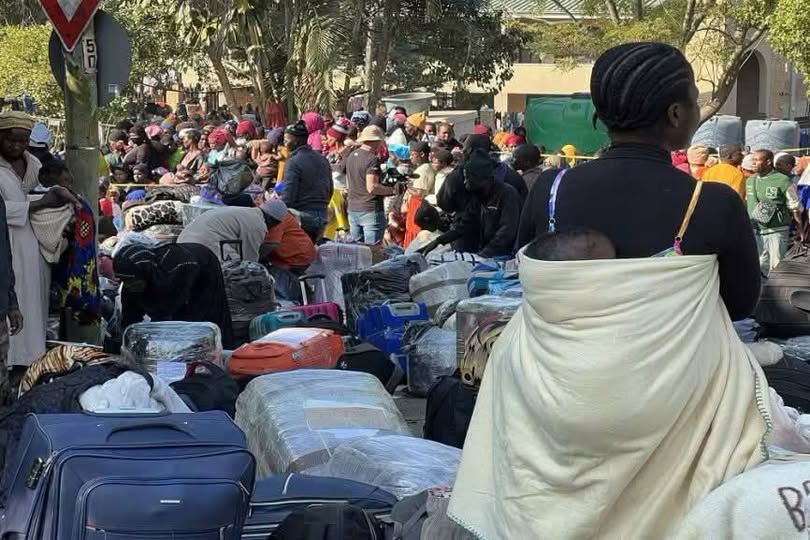
The recent images of thousands of Malawian nationals being deported from South Africa, crowded into temporary centres and making the arduous journey home, paint a stark picture of the challenges inherent in cross-border migration within Southern Africa. These events are not merely a humanitarian crisis but a profound legal development that demands scrutiny from practising attorneys and legal professionals across the region. The scale of these deportations underscores the persistent tension between a sovereign state's right to control its borders and the fundamental human rights afforded to all individuals, regardless of their immigration status.
This situation compels a critical examination of the legal frameworks in both South Africa, as the host country, and Malawi, as the country of origin. For South Africa, it raises questions about the consistent application of its immigration laws and constitutional safeguards. For Malawi, it highlights the urgent need to review and strengthen its mechanisms for protecting its citizens abroad and to engage more proactively in regional and international migration governance. This article will analyse the relevant domestic and international legal instruments, expose existing gaps, and discuss the implications for practitioners navigating these complex legal landscapes.
Background
South Africa's immigration regime is primarily governed by the Immigration Act 13 of 2002, as amended, which regulates the admission, residence, and departure of persons from the Republic. The Act aims to promote economic growth through skilled migration, while simultaneously deterring and punishing illegal entry and residence. Under this Act, an immigration officer may declare a person an 'illegal foreigner' if they do not possess valid documentation, leading to potential arrest, detention, and deportation. The Act outlines specific procedures for deportation, including written notification, the right to appeal, and the requirement for an arrested person to be brought before a court within 48 hours.
Malawi, on the other hand, regulates its citizenship and immigration through the Malawi Citizenship Act (Chapter 15:01) and the Malawi Immigration Act (Chapter 15:03), with the Department of Immigration and Citizenship Services operating under the guidance of the Constitution of Malawi, Section 47. Historically, Malawi has been a significant source of migrant labour for South Africa, with bilateral agreements governing this flow, particularly for the mining sector, dating back to the 1960s. The Malawi Citizenship Act, amended in 2019, now permits dual citizenship for Malawians by birth or descent, a significant development for its diaspora.
Regionally and internationally, both South Africa and Malawi are parties to the African Charter on Human and Peoples' Rights, which guarantees rights such as freedom of movement, dignity, liberty, and security of person, and explicitly prohibits mass expulsions. However, the SADC Protocol on the Facilitation of Movement of Persons, which aims to enable visa-free entry, residence, and establishment for citizens of member states, has not been ratified by Malawi and is not yet in force due to insufficient ratifications across the Southern African Development Community. Furthermore, neither South Africa nor Malawi are parties to the International Convention on the Protection of the Rights of All Migrant Workers and Members of Their Families, a crucial international instrument for migrant rights.
Analysis
The recent deportations highlight a critical tension between South Africa's sovereign right to enforce its immigration laws and its constitutional and international human rights obligations. While the Immigration Act 13 of 2002 provides for the deportation of "illegal foreigners," the South African Constitution extends fundamental rights to "everyone" within its borders, including documented and undocumented foreign nationals. These rights include the right to dignity, freedom and security of the person (Section 12), and access to courts. The Constitutional Court has affirmed the necessity of judicial oversight for immigration detention, ruling that individuals detained for deportation must be brought before a court within 48 hours. This ensures that detention is not arbitrary and that due process is observed, with detention periods generally limited to 120 days.
However, the practical implementation of these safeguards often faces challenges. Reports of mass deportations, as seen with Malawian nationals, raise concerns about the individual assessment of cases and adherence to procedural fairness. The African Charter on Human and Peoples' Rights explicitly prohibits mass expulsions, defining them as those aimed at national, racial, ethnic, or religious groups, and mandates that any expulsion must be based on a decision taken in accordance with the law. While South Africa asserts its commitment to upholding human rights and international obligations, the sheer volume of deportations necessitates rigorous oversight to prevent systemic violations.
For Malawi, the deportations serve as a stark reminder of the vulnerabilities faced by its citizens migrating for economic opportunities. The absence of comprehensive, updated bilateral labour agreements with South Africa, beyond historical arrangements, leaves many Malawian migrant workers without adequate legal protection. The non-ratification of the SADC Protocol on the Facilitation of Movement of Persons by Malawi, and its general lack of entry into force, means that the aspirational framework for easier movement and residence within the region remains largely unrealized. Furthermore, Malawi's non-signature of the International Convention on the Protection of the Rights of All Migrant Workers and Members of Their Families indicates a broader gap in its commitment to international standards for migrant protection.
The Malawian High Court has recently demonstrated a proactive stance on the rights of detained migrants, ruling that indefinite detention of undocumented immigrants is unconstitutional and setting a reasonable 30-day period for deportation to be effected. This judicial intervention within Malawi underscores the domestic legal responsibility to protect individuals, even those deemed 'illegal' in another jurisdiction, from arbitrary state action. The collaboration between the South African and Malawian governments in facilitating repatriation, including the provision of transport, indicates a practical, albeit reactive, response to the crisis. However, a more robust, preventative legal and diplomatic strategy is clearly needed to address the root causes and ensure the dignified treatment of Malawian citizens abroad.
Conclusion
The mass deportations of Malawian nationals from South Africa represent a critical juncture, demanding a re-evaluation of migration policies and their implementation across Southern Africa. For Malawi, this is an undeniable wake-up call to move beyond reactive measures and develop a comprehensive, proactive strategy for managing labour migration and protecting its citizens abroad. This includes urgently pursuing and updating bilateral labour agreements with key destination countries like South Africa, ensuring they align with international best practices and provide robust protections for migrant workers. Furthermore, Malawi should reconsider its stance on international instruments such as the International Convention on the Protection of the Rights of All Migrant Workers and Members of Their Families, as ratification could provide an additional layer of protection and leverage for its citizens.
For South Africa, the events underscore the imperative to consistently uphold its constitutional commitments and international human rights obligations, even in the face of intensified immigration enforcement. Practitioners must remain vigilant in challenging arbitrary detentions and ensuring due process for all individuals facing deportation, emphasizing the rights to dignity, access to legal representation, and timely judicial review. The aspirational goals of regional integration, as embodied in the SADC Protocol on the Facilitation of Movement of Persons, highlight the need for greater cooperation and harmonisation of immigration policies to foster orderly and humane migration within the region. Both nations, and indeed the broader SADC community, must engage in sustained dialogue and legal reform to create a migration framework that balances national sovereignty with the fundamental human rights of all people.
Citations
- 1.Immigration Act 13 of 2002 (South Africa)
- 2.Malawi Citizenship Act (Chapter 15:01)
- 3.Malawi Immigration Act (Chapter 15:03)
- 4.African Charter on Human and Peoples' Rights
- 5.SADC Protocol on the Facilitation of Movement of Persons
- 6.International Convention on the Protection of the Rights of All Migrant Workers and Members of Their Families
- 7.Constitution of the Republic of South Africa, 1996
- 8.Constitution of the Republic of Malawi
- 9.Malawi Citizenship Amendment Bill, 2018
- 10.Malawi Citizenship (Dual Citizenship) Regulations, 2021
- 11.Scalabrini, "DETENTION AND DEPORTATION OF MIGRANTS AND REFUGEES IN SOUTH AFRICA"
- 12.SAnews, "South Africa and Malawi collaborate on repatriation efforts" (June 14, 2026)
- 13.CAJ Global, "Malawi: Longstanding cheap labour for South Africa ends" (July 03, 2026)
- 14.Department of Immigration, Republic of Malawi, "Dual Citizenship"
- 15.Department of Immigration, Republic of Malawi, "Current Institutional Arrangement"
- 16.Malawi High Court, Mzuzu, ruling on detention of undocumented immigrants (July 29, 2024)
- 17.Southern Africa Litigation Centre, "MALAWI GOVERNMENT COMPLIES WITH THE HIGH COURT ORDERS ON DETENTION OF MIGRANTS" (September 12, 2024)
- 18.Accountability Now, "The rights of undocumented immigrants in SA" (January 22, 2025)
- 19.Human Rights Commission (South Africa), "NON-NATIONALS"
- 20.Scalabrini, "Scalabrini encourages you to know your rights!" (April 05, 2023)
- 21.South African Government, "Immigration Act 13 of 2002"
- 22.Refworld, "Malawi: Immigration Act of 1964"
- 23.Refworld, "Malawi: Immigration Regulations of 1968"
- 24.IOM Regional Office, "Bilateral Labour Migration Agreements in Two SADC Corridors" (November 18, 2019)
- 25.ResearchGate, "Bilateral Labour (Migration) Agreements"
- 26.UNTC, "13. International Convention on the Protection of the Rights of All Migrant Workers and Members of their Families"