
Uganda Military Chief Orders Shutdown of Daily Monitor and NTV Uganda, Triggering U.S. Senate Call to Review Security Ties and Exposing Nation Media Group to Cross-Border Governance and Investor Risk
Abstract
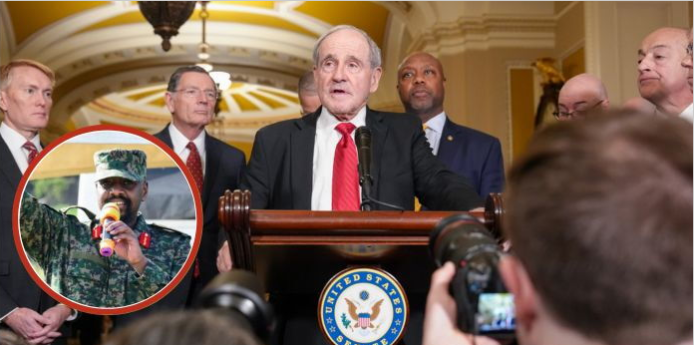
Uganda's military chief, General Muhoozi Kainerugaba, has ordered the closure of Daily Monitor and NTV Uganda, both owned by Nation Media Group, with military personnel deployed to NMG's Kampala premises to block staff access. Kainerugaba has stated the outlets will remain closed until he personally authorises reopening, citing allegations of bias and explicitly dismissing press freedom as having no place in Uganda. U.S. Senator Jim Risch, chairman of the Senate Foreign Relations Committee, has called for an immediate review of U.S.-Uganda security relations, stating that Kainerugaba's actions make him and the Uganda People's Defence Forces unfit security partners. NMG is headquartered in Nairobi and listed on the Nairobi Securities Exchange, making this a cross-border governance and investor exposure event, not merely a domestic Ugandan press freedom matter. For NMG's board and shareholders, Kenyan and regional media companies operating across borders, and compliance professionals assessing political risk in East Africa, the shutdown raises operational continuity, asset protection, and foreign relations risk questions with no clear resolution timeline since reopening depends entirely on one individual's discretion.
Introduction
A military commander ordering the closure of a country's largest independent newspaper and a major television station, backed by troops physically preventing staff from entering or leaving the premises, is an action without ordinary administrative or judicial process behind it. Kainerugaba has been explicit that the outlets remain closed at his personal discretion, with no stated legal basis, no court order, and no defined criteria for reopening referenced in his public statements. That arbitrariness is itself the central legal and governance problem, distinct from the press freedom question, because it means NMG's Ugandan operations are currently subject to indefinite suspension by executive fiat rather than any process the company could legally contest or predict.
The international dimension escalated quickly. Risch's position as Senate Foreign Relations Committee chairman gives his statement direct policy weight, since he has substantial influence over U.S. foreign policy formulation and oversight of bilateral security relationships. His framing, that the UPDF is now an "unfit" security partner, signals potential review of security cooperation, assistance, or other bilateral arrangements between the U.S. and Uganda, extending the consequences of this single shutdown order well beyond the media sector into broader diplomatic and security policy terrain.
Background
Uganda's media sector operates under the Press and Journalist Act, Cap 105, and the Electronic Media Act, Cap 104, which establish licensing and regulatory frameworks administered through the Uganda Communications Commission and the Media Council of Uganda. Neither statute grants the military command authority to order media closures; that authority, where it exists at all, would ordinarily run through the relevant regulatory body or the courts. Uganda's Constitution, 1995, guarantees freedom of expression and press freedom under Article 29, subject to limitations that must themselves be prescribed by law and justifiable in a democratic society, a standard a unilateral military order citing personal discretion to reopen does not appear to meet.
Nation Media Group operates across multiple East African jurisdictions and is incorporated and listed in Kenya, subject to the Capital Markets Act, Cap 485A, and Nairobi Securities Exchange listing and disclosure rules. A material disruption to operations in a subsidiary jurisdiction, particularly one with indefinite duration and no clear legal recourse, is the kind of development that engages continuing disclosure obligations to the Kenyan market and raises governance questions for the NMG board regarding crisis response, asset protection, and shareholder communication. On the bilateral relations side, U.S.-Uganda security cooperation has historically included counterterrorism collaboration, particularly regional operations involving Somalia, giving Risch's proposed review tangible substance beyond rhetorical condemnation.
Analysis
The legal vacuum at the centre of this action is what makes it consequential beyond a single news cycle. Kainerugaba has not cited any licensing breach, court order, or regulatory finding, he has simply asserted personal authority to close the outlets and personal authority to decide when they reopen. For NMG's legal counsel, this absence of any stated legal basis is simultaneously the company's greatest vulnerability, because there is no process to formally challenge, and potentially its strongest position in any future legal or diplomatic remedy, because an action with no legal foundation is difficult for the Ugandan state to defend if international or domestic pressure forces a review. Companies operating across multiple African jurisdictions should treat this as a live case study in how quickly cross-border media and communications assets can be rendered inoperative by executive or military action that bypasses the ordinary regulatory and judicial channels entirely.
For NMG specifically, the governance and disclosure implications are immediate. As an NSE-listed entity, a material operational disruption to a significant subsidiary, with indefinite duration and direct revenue and reputational impact, is the kind of development shareholders and the Capital Markets Authority would expect to be addressed through the company's continuing disclosure obligations. The board's response, including any public statement on operational contingency, legal options being pursued, and financial exposure from the Ugandan shutdown, will be scrutinised both by Kenyan market regulators and by the broader East African media and investment community watching how a major regional media company manages a politically driven operational shutdown in a neighbouring jurisdiction. This is also a useful precedent for other Kenyan and regional companies with Ugandan operations: political risk insurance, contingency planning for asset access disruption, and clear internal protocols for responding to extra-legal government action are now demonstrably relevant considerations, not theoretical ones.
The diplomatic dimension carries its own distinct risk and timeline. Risch's call for a review is a statement of intent from an influential committee chairman, not an executed policy change, and the practical consequences depend on what the Senate Foreign Relations Committee or the executive branch actually does next, whether that involves formal review proceedings, conditions attached to security assistance, or no concrete action at all. Uganda's government, separate from Kainerugaba's individual conduct, will need to decide whether to distance itself from the shutdown order or defend it, and that decision will shape both the diplomatic trajectory with the U.S. and the prospects for NMG's outlets to reopen. Given that Kainerugaba is President Museveni's son, the Ugandan state's response carries additional political complexity, since any formal rebuke of the shutdown order necessarily touches on the President's own family and succession dynamics.
Conclusion
This is a media freedom story on its surface, but the more immediate professional concern is that a listed company's significant cross-border assets have been shut down indefinitely by a military commander citing no legal authority beyond his own discretion. NMG's board, Kenyan market regulators, and any company with comparable Ugandan exposure should treat this as a live test of how cross-border African corporate governance and investor protection frameworks function when the disruption originates from extra-legal state or military action rather than ordinary regulatory or commercial risk.
Citations
- 1.Constitution of the Republic of Uganda, 1995, Article 29 (freedom of expression and the press)
- 2.Press and Journalist Act, Cap 105, Laws of Uganda
- 3.Electronic Media Act, Cap 104, Laws of Uganda
- 4.Capital Markets Act, Cap 485A, Laws of Kenya
- 5.Nairobi Securities Exchange Listing and Continuing Disclosure Rules
- 6.Statement of Senator Jim Risch, Chairman, U.S. Senate Foreign Relations Committee, 29 June 2026
- 7.East African Community Treaty (regional legal framework, by reference)