
Uganda's High Court Rules 2013 Daily Monitor Shutdown Unlawful
Abstract
Uganda's prominent independent media house, Daily Monitor, has faced repeated shutdowns by state security forces, highlighting a persistent tension between state control and constitutional guarantees of press freedom. This article examines three significant instances of such closures – in 2002, 2013, and the recent 2026 event – analyzing the legal justifications (or lack thereof) provided by the state, the constitutional framework for media freedom, and the judicial pronouncements that have, at times, affirmed the media's rights. The pattern reveals a recurring challenge to the rule of law and due process, with the state often resorting to extra-legal measures, as evidenced by a High Court ruling that found the 2013 shutdown unlawful and resulted in significant compensation to the media house.
Introduction
The relationship between the state and independent media in Uganda has long been characterized by a delicate balance, often tipping into overt conflict. The Daily Monitor, a leading independent newspaper and part of the Nation Media Group (NMG), has frequently found itself at the nexus of this tension. The recent shutdown of the Daily Monitor and its sister outlets, including NTV Uganda, Spark TV, KFM, and Dembe FM, marks the third such significant intervention by state security forces, drawing widespread concern over the state of press freedom in the country.
These recurring closures are not merely isolated incidents but represent a pattern of state action that challenges the constitutional protections afforded to the press. This article delves into the legal and constitutional implications of these shutdowns, examining the specific circumstances surrounding each event, the legal frameworks at play, and the judicial precedents that underscore the importance of media independence. By analyzing these instances, we aim to provide legal professionals with a comprehensive understanding of the ongoing struggle for press freedom in Uganda and the legal avenues available for redress.
Background
The foundation of media freedom in Uganda is enshrined in Article 29(1)(a) of the 1995 Constitution of the Republic of Uganda, which guarantees every person the right to "freedom of speech and expression, which shall include freedom of the press and other media." This fundamental right is, however, subject to limitations under Article 43, which permits restrictions on rights in the public interest, provided such limitations are "acceptable and demonstrably justifiable in a free and democratic society."
Further regulating the media landscape are statutes such as the Press and Journalist Act, Cap 105, which outlines the rights and responsibilities of journalists, establishes the Media Council, and sets standards for registration and ethical conduct. Additionally, the Uganda Communications Act, 2013, governs the broadcasting sector, consolidating the regulatory functions previously held by the Uganda Communications Commission (UCC) and the Broadcasting Council. While these laws provide a framework for media operations, their application, particularly during periods of political sensitivity, has often been a point of contention, leading to accusations of arbitrary enforcement and suppression of independent reporting.
Analysis
The Daily Monitor's history is punctuated by several dramatic state-imposed shutdowns, each stemming from its independent and often critical reporting. The first notable shutdown occurred on October 11, 2002, when heavily armed security personnel raided the newspaper's headquarters. This action followed the publication of a report alleging that a Uganda People's Defence Force (UPDF) helicopter had been shot down by the Lord's Resistance Army (LRA) in northern Uganda, a claim the government disputed, insisting on mechanical failure. Days prior, President Yoweri Museveni had publicly branded The Monitor an "enemy newspaper," accusing it of undermining national security.
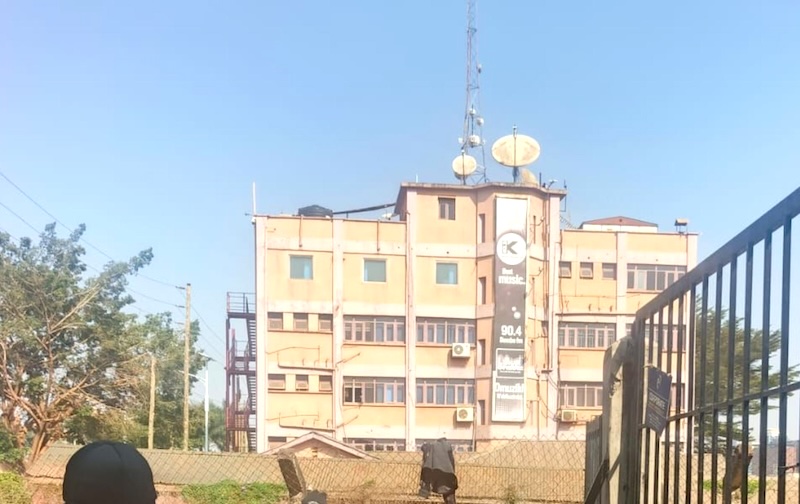
The second major closure took place on May 20, 2013, when police sealed off the Monitor premises and its sister radio stations, KFM and Dembe FM, for 11 days. The catalyst was the publication of a leaked letter attributed to Gen. David Sejusa (Tinyefuza), then Coordinator of Intelligence Services, which alleged a plot to assassinate senior government and military officials opposed to the so-called "Muhoozi Project" – an alleged succession plan involving Gen. Muhoozi Kainerugaba. Crucially, this shutdown was later challenged in court, leading to a landmark judgment on August 16, 2018, in *Monitor Publications Limited v. Attorney General (Civil Suit No. 747 of 2013)*. The High Court Commercial Division, presided over by Justice David Wangutsi, declared the police action unlawful, finding that officers had exceeded the scope of their search warrant by shutting down operations. The government ultimately settled the judgment in 2025, paying approximately UGX 3.1 billion in special, general, and aggravated damages, acknowledging the illegality of its actions.
The most recent shutdown, in June 2026, saw Gen. Muhoozi Kainerugaba, now the Chief of Defence Forces, directly order the closure of Daily Monitor, NTV Uganda, Spark TV, KFM, and Dembe FM. His public statements, including declarations like "I do not believe in a free press! The press should be guided by cadres of the revolution," and the absence of a formal legal order from the Uganda Communications Commission (UCC) or a court, underscore concerns about arbitrary executive action overriding established legal processes. This directly contradicts the constitutional protection of press freedom and the role of the UCC as the statutory regulator.
These incidents occur against a backdrop of significant legal developments affirming media freedom. In *Andrew Mujuni Mwenda & Anor v Attorney General (Constitutional Petition No.12 of 2005)*, the Supreme Court struck down Section 50 of the Penal Code Act, which criminalized the publication of false news, as unconstitutional, thereby strengthening freedom of expression. More recently, in March 2026, the Constitutional Court declared criminal defamation (Section 162 of the Penal Code Act) unconstitutional, further aligning Ugandan law with international human rights standards. Additionally, the Constitutional Court in *Human Rights Network for Journalists & Another v. Attorney General of the Republic of Uganda* affirmed that the state is prevented from acts like censorship that directly impede the press from publishing content. Despite these judicial pronouncements, the recurring nature of extra-legal shutdowns by security forces highlights a persistent gap between constitutional guarantees and practical enforcement, often bypassing the designated regulatory bodies like the UCC.
Conclusion
The repeated shutdowns of the Daily Monitor and its affiliated media houses underscore a deeply entrenched and ongoing struggle for press freedom in Uganda. While the 1995 Constitution robustly guarantees freedom of expression and the press, and the judiciary has, on several occasions, upheld these rights by striking down restrictive laws and penalizing unlawful state actions, the executive and security apparatus frequently resort to arbitrary measures. This pattern creates an unpredictable and challenging environment for independent journalism.
For legal practitioners, these developments highlight the critical need to advise media clients on their constitutional rights and the available legal avenues for challenging unlawful state interference. The successful litigation following the 2013 shutdown serves as a powerful precedent, demonstrating that legal redress, including significant compensation, is achievable. Attorneys must remain vigilant in monitoring regulatory compliance, challenging extra-legal directives, and advocating for the consistent application of the rule of law. The outcome of the current shutdown and any subsequent legal challenges will be crucial indicators of the future trajectory of media freedom and constitutional governance in Uganda.
Citations
- 1.1995 Constitution of the Republic of Uganda, Article 29
- 2.1995 Constitution of the Republic of Uganda, Article 43
- 3.Press and Journalist Act, Cap 105
- 4.Uganda Communications Act, 2013
- 5.Monitor Publications Limited v. Attorney General, Civil Suit No. 747 of 2013
- 6.Andrew Mujuni Mwenda & Anor V Attorney General, Constitutional Petition No.12 of 2005
- 7.Human Rights Network for Journalists & Another v. Attorney General of the Republic of Uganda
- 8.Penal Code Act, Section 50
- 9.Penal Code Act, Section 162
How does this affect your business?
Get an AI analysis of this article grounded in your jurisdictions, practice areas, and any policy documents you've uploaded to Wansom.