
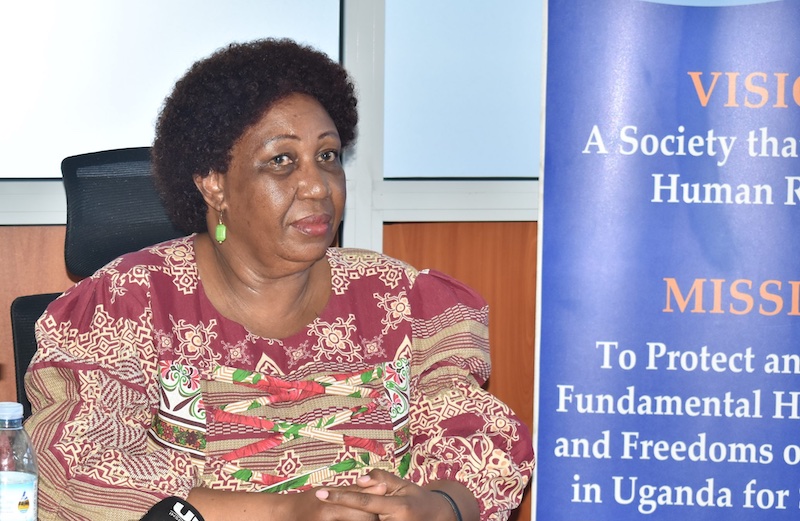
Wangadya resigns as Uganda Human Rights Commission chairperson
Abstract
Fauzati Mariam Wangadya has resigned as Chairperson of the Uganda Human Rights Commission (UHRC), concluding a tumultuous tenure marked by internal strife and public disagreements over the constitutional body's leadership and governance. Her resignation, conveyed in a letter to President Yoweri Kaguta Museveni, follows weeks of accusations of financial mismanagement and counter-allegations of a smear campaign, alongside her own public criticism of the President's appointments to the Commission. This development raises significant questions about the independence, integrity, and operational effectiveness of the UHRC, a crucial institution established under Uganda's 1995 Constitution to promote and protect human rights.
Introduction
The landscape of human rights oversight in Uganda has been significantly altered by the abrupt resignation of Fauzati Mariam Wangadya as the Chairperson of the Uganda Human Rights Commission (UHRC). Her departure brings to an end a period characterized by intense public scrutiny and internal discord within one of the nation's most vital constitutional bodies. The resignation, communicated to President Yoweri Kaguta Museveni, was initially without stated reasons, though subsequent reports indicated a "toxic work environment" and followed her outspoken critique of the calibre of presidential appointments to the Commission.
This development is not merely a change in leadership but signals a critical juncture for the UHRC, an institution mandated to safeguard fundamental human rights and freedoms in Uganda. The circumstances surrounding Wangadya's exit underscore persistent challenges to the Commission's independence and operational integrity. This article will delve into the legal framework governing the UHRC, analyze the controversies that precipitated the Chairperson's resignation, and explore the broader implications for human rights protection and institutional governance in Uganda.
Background
The Uganda Human Rights Commission (UHRC) is a cornerstone of Uganda's democratic governance, established under Article 51(1) of the 1995 Constitution of the Republic of Uganda. Its creation was a direct response to Uganda's turbulent history of widespread human rights abuses, aiming to provide a permanent body to monitor and promote human rights. The Commission's extensive mandate, detailed in Article 52(1) of the Constitution and operationalized by the Uganda Human Rights Commission Act, Cap. 24, includes investigating human rights violations, visiting detention facilities, conducting public education, monitoring government compliance with international human rights treaties, and making recommendations to Parliament.
The UHRC is composed of a Chairperson and not less than three other persons, all appointed by the President with the approval of Parliament. The Chairperson must be a judge of the High Court or a person qualified to hold such an office, and both the Chairperson and members are required to be individuals of high moral character and proven integrity, serving for a renewable term of six years. Historically, the UHRC has held an 'A status' accreditation from the Global Alliance of National Human Rights Institutions (GANHRI), signifying its compliance with the Paris Principles. However, this status has recently been deferred, citing concerns over the Commission's attention to systemic torture and human rights violations in Uganda, highlighting ongoing challenges to its perceived independence and effectiveness.
Analysis
Fauzati Mariam Wangadya's resignation, effective July 6, 2026, occurred amidst a backdrop of escalating internal conflicts and public accusations. While her brief resignation letter to President Museveni did not specify reasons, she later attributed her decision to a "toxic work environment" and had, just days prior, publicly criticized the President for appointing "undeserving" individuals and "political failures" to the Commission, thereby undermining its independence and integrity.
These public statements followed weeks of intense internal wrangling, where three commissioners – Simeo Nsubuga, Col. (Rtd) Steven Basaliza, and Jacklet Atuhaire Rwabukurukuru – had petitioned both President Museveni and the Inspector General of Government (IGG). Their petition alleged financial mismanagement, abuse of office, irregular salary enhancements, questionable procurement practices, and rapid, unwarranted promotions of certain staff under Wangadya's leadership. Wangadya vehemently denied these allegations, characterizing them as a "vicious, vile, and relentless smear campaign" orchestrated by her detractors, possibly with political backing. Reports also indicated an ongoing IGG investigation into the UHRC's management, further intensifying the institutional crisis.
The legal framework for the appointment of the UHRC Chairperson and members, as stipulated in Article 51 of the Constitution, vests significant power in the President, subject to parliamentary approval. While the Constitution aims to ensure the Commission's independence, the controversies surrounding Wangadya's tenure, particularly her criticisms of politically motivated appointments, highlight a tension between executive prerogative and the imperative for an impartial human rights body. This tension is exacerbated by the UHRC's reliance on government funding and the absence of explicit constitutional provisions for the removal of a Chairperson who resigns, leaving the process of filling the vacancy to the President's discretion.
Furthermore, Wangadya's leadership had previously faced criticism from opposition parties, such as the Forum for Democratic Change (FDC) and the National Unity Platform (NUP), and human rights defenders. They had called for her resignation over perceived bias towards security agencies and the Commission's alleged failure to adequately investigate cases of missing persons and torture. These criticisms, coupled with the recent deferral of the UHRC's 'A status' accreditation by GANHRI due to concerns about systemic torture, underscore a broader erosion of confidence in the Commission's ability to effectively fulfill its constitutional mandate.
Conclusion
Fauzati Mariam Wangadya's resignation as Chairperson of the Uganda Human Rights Commission marks a pivotal moment for human rights protection in Uganda. The internal conflicts and public accusations that preceded her departure have undeniably cast a shadow over the UHRC's independence and credibility, both domestically and internationally. The immediate implication is the need for a swift and transparent process to appoint a new Chairperson and commissioners, ensuring that the selections prioritize merit, integrity, and a demonstrable commitment to human rights principles, rather than political expediency.
Practitioners and legal professionals must closely monitor the upcoming appointment process and advocate for reforms that strengthen the UHRC's institutional autonomy and financial independence. Restoring public trust and regaining international accreditation will require not only a leadership committed to its constitutional mandate but also robust parliamentary oversight and adequate resourcing. The UHRC remains a critical bulwark against human rights abuses, and its effectiveness is paramount for upholding the rule of law and fostering a rights-respecting society in Uganda.
How does this affect your business?
Get an AI analysis of this article grounded in your jurisdictions, practice areas, and any policy documents you've uploaded to Wansom.