
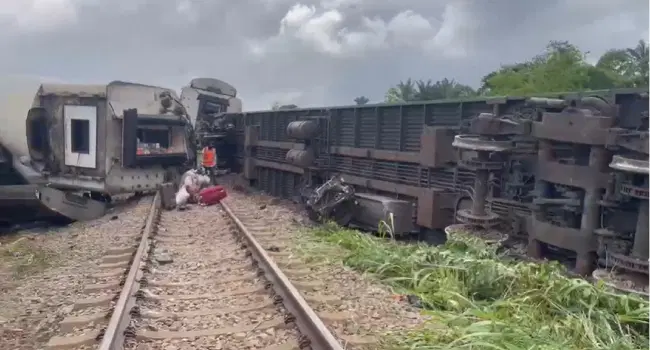
Warri-Itakpe Train Derailment: NSIB says its investigators have retrieved ‘evidence’
Abstract
The recent Warri-Itakpe train derailment has brought into sharp focus the critical role of the Nigerian Safety Investigation Bureau (NSIB) in enhancing transport safety. As investigators retrieve crucial evidence, the NSIB has reiterated its mandate to conduct safety-focused, non-punitive inquiries aimed at identifying causal factors and issuing recommendations to prevent future occurrences. This incident underscores the evolving legal and regulatory landscape for railway safety in Nigeria, particularly with the NSIB's expanded multimodal mandate under its 2022 Establishment Act and ongoing efforts to establish comprehensive rail accident investigation regulations. While the NSIB's role is distinct from determining civil or criminal liability, its findings are instrumental in informing regulatory reforms and potentially supporting future legal actions by affected parties.
Introduction
The derailment of a train along the Warri-Itakpe rail corridor on June 8, 2026, has once again highlighted the inherent risks within Nigeria's burgeoning railway sector and the imperative for robust safety oversight. In the aftermath of the incident, the Nigerian Safety Investigation Bureau (NSIB) swiftly deployed its investigation team, announcing the retrieval of critical evidence and the completion of key on-site activities. This development is significant for legal professionals, as it illuminates the distinct, yet interconnected, roles of safety investigation bodies and the broader legal framework governing railway operations and liability in Nigeria.
The NSIB's emphasis on a "safety-focused and non-punitive" investigation is a cornerstone of its mandate, differentiating its work from criminal or civil proceedings. This article will delve into the legal framework underpinning the NSIB's authority, its investigative processes, and the implications of its findings for railway operators, regulators, and potential litigants. It will also examine the broader regulatory environment for railway safety in Nigeria, considering the roles of the Nigerian Railway Corporation (NRC) and the ongoing efforts to strengthen transport safety legislation.
Background
The Nigerian Safety Investigation Bureau (NSIB) was established by the Nigerian Safety Investigation Bureau (Establishment) Act, 2022 (Act No. 35 of 2022), marking a significant evolution from its predecessor, the Accident Investigation Bureau (AIB), which was primarily focused on aviation. The NSIB's expanded mandate now encompasses the investigation of accidents and serious incidents across all modes of transportation, including air, marine, rail, and tracked vehicle systems, positioning it as Nigeria's sole multimodal accident investigation authority. Its core objective is to promote transport safety by conducting objective, comprehensive, and accurate investigations to determine probable causes and issue safety recommendations, rather than to apportion blame or determine liability.
Complementing the NSIB's investigative role is the Nigerian Railway Corporation (NRC), established by the Nigerian Railway Corporation Act of 1955. Historically, the NRC Act vested both operational and regulatory functions in the Corporation, a structure that has been identified as a potential conflict of interest. Efforts to reform this framework include proposals for a new Railway Act and the establishment of an independent economic and safety regulator for the sector, aimed at separating operational and regulatory responsibilities. Furthermore, the National Assembly has been empowered by the 5th Alteration No 16 to the Constitution of the Federal Republic of Nigeria, 1999 (Act, 2023) to enact laws for the regulation of railway operations, signaling a legislative intent to modernize and strengthen the sector's oversight.
Analysis
The NSIB's investigation into the Warri-Itakpe derailment, led by its Director-General, Captain Alex Badeh Jr., exemplifies its statutory functions. Investigators meticulously documented the accident scene, examined affected rail equipment and infrastructure, gathered operational and technical data, and conducted interviews with relevant personnel. The evidence collected, including witness statements, operational records, and maintenance documentation, will undergo detailed examination by NSIB specialists to identify causal and contributing factors. This process is crucial for generating actionable safety recommendations designed to address identified risks and prevent recurrence, aligning with the Bureau's non-punitive, safety-enhancement objective.
The distinction between a safety investigation and a punitive legal process is paramount. While the NSIB's findings will not directly determine civil or criminal liability, they often form a critical evidentiary basis for subsequent legal proceedings. For instance, victims of the derailment or their families may pursue civil claims against the Nigerian Railway Corporation for negligence or breach of duty of care. The NSIB's report, detailing the probable causes and contributing factors, could be highly persuasive in establishing liability in such cases, even if it does not explicitly assign blame. The NRC Act of 1955, while establishing the corporation, also contains provisions relating to its responsibilities as a carrier of passengers and goods, which could be invoked in civil litigation.
The ongoing development of the NSIB's Rail and Track Accident Investigation Regulations is a significant step towards formalizing and standardizing rail accident investigations in Nigeria, aligning them with international best practices. This regulatory framework, customized to Nigeria's operational realities, will provide a structured methodology for probing rail accidents and near-misses, ensuring thorough analysis and evidence-based recommendations. Furthermore, the recent repositioning of the NSIB to report directly to the Presidency, rather than the Ministry of Aviation, is a strategic move to enhance its independence and ensure that safety lessons translate more directly into national policy reform across all transport modes. This structural change aims to resolve previous inconsistencies where a multimodal agency reported to a ministry with a predominantly aviation focus.
However, challenges remain within the broader regulatory landscape. The existing Nigerian Railway Corporation Act of 1955 has been criticized for not creating an enabling environment for private sector participation and for vesting both regulatory and operational roles in the NRC, leading to potential conflicts of interest. While the National Transport Commission (NTC) Bill, if enacted, aims to establish an independent multimodal economic and safety oversight regulator, its full implementation and effectiveness in harmonizing safety standards across the transport sector are yet to be fully realized. The NSIB's recommendations, therefore, operate within a complex regulatory environment that is still undergoing reform, necessitating close collaboration between various agencies to ensure their effective implementation.
Conclusion
The NSIB's diligent investigation into the Warri-Itakpe train derailment is a crucial step towards understanding the incident's root causes and preventing future tragedies. For legal practitioners, the NSIB's final report will be an invaluable resource, providing expert analysis on the technical and operational factors contributing to the accident. While the Bureau's mandate is strictly non-punitive, its findings can significantly influence civil liability claims against railway operators and inform regulatory enforcement actions by other relevant bodies.
Practitioners should closely monitor the NSIB's forthcoming safety recommendations and the ongoing legislative reforms, particularly the finalization of the Rail and Track Accident Investigation Regulations and the potential enactment of a comprehensive National Transport Commission Act. These developments will shape the future of railway safety and liability in Nigeria, offering new avenues for accountability and improved safety standards. Understanding the interplay between safety investigations, regulatory compliance, and potential litigation will be essential for advising clients in this evolving area of law.
Citations
- 1.Nigerian Safety Investigation Bureau (Establishment) Act, 2022
- 2.Nigerian Railway Corporation Act, 1955
- 3.Constitution of the Federal Republic of Nigeria, 1999 (Fifth Alteration) (No. 16) Act, 2023
- 4.Punch Newspapers, 'Probe deepens into Warri-Itakpe train derailment', June 11, 2026
- 5.The Guardian Nigeria News, 'NSIB launches probe into Warri-Itakpe train derailment Probe', June 10, 2026
- 6.Vanguard News, 'NSIB retrieves key evidence in Warri-Itakpe train derailment probe', June 10, 2026
- 7.The Guardian Nigeria News, 'NSIB retrieves key evidence in Warri-Itakpe train derailment', June 10, 2026
- 8.Nigerian Safety Investigation Bureau (NSIB) website, 'NSIB Establishment Act 2022'
- 9.The Guardian Nigeria News, 'Tinubu moves NSIB to Presidency in major transport safety reform', March 15, 2026
- 10.Nigerian Safety Investigation Bureau (NSIB) website, 'NSIB COMMENCES INVESTIGATION INTO RAILWAY INCIDENT ON RIGASA – IDU PASSENGER SERVICE', March 16, 2026
- 11.Bureau of Public Enterprise, 'Nigerian Railway Corporation - NEW LEGAL AND REGULATORY FRAMEWORK', January 08, 2006
- 12.Aviation Metric, 'NSIB to unveil regulatory framework for transportation investigation', July 21, 2025
- 13.Vanguard News, 'NSIB finalises accident probe framework for maritime, railway sector', July 21, 2025
- 14.ThisDayLive, 'NSIB Unveils Draft Regulations to Enhance Safety in Rail, Maritime, Aviation Sectors', August 01, 2025
- 15.The Guardian Nigeria News, 'NTC bill heralds new dawn for transport sector', April 17, 2018
- 16.Wikipedia, 'Nigerian Safety Investigation Bureau'
- 17.Wikipedia, 'Nigerian Railway Corporation'
- 18.Premium Times Nigeria, 'Warri-Itakpe Train Derailment: NSIB says its investigators have retrieved ‘evidence’', June 12, 2026
How does this affect your business?
Get an AI analysis of this article grounded in your jurisdictions, practice areas, and any policy documents you've uploaded to Wansom.