
What Museveni’s words mean for Besigye’s trial
Abstract
President Yoweri Museveni's recent public comments regarding the ongoing treason trial of opposition leader Dr. Kizza Besigye have ignited a significant legal debate in Uganda. These remarks, which questioned the conduct of the trial and the granting of bail, have been widely criticized by the Uganda Law Society (ULS) as a direct violation of the sub judice rule and an unconstitutional interference with judicial independence. The incident highlights the persistent tension between the executive and judicial arms of government, raising critical concerns about the right to a fair hearing guaranteed under Article 28 of the Constitution and the broader implications for the rule of law in Uganda.
Introduction
The protracted political rivalry between Ugandan President Yoweri Museveni and opposition figure Dr. Kizza Besigye has frequently spilled over from the political arena into the country's courts. A recent televised address by President Museveni, in which he publicly commented on Besigye’s ongoing treason trial and criticized the judiciary's approach to bail, has brought this tension to a head, sparking a fervent debate among legal professionals and civil society. These presidential remarks, made while the case remains sub judice, directly challenge the fundamental principles of judicial independence and the right to a fair trial, which are cornerstones of Uganda's constitutional democracy.
This article delves into the legal ramifications of President Museveni's statements for Dr. Besigye's trial and the broader administration of justice in Uganda. It will examine the constitutional framework governing judicial independence and fair hearing rights, analyze the application of the sub judice rule and principles of contempt of court in this context, and discuss the implications of executive interference on public confidence in the judiciary. The central thesis is that such pronouncements by the head of state, regardless of intent, pose a grave threat to the integrity of the judicial process and undermine the constitutional separation of powers, necessitating a robust defense of judicial autonomy.
Background
Uganda's legal system is founded on the principle of the separation of powers, with the Judiciary established as an independent arm of government under Article 126 of the Constitution of the Republic of Uganda, 1995. This constitutional mandate empowers the judiciary to administer justice, interpret and defend the Constitution, and promote the rule of law, free from control or direction by any person or authority, as stipulated in Article 128(1). Crucially, Article 28 of the Constitution guarantees every person the right to a fair, speedy, and public hearing before an independent and impartial court or tribunal in the determination of civil rights and obligations or any criminal charge. This right is non-derogable, even in states of emergency, underscoring its fundamental importance.
Central to safeguarding the fairness and impartiality of judicial proceedings is the sub judice rule. This common law principle, a species of contempt of court, prohibits public discussion of matters pending before the courts that could prejudice judicial officers or assessors and thereby affect the outcome of a trial. Contempt of court itself is defined as conduct that scandalizes or tends to scandalize, or lower the authority of any court; prejudices or interferes with the due course of any judicial proceeding; or obstructs the administration of justice. The rule is designed to ensure that justice is administered solely within the courtroom, based on evidence presented, rather than influenced by external pressures or public opinion. Historically, there have been instances where the application of the sub judice rule in Uganda has been inconsistent, sometimes used for political convenience, highlighting the need for clarity and strict adherence, especially when high-profile cases are involved.
Analysis
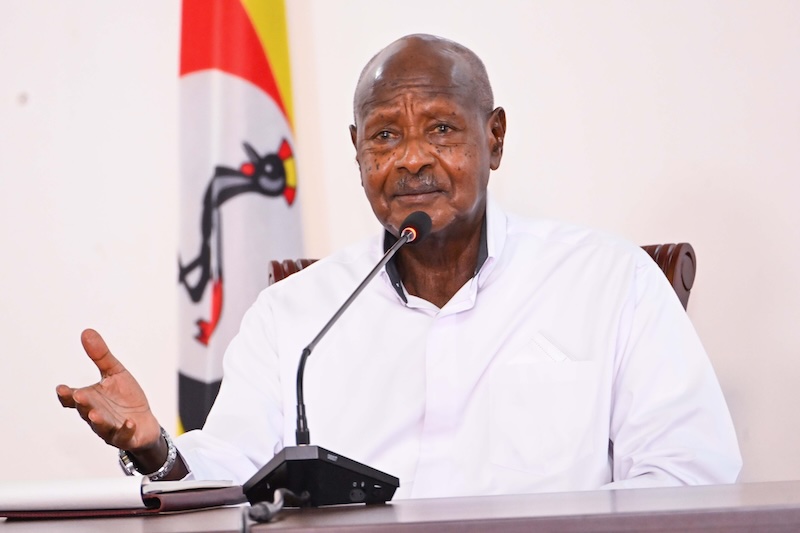
President Museveni's recent comments, accusing Dr. Besigye of frustrating his own trial and questioning the continued granting of bail in serious criminal cases, directly contravene the established legal principles. The Uganda Law Society (ULS) swiftly condemned these remarks, asserting that they constitute "clear sub judice contempt of court" by publicly speculating on the motives, conduct, and merits of an active criminal case. Such statements, emanating from the head of the executive, are seen as a direct attack on the constitutional guarantees of personal liberty and the presumption of innocence enshrined in Articles 23 and 28 of the Constitution.
The executive's interference with judicial decisions, particularly concerning bail, undermines the exclusive jurisdiction of the courts in such matters. The Supreme Court of Uganda has previously affirmed the judiciary's role as the guardian of constitutional rights, notably in its landmark ruling that military courts cannot try civilians, a decision initially rejected by President Museveni. This historical context underscores a persistent tension where the executive has, at times, challenged judicial authority and sought to influence legal processes, thereby weakening the judiciary's independence.
The practical implications for judges presiding over Dr. Besigye's case are significant. While judges are expected to be impartial, public pronouncements by the head of state can create an environment of perceived pressure, potentially compromising the appearance of justice. The ULS has called upon the Chief Justice and the Judiciary's top management to publicly denounce such executive interference, citing instances where judicial officers have courageously resisted external pressures. This highlights the judiciary's critical role in defending its independence against attempts to undermine its authority and public confidence in the administration of justice. The continued disregard for the sub judice rule by high-ranking officials risks eroding the public's trust in the impartiality of the courts, a vital component of the rule of law.
Furthermore, the President's criticism of bail, a constitutional right, suggests a desire to influence judicial discretion. Article 28(3)(a) of the Constitution presumes an accused person innocent until proven guilty, and bail is a mechanism to uphold this presumption while ensuring attendance at trial. Any attempt to abolish or unduly restrict bail, as suggested by the President, would be inconsistent with Uganda's constitutional framework and international human rights standards. The ULS argues that banning bail would punish the innocent and shield systemic failures from scrutiny, rather than protecting witnesses or ensuring justice.
Conclusion
President Museveni’s public comments on Dr. Kizza Besigye’s ongoing trial represent a serious challenge to the rule of law and judicial independence in Uganda. By violating the sub judice rule and attempting to influence judicial decisions on matters like bail, the executive risks undermining the constitutional guarantees of a fair trial and the separation of powers. For legal practitioners, this incident underscores the imperative to vigorously defend constitutionalism and the independence of the judiciary, utilizing all available legal avenues to ensure that trials are conducted free from executive interference.
Moving forward, all stakeholders must closely monitor the judiciary's response and the progression of Dr. Besigye's trial. The judiciary's resolve in upholding its independence, potentially through formal condemnations of executive overreach or through robust rulings that reaffirm constitutional principles, will be crucial. This situation serves as a critical reminder that the integrity of the justice system hinges not only on the letter of the law but also on the unwavering commitment of all branches of government to respect and uphold its foundational principles. Practitioners should be prepared to challenge any perceived bias or undue influence in court, advocating for strict adherence to fair trial standards and the sub judice rule to safeguard the sanctity of the judicial process.
Citations
- 1.The Constitution of the Republic of Uganda, 1995, Article 28
- 2.The Constitution of the Republic of Uganda, 1995, Article 126
- 3.The Constitution of the Republic of Uganda, 1995, Article 128(1)
- 4.Uganda Law Society Statement (July 4, 2026) (as reported by The Observer, Nilepost, and The Independent Uganda)
- 5.Attorney General vs. Hon. Micheal Kabaziguruka (Constitutional Appeal No. 02 of 2021)
- 6.Florence Dawaru v Angumale Albino & Anor HCMA No. 0096 of 2016