
Why cooking gas will remain scarce, expensive
Abstract
Nigeria, despite possessing Africa's largest proven gas reserves, continues to grapple with acute scarcity and high prices of Liquefied Petroleum Gas (LPG), commonly known as cooking gas. This article examines the legal and regulatory frameworks, primarily the Petroleum Industry Act (PIA) 2021 and associated policies, that govern the domestic gas sector. It highlights how a confluence of factors, including infrastructure deficits, market dynamics, and the implementation challenges of domestic supply obligations, contribute to the persistent disparity between abundant reserves and limited household access. The analysis delves into the efficacy of current regulations in balancing export revenues with domestic energy security, offering insights into the complex interplay of policy, market forces, and infrastructure that underpins the ongoing scarcity and costliness of LPG for Nigerian consumers.
Introduction
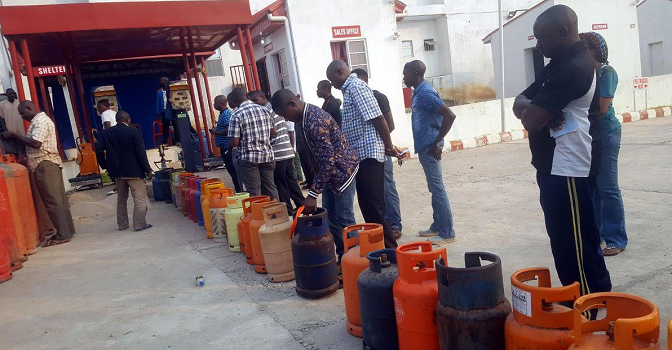
Nigeria's energy landscape presents a striking paradox: a nation endowed with over 209 trillion cubic feet (TCF) of proven natural gas reserves, ranking among the largest globally, yet its citizens face persistent scarcity and escalating costs for Liquefied Petroleum Gas (LPG), a critical domestic energy source. This incongruity, where domestic demand for cooking gas far outstrips supply, has significant socio-economic implications, impacting household budgets, environmental sustainability, and the broader industrial sector. The prevailing situation, as highlighted by industry experts, suggests an uncertain outlook for the affordability and availability of LPG, despite governmental efforts to deepen gas utilization.
This article aims to dissect the legal and regulatory architecture governing Nigeria's gas sector, particularly as it pertains to domestic LPG supply. It will explore how the foundational statutes and policies, notably the Petroleum Industry Act (PIA) 2021, the National Gas Policy, and various regulatory instruments, interact with market forces and infrastructural realities to shape the current challenges. By examining the statutory obligations, fiscal incentives, and regulatory oversight mechanisms, this analysis seeks to provide legal professionals with a comprehensive understanding of the systemic issues contributing to the scarcity and high cost of cooking gas in Nigeria, and to identify areas for potential legal and policy intervention.
The core thesis is that while Nigeria possesses a robust legal framework aimed at promoting domestic gas utilization, including LPG, its effectiveness is hampered by persistent infrastructure deficits, a complex interplay of market incentives that may favor export, and implementation challenges in enforcing domestic supply obligations. Understanding these legal and regulatory nuances is crucial for practitioners advising stakeholders across the gas value chain, from producers to distributors and consumers.
Background
The legal and regulatory framework governing Nigeria's petroleum sector, including its vast natural gas resources, has undergone significant evolution, culminating in the enactment of the Petroleum Industry Act (PIA) 2021. Prior to the PIA, the sector was governed by a fragmented array of legislation, including the Petroleum Act and the Associated Gas Re-injection Act, which often proved inadequate in addressing the complexities of gas commercialization and domestic utilization.
The PIA 2021 serves as the primary legislation, establishing a comprehensive legal, governance, and fiscal framework for the industry. It created two key regulatory bodies: the Nigerian Upstream Petroleum Regulatory Commission (NUPRC) for upstream operations and the Nigerian Midstream and Downstream Petroleum Regulatory Authority (NMDPRA) for midstream and downstream activities, including gas transportation, processing, pricing, and distribution. A cornerstone of the PIA, particularly relevant to domestic supply, is Section 110, which transforms domestic gas supply from a policy preference into a legal obligation, known as the Domestic Gas Delivery Obligation (DGDO), for upstream lessees. The NUPRC is empowered to prescribe and allocate these obligations annually.
Complementing the PIA are various policies and regulations, such as the National Gas Policy 2017 and the more recent NNPC Gas Master Plan (GMP) 2026. The GMP 2026, anchored in the PIA, aims to increase national gas production to 10 billion cubic feet per day (Bcf/d) by 2027 and 12 Bcf/d by 2030, with a strong emphasis on domestic utilization, including LPG. Furthermore, the framework has transitioned from a regulated gas pricing regime to a willing buyer-willing seller model, albeit with transitional buffers, to attract investment and allow market fundamentals to determine prices. Efforts to curb gas flaring, a historical challenge, are also integrated through the Gas Flaring, Venting and Methane Emission Regulations and the Nigerian Gas Flare Commercialisation Programme (NGFCP), which seek to monetize flared gas and contribute to domestic supply.
Analysis
Despite the robust legal and policy framework, several factors contribute to the persistent scarcity and high cost of LPG in Nigeria. A primary challenge lies in the effective implementation and enforcement of the Domestic Gas Delivery Obligation (DGDO) under Section 110 of the PIA. While NUPRC reported a 77% delivery of the DGDO in 2024, this figure represents overall gas and does not specifically detail LPG volumes, nor does it fully address the underlying infrastructure gaps that impede actual delivery to end-users. The incentive structure, while offering a reduced royalty rate of 2.5% for domestically utilized gas compared to 5% for other gas production, may still be outweighed by the perceived higher profitability and ease of export for producers, particularly international oil companies (IOCs) who have historically been accused of ignoring their DGSO obligations.
The critical infrastructure deficit remains a significant bottleneck. Nigeria's gas infrastructure, including processing plants, pipelines, and storage facilities, is inadequate to meet the burgeoning domestic demand. For instance, a major LPG producer like Nigeria LNG (NLNG) transports its product from Bonny to Lagos for storage before nationwide distribution, creating logistical bottlenecks and increasing landing costs. The Midstream and Downstream Gas Infrastructure Fund (MGIF), established under Section 52 of the PIA, aims to catalyze investments in this area, funded partly by a 0.5% levy on the wholesale price of petroleum products and natural gas. However, the pace of infrastructure development has not kept up with demand growth, exacerbated by issues like pipeline vandalism and security challenges.
The transition to a willing buyer-willing seller pricing framework, while intended to attract investment by eliminating price distortions, can lead to price volatility in a supply-constrained market. The government has attempted to mitigate this through interventions, such as the Minister of State for Petroleum Resources (Gas) directing NMDPRA to engage stakeholders for market stability and the introduction of VAT exemptions on LPG in 2024. However, the impact of these measures on sustained affordability is yet to be fully realized, with retail prices for cooking gas remaining high.
Furthermore, regulatory fragmentation and institutional weaknesses have historically hampered effective gas utilization. While the PIA aimed to streamline regulation, challenges persist in ensuring strict enforcement of duties, clear liability regimes, and enhanced market incentives. The focus on commercializing flared gas through the NGFCP is a positive step, providing a potential additional source for domestic supply, but its full operational engagement and infrastructural support are still developing. The overall picture reveals that while the legal framework provides a strong foundation, the practical realities of infrastructure, market dynamics, and enforcement continue to undermine the goal of abundant and affordable LPG for Nigerian households and industries.
Conclusion
The persistent scarcity and high cost of cooking gas in Nigeria, despite the nation's vast gas reserves and a progressive legal framework embodied in the Petroleum Industry Act 2021, underscore a complex interplay of regulatory, infrastructural, and market challenges. While the PIA's Domestic Gas Delivery Obligation (DGDO) and the broader National Gas Policy aim to prioritize domestic utilization, their effectiveness is significantly hampered by inadequate midstream and downstream infrastructure, a market structure that may still inadvertently favor export, and the inherent complexities of transitioning to a market-driven pricing regime.
For legal practitioners, these dynamics present multifaceted implications. Advising clients in the upstream sector requires a deep understanding of DGDO compliance and the evolving fiscal incentives for domestic gas production, balanced against export opportunities. In the midstream and downstream, legal counsel is crucial for navigating licensing requirements, investment in infrastructure projects, and addressing contractual disputes arising from supply chain inefficiencies or price volatility. Furthermore, the ongoing regulatory efforts by NMDPRA to stabilize the LPG market and the government's push for infrastructure development through initiatives like the Midstream and Downstream Gas Infrastructure Fund warrant close monitoring. Future legal and policy reforms will likely focus on strengthening enforcement mechanisms, attracting targeted investments in gas processing and distribution infrastructure, and ensuring a more equitable balance between export revenues and domestic energy security to finally unlock Nigeria's gas potential for its citizens.
Citations
- 1.Petroleum Industry Act 2021
- 2.Nigerian Midstream and Downstream Petroleum Operations Regulations 2022
- 3.Flare Gas (Prevention of Waste and Pollution) Regulations 2018
- 4.Oil and Gas Companies (Tax Incentives, Exemption, Remission, etc.) Order 2024
- 5.Nigeria Tax Act 2025
- 6.National Gas Policy 2017
- 7.NNPC Gas Master Plan 2026
How does this affect your business?
Get an AI analysis of this article grounded in your jurisdictions, practice areas, and any policy documents you've uploaded to Wansom.