
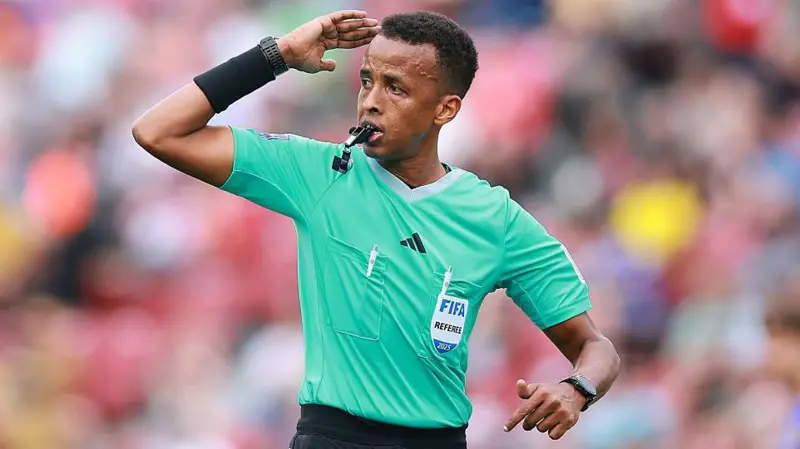
World Cup: I have right papers and visa – barred referee Artan
Abstract
The recent denial of entry to Somali referee Omar Artan into the United States, despite his assertion of possessing valid documentation and a visa for the World Cup, highlights a critical aspect of U.S. immigration law: the broad discretionary power vested in Customs and Border Protection (CBP) officers at ports of entry. This incident underscores that a visa merely permits travel to a U.S. port of entry and formally apply for admission, but does not guarantee entry. Practitioners must understand the statutory grounds of inadmissibility under the Immigration and Nationality Act (INA) and the significant authority of CBP officers to conduct secondary inspections and deny admission, even to individuals holding seemingly valid travel documents, with limited avenues for immediate appeal.
Introduction
The recent incident involving Somali referee Omar Artan, who was reportedly denied entry to the United States for the World Cup despite holding what he described as "right papers" and a "right visa" after an extensive 11-hour immigration interview, casts a spotlight on the often-misunderstood nuances of U.S. immigration law. This event, while specific to an individual, serves as a potent reminder for legal professionals and international travelers alike: a U.S. visa is not an absolute guarantee of admission into the country. Instead, it merely grants the holder the privilege to travel to a U.S. port of entry and formally apply for admission.
Background
The legal framework governing entry into the United States is primarily enshrined in the Immigration and Nationality Act (INA). Under the INA, all non-U.S. citizens seeking to enter the country are considered "applicants for admission" and are subject to inspection by U.S. Customs and Border Protection (CBP) officers at ports of entry. This inspection process, outlined in 8 U.S. Code § 1225, grants immigration officers broad powers to interrogate individuals and examine their documents to determine admissibility. Even with a valid visa, an individual must still establish their admissibility to the satisfaction of the CBP officer.
Analysis
The core of the issue lies in the distinction between visa issuance and admission. A visa is issued by a U.S. consular officer abroad, certifying that the applicant appears eligible for a specific visa category. However, the final decision on entry rests with CBP officers at the port of entry. These officers possess significant discretionary authority to deny admission if they determine an individual is inadmissible under any of the grounds specified in Section 212(a) of the INA (8 U.S. Code § 1182). These grounds are extensive and include health-related issues, criminal history, security concerns, public charge concerns, and immigration violations, among others.
CBP officers are trained to identify "red flags" during inspection, which can lead to secondary screening—a more intensive interview process, potentially lasting hours, where travelers may be questioned extensively and their belongings searched. Reasons for referral to secondary inspection can include inconsistent travel stories, outdated documents, suspicion of immigrant intent (for non-immigrant visa holders), missing paperwork, past immigration violations, or even minor criminal records. The officer's discretion extends to determining if the traveler's true intent aligns with their stated purpose of travel and visa category. For instance, a P-1 visa, typically for internationally recognized athletes or entertainers, requires proof of international recognition and that the services will be performed for a specific event or competition. A denial could stem from insufficient documentation of this recognition or the nature of the event.
Crucially, a CBP officer can deny admission even if the Department of State previously issued a visa. If denied, the individual may be subject to expedited removal, which can result in a five-year or even permanent bar from the United States, depending on the reason for inadmissibility. While an applicant may be permitted to withdraw their application for admission to avoid a formal inadmissibility finding, this is also at the discretion of the CBP officer. Judicial review of such decisions, particularly in expedited removal cases or denials at the port of entry, is severely limited by statute, making immediate challenges difficult. The Supreme Court has affirmed that aliens seeking entry are limited to the due process rights provided by Congress.
Conclusion
The case of Omar Artan serves as a stark reminder for legal practitioners to thoroughly educate clients on the realities of U.S. entry. A valid visa is a prerequisite, not a guarantee. Attorneys must emphasize the discretionary power of CBP officers and the importance of meticulous preparation, including consistent travel narratives, comprehensive supporting documentation, and a clear understanding of the visa's purpose. Clients should be advised to be truthful and concise during interviews and understand their limited rights during secondary inspection, particularly the absence of a right to counsel in all circumstances during initial questioning. Furthermore, practitioners should be aware of the extremely limited avenues for challenging a denial of admission at the border. Proactive and comprehensive legal counsel remains paramount to mitigate the risks associated with U.S. border inspections, especially for individuals participating in high-profile international events.
Citations
- 1.8 U.S. Code § 1182 - Inadmissible aliens
- 2.8 U.S. Code § 1225 - Inspection by immigration officers
- 3.CBP's Use of Discretion at Ports of Entry - Murthy Law Firm | U.S Immigration Law (October 08 2013)
- 4.Grounds for Finding a Foreign National Legally Inadmissible to the U.S. | Immigration Law Center | Justia (October 18 2025)
- 5.Inadmissibility Overview - Kevin W. Jones & Associates
- 6.Grounds of Inadmissibility - Serotte Reich, LLP - Immigration Law
- 7.Chapter 8: Grounds For Inadmissibility and Removal
- 8.8 U.S.C. § 1182 - U.S. Code Title 8. Aliens and Nationality § 1182 | FindLaw
- 9.8 USC 1225: Inspection by immigration officers; expedited removal of inadmissible arriving aliens; referral for hearing - OLRC Home
- 10.Entering or re-entering the U.S.: Guidance about Border Security Measures at Ports of Entry (March 09 2022)
- 11.Unlawful Presence and Inadmissibility - USCIS (January 25 2025)
- 12.8 USC 1182: Inadmissible aliens - OLRC Home (May 08 2008)
- 13.Visa Approved, Entry Denied: Steps to Take at the U.S. Border (May 09 2025)
- 14.8 USC 1182 - Inadmissible aliens - GovRegs (January 29 2025)
- 15.8 USC 1225 - Inspection by immigration officers; expedited removal of inadmissible arriving aliens; referral for hearing - GovRegs
- 16.INA §235 (2011): Inspection by immigration officers; expedited removal of inadmissible arriving aliens; referral for hearing - Law and Software
- 17.8 U.S. Code Chapter 12 Subchapter II Part IV - Inspection, Apprehension, Examination, Exclusion, and Removal - Law.Cornell.Edu
- 18.8 U.S.C. 1182 - Inadmissible aliens - Content Details - USCODE-2016-title8-chap12-subchapII-partII-sec1182 - GovInfo
- 19.P-1A Denial Reasons — Why Athletes Get Rejected - Law Offices of Peter D. Chu (June 03 2026)
- 20.US Port Of Entry And Admission Process - MSU OISS
- 21.Can I Be Denied Admission Into The U.S. If I Have A Valid Visa Or Enter On The Visa Waiver Program? - Florida Immigration Lawyer Blog (May 22 2017)
- 22.INA §212 (2011): Inadmissible aliens - Law and Software
- 23.Reasons For A P Visa Denial - Serving Immigrants
- 24.Common Reasons for U.S. Visa Denials - goellaw
- 25.Understanding Inadmissibility: Guidance on U.S. Entry Denials
- 26.Visa Denials - Travel
- 27.5 Common Visa Questions for International Athletes - Guerra Legal (July 14 2025)
- 28.Understanding Your Rights at U.S. Ports of Entry: A Guide for Travelers – Perry & Alznauer
- 29.CBP Search Authority | U.S. Customs and Border Protection (January 28 2026)
- 30.P-1A Denied Options — Next Steps After Rejection - Law Offices of Peter D. Chu (June 03 2026)
- 31.At U.S. Airports and Ports of Entry - ACLU of Socal (June 10 2024)
- 32.What U.S. Customs and Border Protection Can and Cannot Do: Legal Powers, Limits & Rights — Charles International Law (August 17 2025)
- 33.Authority of US Customs and Border Protection Agents - American Immigration Council
- 34.Background on Judicial Review of Immigration Decisions (June 01 2013)
- 35.SCOTUS: Judicial Review Limitation for Expedited Removal Does Not Violate the Constitution - Center for Immigration Studies (June 26 2020)
- 36.P-1 Work Visas for Athletes, Celebrities, and Entertainers - San Diego Attorneys
- 37.SCOTUS Grants Review of Ninth Circuit Decision Holding Turnbacks of Asylum Seekers Unlawful - Democracy Forward (November 17 2025)
- 38.An Overview of Judicial Review of Immigration Matters - EveryCRSReport.com (September 11 2013)
- 39.Immigration & National Security Supreme Court Cases
How does this affect your business?
Get an AI analysis of this article grounded in your jurisdictions, practice areas, and any policy documents you've uploaded to Wansom.