
CBK Amendment Act 2026 Tightens Emergency Liquidity Access, Formalises Financial Stability Mandate, and Introduces National Assembly Vetting for Deputy Governor
Abstract
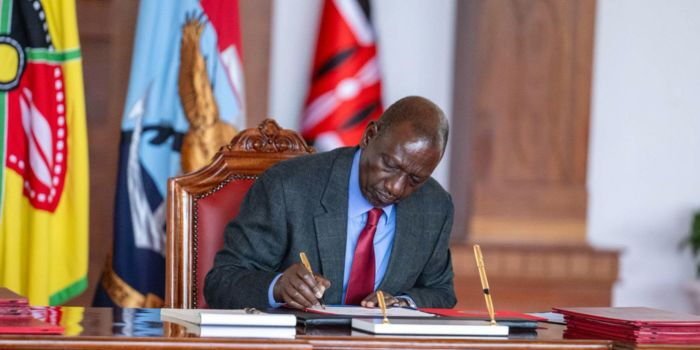
President Ruto has assented to the Central Bank of Kenya Amendment Act 2026, introducing four material reforms. First, ELA access is now conditioned on strict solvency, viability, and systemic risk thresholds, with institutions that fail these thresholds directed toward restructuring, resolution, or closure rather than emergency support. Second, the CBK's routine monetary policy operations are formally separated from emergency financial interventions, creating a clearer legal distinction between liquidity management and crisis response. Third, financial system stability and sound banking regulation are elevated to the CBK's secondary mandate alongside price stability as the primary objective. Fourth, Deputy Governor nominees must be vetted and approved by the National Assembly before appointment, aligning their process with that of the Governor. For banks, the tightened ELA conditions remove any expectation of automatic support and raise the floor for what constitutes adequate liquidity planning. For the CBK, the mandate and governance reforms carry institutional and political implications that extend beyond the current crisis management framework. The Act is the most substantive reform of Kenya's central banking framework in recent years.
Introduction
Emergency Liquidity Assistance exists to prevent solvency-adjacent but fundamentally sound institutions from collapsing under temporary funding pressure. The classic lender-of-last-resort design, credit extended at penalty rates against good collateral to solvent but illiquid institutions, is what the CBK's prior framework approximated. The CBK Amendment Act 2026 tightens that design considerably by requiring formal assessment of solvency, viability, and systemic risk before support is extended. The practical effect is that a bank facing liquidity stress can no longer assume CBK support is available simply because it has not yet failed. It must demonstrate it meets the new statutory thresholds, and if it does not, it faces restructuring or resolution rather than emergency funding.
That shift in the ELA framework is a direct signal to the banking sector about the direction of supervisory philosophy. Moral hazard in banking, the tendency of institutions to take on more risk when they expect public support in a crisis, is reduced when the conditions for that support are made more demanding and less predictable. The CBK is signalling that Kenya's banking system needs to internalise stronger liquidity management discipline rather than relying on central bank support as a backstop. For bank boards and risk managers, the message is operationally clear: contingency funding plans that depend on ELA availability as a primary or secondary fallback need to be reviewed.
Background
The Central Bank of Kenya Act, Cap 491, is the primary statute governing the CBK's mandate, powers, and institutional structure. Prior to this amendment, the CBK's emergency liquidity powers were structured to preserve institutional discretion on whether and how to extend support, but the statutory conditions for accessing that support were less precisely defined than the new framework. Kenya's banking sector has experienced periodic institutional stress, including significant non-performing loan cycles and institution-specific liquidity challenges, against which the CBK has intervened in various ways. The amendment formalises the criteria for those interventions rather than leaving them to supervisory discretion alone.
The separation of monetary policy operations from emergency financial interventions codifies a distinction that central banking best practice has long recommended. The IMF and World Bank's central banking governance guidance emphasises the importance of clear institutional delineation between routine open market operations, which manage system-wide liquidity for monetary policy purposes, and ELA, which addresses institution-specific distress. Conflating the two creates both operational and reputational risks for the central bank. The amendment's formalisation of this separation brings Kenya's central banking framework into closer alignment with international standards.
The elevation of financial stability as a secondary mandate reflects a global post-2008 financial crisis shift in central banking doctrine. Many central banks, including the Bank of England and the South African Reserve Bank, have explicitly incorporated macroprudential and financial stability objectives alongside their primary price stability mandates. The CBK's formalisation of this dual mandate structure aligns Kenya with that international trajectory and gives the CBK an explicit legal basis for macroprudential interventions that may not directly serve price stability objectives but serve financial system health.
Analysis
The tightened ELA conditions are the reform with the most immediate operational implications for Kenya's banking sector. Under the new framework, a bank seeking ELA must satisfy the CBK that it meets thresholds on solvency, viability, and systemic relevance before support is extended. Each of those thresholds requires elaboration that the Act's language as reported does not fully provide. Solvency means the institution's assets exceed its liabilities on a realistic valuation basis, which requires the CBK to make a forward-looking assessment of asset quality at a moment of stress, precisely when valuations are most uncertain. Viability means the institution has a credible path to recovery without ongoing public support, which requires a business plan assessment. Systemic risk means the institution's failure would cause contagion or disruption to the broader financial system, which requires a market impact analysis. None of these assessments is straightforward, and the quality of the CBK's assessment process will determine whether the new conditions operate as a genuine tightening or as a procedural overlay that produces the same outcomes as before under more formal documentation.
For bank boards and risk committees, the practical consequence is a recalibration of liquidity risk management. A contingency funding plan that relied on ELA as a near-automatic backstop is no longer adequate. Banks need to demonstrate to their own boards, and potentially to the CBK in supervisory engagement, that their liquidity planning can withstand stress scenarios without ELA support, or that they would clearly meet the new statutory thresholds if ELA were needed. That requires more rigorous internal stress testing and more honest board-level conversation about liquidity risk than has been required under the prior framework. Banks that have been treating ELA as an implicit guarantee of support have a compliance and governance gap to close.
The National Assembly vetting requirement for Deputy Governor nominees is a governance reform with longer-term implications for CBK institutional independence. The Governor's vetting by the National Assembly was already established practice, ensuring parliamentary accountability for the central bank's leadership. Extending that requirement to Deputy Governors aligns the framework and reduces the risk that a Deputy Governor who would not survive parliamentary scrutiny is appointed to influence CBK policy. The political dimension is real: National Assembly vetting gives the legislature a formal role in shaping CBK leadership, which is a check on executive appointment power but also a potential vector for political influence over central bank governance. How that tension plays out will depend on the quality of parliamentary scrutiny in practice. The legal framework now supports accountability; whether it delivers independence depends on institutional culture.
Conclusion
The CBK Amendment Act 2026 removes the assumption of automatic central bank support and places the burden of liquidity resilience squarely on individual institutions. That is the correct policy direction, and it aligns Kenya's framework with international best practice. The test will be whether the CBK's assessment process for the new ELA thresholds is rigorous enough to distinguish genuinely sound institutions from those that should be resolved, and whether it can make those assessments credibly under the time pressure that banking crises generate. Banks that treat this amendment as a compliance exercise rather than a genuine signal about the future of regulatory expectations will be unprepared when that test comes.
Citations
- 1.Central Bank of Kenya Amendment Act, 2026 (assented to 6 July 2026)
- 2.Central Bank of Kenya Act, Cap 491, Laws of Kenya (as amended)
- 3.IMF Central Banking Governance guidance on lender-of-last-resort frameworks
- 4.Constitution of Kenya, 2010, Article 231 (Central Bank of Kenya)
- 5.Banking Act, Cap 488, Laws of Kenya (bank supervision framework, by reference)