
Closing of Florida’s ‘Alligator Alcatraz’: The Structural Collapse of a $1.2 Billion Detention Experiment
Abstract
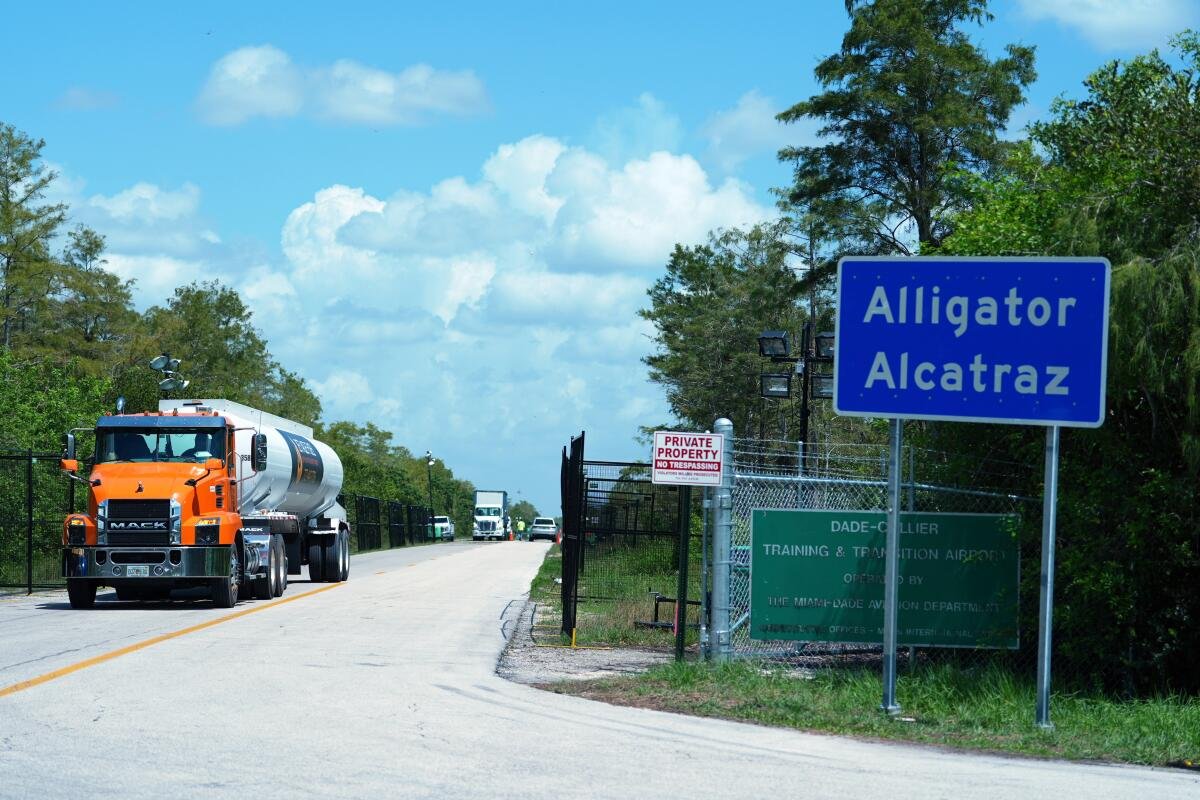
On June 25, 2026, Florida Governor Ron DeSantis officially announced the closure and full demobilization of the South Florida Detention Facility, colloquially known as "Alligator Alcatraz". Sprawled across an abandoned airfield within the Big Cypress National Preserve in the Everglades, the 5,000-bed soft-sided facility operated as a high-velocity deportation hub for nearly a year. However, the $1.2 billion experiment faced continuous legal interventions, hunger strikes, and severe environmental challenges that ultimately forced state and federal authorities to clear the camp ahead of the 2026 hurricane season. This article analyzes the legal framework under which the facility operated, the compliance vulnerabilities of its private contractors, and the broader institutional lessons drawn from its rapid dissolution
Introduction
The sudden dismantling of Florida’s most infamous immigration detention center marks a dramatic pivot point in regional enforcement strategies. Hailed at its July 2025 opening by state and federal leadership as the blueprint for aggressive immigration control, the facility at the Dade-Collier Training and Transition Airport has officially been ordered into full demobilization. Governor Ron DeSantis defended the facility’s record during a press conference on June 25, 2026, stating it successfully channeled 21,000 deportations and fulfilled its role as an emergency stopgap.
Yet, the facility's legacy is deeply fractured. Behind the administration's claims of operational success lies a complex tapestry of civil rights litigation, sub-standard living conditions, unmonitored vendor spending, and an acute geographical vulnerability to extreme weather that made continued operations legally and physically untenable
Background
Alligator Alcatraz" was established in the summer of 2025 by invoking a standing immigration "state of emergency" in Florida. This administrative mechanism allowed the Florida Division of Emergency Management to bypass standard local zoning ordinances, municipal cooperation, and rigorous federal environmental impact assessments normally required within protected wetlands.
Constructed in a matter of days out of heavily reinforced fabric tents and modular trailers, the camp was designed to dramatically scale up detention bed space. The facility operated at a staggering burn rate of $1.2 million per day, funded through heavily contested emergency resource allocations. Despite a brief pause in August 2025 when a U.S. District Judge granted a preliminary injunction halting expansion due to due process and environmental concerns, the 11th Circuit Court of Appeals stayed the order, allowing the complex to reach peak capacity by the winter of 2025.
Analysis
The operational collapse of the facility provides critical insights into the legal risks inherent to outsourced emergency administrative detention. From its inception, corporate vendors and state administrators faced a barrage of structural challenges:
1. Civil and Human Rights Liabilities: Detainees consistently launched legal challenges and organized prolonged hunger strikes to protest substandard living conditions. Documented failures included systemic medical neglect, lack of valid orders of removal, and severe plumbing breakdowns that routinely flooded temporary housing structures with fecal waste. These issues exposed private operations contractors to direct tort liability and federal civil rights investigations.
2. The "Intentional Harshness" Doctrine: Legal advocates successfully argued that the choice of location—an isolated, insect-heavy swamp explicitly marketed by officials as a psychological deterrent involving native wildlife—constituted punitive administrative detention violating international standards for asylum seekers and civil detainees.
3. Force Majeure and Climate Risk: The triggering event for demobilization was not political, but meteorological. In early June 2026, the Department of Homeland Security and the Florida Division of Emergency Management quietly began transferring the remaining detainees to permanent brick-and-mortar facilities across the country. Officials conceded that soft-sided tents could not guarantee basic physical safety or structural integrity during the sweltering heat and high winds of the Florida hurricane season.
Conclusion
The closing of Alligator Alcatraz demonstrates that while emergency executive declarations can fast-track massive physical infrastructure, they cannot insulate operations from basic legal accountability, environmental realities, and standard due process requirements. The rapid winding-down of this $1.2 billion project shifts the enforcement burden back to more traditional, permanent facilities—such as the "Deportation Depot" in Baker County—proving that soft-sided, remote camps remain an unstable asset class for state and federal immigration architectures.
Citations
- 1.In re Everglades Detention Facility Litigation, Consolidated Case No. 1:25-cv-23456, U.S. District Court for the Southern District of Florida.
- 2.Florida Division of Emergency Management, Press Briefing: "Operational Review and Demobilization of the South Florida Detention Facility" (June 25, 2026).
- 3.International Covenant on Civil and Political Rights (ICCPR), Article 9 & Article 10 — Minimum standards for humane treatment of administrative detainees.
- 4.Florida Executive Order No. 25-142 (Invoking Emergency Customs and Immigration Management Framework).
- 5.US Court of Appeals for the 11th Circuit, State of Florida v. Coalition for Immigrant Rights, Case No. 25-13982 (Order staying lower court preliminary injunction).