
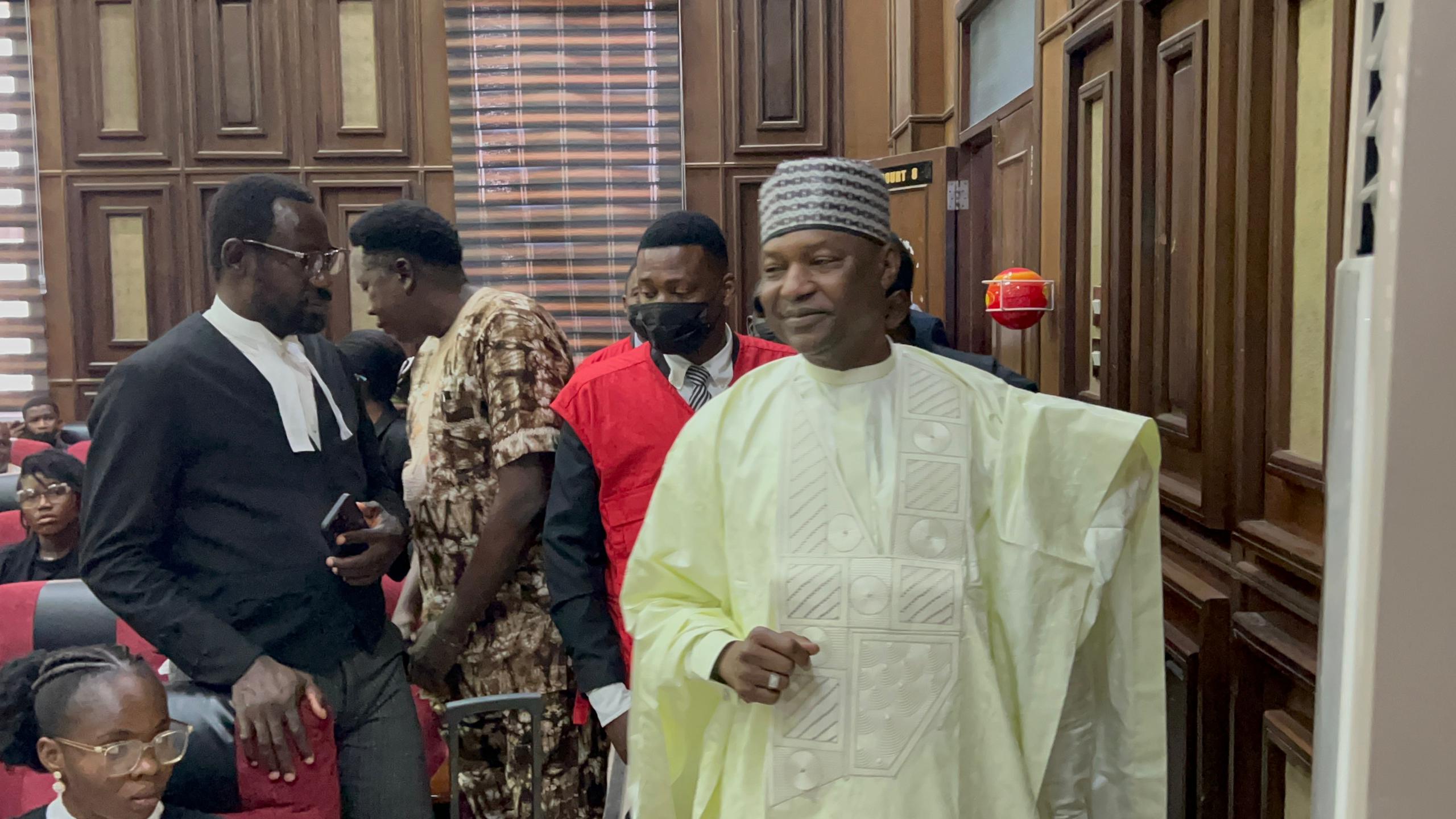
Court again postpones judgement in forfeiture suit against assets linked to Malami
Abstract
The Federal High Court in Abuja recently experienced another postponement in the judgment delivery concerning a high-profile asset forfeiture suit involving 57 properties allegedly linked to former Attorney General of the Federation, Abubakar Malami. The case, initiated by the Economic and Financial Crimes Commission (EFCC), seeks the final forfeiture of assets suspected to be proceeds of unlawful activities. This latest adjournment, due to the unavailability of Justice Joyce Abdulmalik, highlights persistent challenges within Nigeria's anti-corruption legal framework, particularly regarding the timely dispensation of justice in complex financial crime cases. The development underscores the procedural intricacies and the public interest surrounding efforts to recover illicit wealth.
Introduction
The Federal High Court in Abuja recently deferred judgment in a significant asset forfeiture suit brought by the Economic and Financial Crimes Commission (EFCC) against 57 properties allegedly connected to former Attorney General of the Federation and Minister of Justice, Abubakar Malami, and his associates. The judgment, initially scheduled for July 6, was first postponed to July 10, and then again to July 15, 2026, due to the presiding judge, Justice Joyce Abdulmalik, not sitting. This series of postponements in a case of such national importance draws attention to the procedural hurdles and broader implications for Nigeria's ongoing fight against corruption and illicit financial flows. The suit represents a critical test of the nation's legal architecture for asset recovery, aiming to permanently vest the disputed properties, valued at approximately N212.8 billion, in the Federal Government.
Background
Asset forfeiture serves as a crucial mechanism in Nigeria's anti-corruption strategy, designed to deprive criminals of their ill-gotten gains and deter illegal activities. The legal framework for such actions is primarily enshrined in the Economic and Financial Crimes Commission (Establishment) Act, 2004 (EFCC Act) and, more recently, the Proceeds of Crime (Recovery and Management) Act, 2022 (POCA 2022). These statutes empower the EFCC to trace, seize, and seek the forfeiture of properties reasonably suspected to be proceeds of crime. Forfeiture proceedings are typically civil in nature, operating *in rem* against the property itself, rather than *in personam* against the owner, and do not necessarily require a prior criminal conviction.
The process usually commences with an interim forfeiture order, which temporarily vests control of the assets in the government to prevent their dissipation while investigations and legal proceedings are ongoing. Subsequently, the anti-graft agency applies for a final forfeiture order, requiring interested parties to "show cause" why the properties should not be permanently forfeited. In the present case, an interim forfeiture order was initially granted by Justice Emeka Nwite in January 2026, covering the 57 properties located across Abuja, Kebbi, Kano, and Kaduna states, before the matter was transferred to Justice Abdulmalik for the final forfeiture hearing.
Analysis
The substantive arguments in the forfeiture suit highlight the adversarial nature of asset recovery litigation. Counsel for the EFCC, Jibrin Okutepa (SAN), contended that Abubakar Malami and other respondents had "woefully failed to show cause" that the 57 properties were legitimately acquired, urging the court to grant the application for permanent forfeiture. The EFCC's application, filed in February 2026, was supported by a 47-paragraph affidavit and 46 exhibits, asserting that the assets were proceeds of unlawful activities.
Conversely, Adedayo Adedeji (SAN), counsel for Malami and other respondents, vehemently opposed the forfeiture request. He argued that the EFCC's case was predicated on "suspicion" rather than concrete evidence, and that the agency relied on "extrajudicial evidence" more suited for criminal trials where cross-examination could occur. Adedeji maintained that the respondents had provided sufficient explanations demonstrating the legitimate acquisition of the properties, with some predating Malami's tenure as Attorney General. He urged the court to dismiss the EFCC's application and set aside the earlier interim forfeiture order. This exchange underscores the high evidentiary burden on both sides in forfeiture proceedings, where the state must establish a link between the assets and criminal activity, and respondents must prove legitimate ownership.
The repeated postponements of judgment in this case, a common challenge in the Nigerian judicial system, raise concerns about the efficiency of justice delivery, particularly in high-stakes anti-corruption matters. While judicial discretion allows for adjournments, excessive delays can erode public confidence, prolong legal uncertainty, and potentially impact the preservation and management of the assets under interim forfeiture. The Federal High Court (Civil Procedure) Rules, 2019, provide for the delivery of judgment and circumstances for adjournment, but the frequency of such occurrences in significant cases often points to systemic issues, including heavy caseloads or administrative challenges. The POCA 2022 aims to streamline asset recovery and management, but its effectiveness is intrinsically linked to the timely resolution of forfeiture applications by the courts.
Conclusion
The continued postponement of judgment in the forfeiture suit against assets linked to Abubakar Malami underscores the complexities inherent in Nigeria's anti-corruption efforts and the judicial process. For legal practitioners, this case highlights the critical importance of meticulous preparation, robust evidentiary presentation, and strategic advocacy in asset forfeiture proceedings. Both the prosecuting agencies and defence counsel must navigate a legal landscape that demands adherence to statutory provisions, such as the EFCC Act and POCA 2022, while upholding fundamental rights, including the right to fair hearing within a reasonable time.
Moving forward, the resolution of this and similar cases will significantly shape the trajectory of asset recovery in Nigeria. Practitioners should anticipate continued legislative and judicial developments aimed at enhancing the efficiency and transparency of forfeiture processes. The judiciary's commitment to delivering timely judgments, even in the face of complex facts and voluminous evidence, remains paramount for bolstering public confidence in the rule of law and demonstrating Nigeria's resolve in combating economic and financial crimes. All stakeholders must remain vigilant, advocating for reforms that ensure justice is not only done but is seen to be done expeditiously.
Citations
- 1.Economic and Financial Crimes Commission (Establishment) Act, 2004
- 2.Proceeds of Crime (Recovery and Management) Act, 2022
- 3.Federal High Court (Civil Procedure) Rules, 2019
How does this affect your business?
Get an AI analysis of this article grounded in your jurisdictions, practice areas, and any policy documents you've uploaded to Wansom.