
DCJ Mwilu Warns IEBC Against Bias, Says Kenya Risks Crisis if 2027 Polls Are Mishandled
Abstract
Deputy Chief Justice Philomena Mwilu has issued a stern warning to the Independent Electoral and Boundaries Commission (IEBC) regarding the conduct of the 2027 General Election in Kenya. Emphasizing that the credibility of the upcoming polls hinges on the commission's ability to manage disputes fairly, impartially, and within the confines of the law, DCJ Mwilu cautioned that any mishandling could plunge the nation into a severe crisis. Her remarks underscore the judiciary's commitment to electoral justice and highlight the critical importance of institutional integrity and adherence to constitutional principles by all election stakeholders to safeguard Kenya's democratic stability.
Introduction
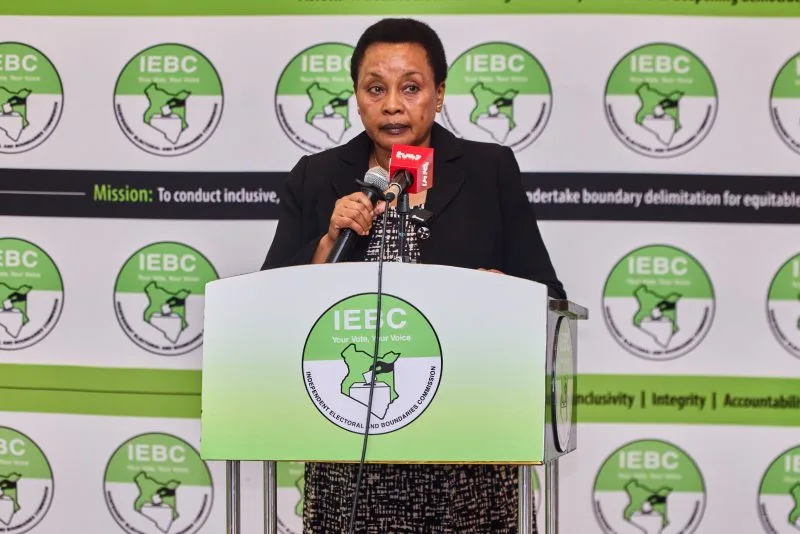
Kenya's Deputy Chief Justice, Philomena Mwilu, recently delivered a pointed caution to the Independent Electoral and Boundaries Commission (IEBC), stressing the imperative of impartiality and adherence to legal frameworks in the lead-up to the 2027 General Election. The DCJ's warning, delivered during the launch of the 2022 IEBC Pre-Election Dispute Resolution Committee report, highlighted the significant risk of a national crisis should the electoral body fail to manage disputes fairly and professionally.
This pronouncement by a senior judicial officer is not merely a procedural reminder but a weighty statement reflecting the judiciary's deep concern for electoral integrity and national stability. It signals a proactive stance by the courts in ensuring that the constitutional principles governing elections are upheld. The credibility of Kenya's democratic process, often tested by contentious polls, rests heavily on the perceived and actual neutrality of institutions like the IEBC.
This article will delve into the legal and practical implications of DCJ Mwilu's warning, examining the constitutional and statutory mandate of the IEBC, the judiciary's established role in electoral dispute resolution, and the lessons gleaned from past electoral petitions. It will underscore the critical need for all electoral stakeholders to prioritize integrity and accountability to avert a potential crisis in 2027.
Background
The framework for elections in Kenya is meticulously laid out in the Constitution of Kenya, 2010, particularly in Chapter Seven, which addresses representation of the people. Article 88 establishes the Independent Electoral and Boundaries Commission (IEBC) as an independent regulatory agency responsible for conducting or supervising referenda and elections to any elective body or office. This mandate is further elaborated in the Independent Electoral and Boundaries Commission Act, 2011, and the Elections Act, 2011, which provide the operational guidelines for the commission.
Central to the constitutional design of Kenya's electoral system are the general principles enshrined in Article 81, which demand that elections be free and fair, and administered in an impartial, neutral, efficient, accurate, and accountable manner. The IEBC's functions include continuous voter registration, delimitation of electoral units, regulation of political party nominations, and the settlement of electoral disputes arising from nominations, though not election petitions after results are declared.
The judiciary plays a crucial role in safeguarding electoral integrity, with the Supreme Court vested with exclusive original jurisdiction to hear and determine disputes relating to the validity of a presidential election under Article 140 of the Constitution. This judicial oversight is a cornerstone of Kenya's electoral justice system, designed to instill public confidence and provide a recourse for aggrieved parties, especially in a nation with a history of contentious elections and post-election tensions.
Analysis
DCJ Mwilu's warning resonates deeply with Kenya's electoral history, which has seen significant judicial interventions to uphold constitutional principles. The Supreme Court's landmark decision in *Raila Amolo Odinga & Another v Independent Electoral and Boundaries Commission & Others* (2017) stands as a powerful precedent. In that case, the Supreme Court, by a majority decision, nullified the presidential election results, citing significant irregularities and illegalities in the transmission of results and the IEBC's failure to comply with constitutional and statutory requirements. This ruling underscored that elections are not merely about numbers but about the integrity of the process itself, emphasizing the IEBC's obligation to conduct elections in strict conformity with the Constitution and applicable laws.
More recently, in *Raila Odinga and Others v William Ruto and Others* (2022), while the Supreme Court upheld the presidential election results, the judgment acknowledged the persistent public distrust in the IEBC's internal management and the administration of the electoral process. These cases collectively highlight the judiciary's consistent demand for transparency, accountability, and strict adherence to the law by the electoral body. The DCJ's current caution serves as a timely reminder that the lessons from these past petitions must inform the IEBC's preparations for 2027.
The statutory framework, particularly Article 81(e) of the Constitution, explicitly mandates that elections be administered in an impartial and neutral manner. Any deviation from this principle, whether perceived or actual, risks undermining public trust and legitimacy, potentially leading to the very crisis DCJ Mwilu warned against. The IEBC Chairperson, Erastus Ethekon, has publicly committed to delivering free, fair, and credible elections, acknowledging the weight of public expectations and the need for adherence to electoral laws. However, the judiciary's continued emphasis on impartiality suggests that more than just assurances are required; demonstrable actions are necessary to build and maintain confidence.
The challenge for the IEBC lies not only in the technical execution of elections but also in fostering an environment of trust among political actors and the electorate. Perceptions of bias, as highlighted by the DCJ, can be as damaging as actual procedural failures. Therefore, the commission's ability to resolve pre-election and election-related disputes expeditiously and fairly, as well as its transparent engagement with all stakeholders, will be crucial in preventing a repeat of past electoral controversies and ensuring national stability.
Conclusion
DCJ Mwilu's unequivocal warning to the IEBC is a critical intervention in Kenya's ongoing electoral discourse, serving as a powerful reminder that the integrity of the 2027 General Election is paramount for national stability. For legal practitioners, this emphasizes the enduring importance of electoral law and the judiciary's robust role in upholding constitutional democracy. Attorneys advising political parties, candidates, and civil society organizations must remain vigilant, advocating for strict adherence to electoral laws and processes, and preparing for potential legal challenges rooted in principles of fairness and impartiality.
Going forward, all eyes will be on the IEBC to demonstrate tangible steps towards enhanced impartiality, transparency, and efficiency in its operations and dispute resolution mechanisms. Stakeholders, including political parties, civil society, and the public, must actively engage in monitoring the commission's preparations and holding it accountable to its constitutional mandate. The judiciary, for its part, has affirmed its commitment to electoral justice, signaling its readiness to adjudicate disputes fairly and independently. The collective responsibility of all actors to safeguard the electoral process is essential to prevent a crisis and ensure that the 2027 polls genuinely reflect the sovereign will of the Kenyan people.
Citations
- 1.Constitution of Kenya, 2010
- 2.Elections Act, 2011 (No. 24 of 2011)
- 3.Independent Electoral and Boundaries Commission Act, 2011 (No. 9 of 2011)
- 4.Raila Amolo Odinga & Another v Independent Electoral and Boundaries Commission & Others, Presidential Election Petition No. 1 of 2017 [2017] KESC 31 (KLR)
- 5.Raila Odinga and Others v William Ruto and Others, Presidential Election Petition No. E005 of 2022 (Consolidated with E001, E002, E003, E004, E007 & E008 of 2022) [2022] KESC 1 (KLR)
- 6.Capital FM Kenya, "DCJ Mwilu Warns IEBC Against Bias, Says Kenya Risks Crisis if 2027 Polls Are Mishandled" (July 10, 2026)
- 7.Citizen Digital, "DCJ Mwilu warns IEBC against bias ahead of 2027 General Election" (July 09, 2026)
- 8.Citizen Digital, "Gachagua slams IEBC over threat to cancel Ol Kalou by-election, claims Ruto sensing defeat" (July 10, 2026)
- 9.IEBC, "Our Mandate" (www.iebc.or.ke)
- 10.IEBC, "INDEPENDENT ELECTORAL AND BOUNDARIES COMMISSION ACT NO. 9 OF 2011 (Revised Edition 2020)"
- 11.IEBC, "The Elections Act, 2011 (Revised Edition 2016)"
- 12.Kenya Law Reform Commission, "Constitution of Kenya 2010"
- 13.Citizen Digital, "IEBC warns against 2027 election rigging claims, threatens action against politicians" (July 06, 2026)
How does this affect your business?
Get an AI analysis of this article grounded in your jurisdictions, practice areas, and any policy documents you've uploaded to Wansom.