
Dental association warns unregulated health courses threaten patient safety
Abstract
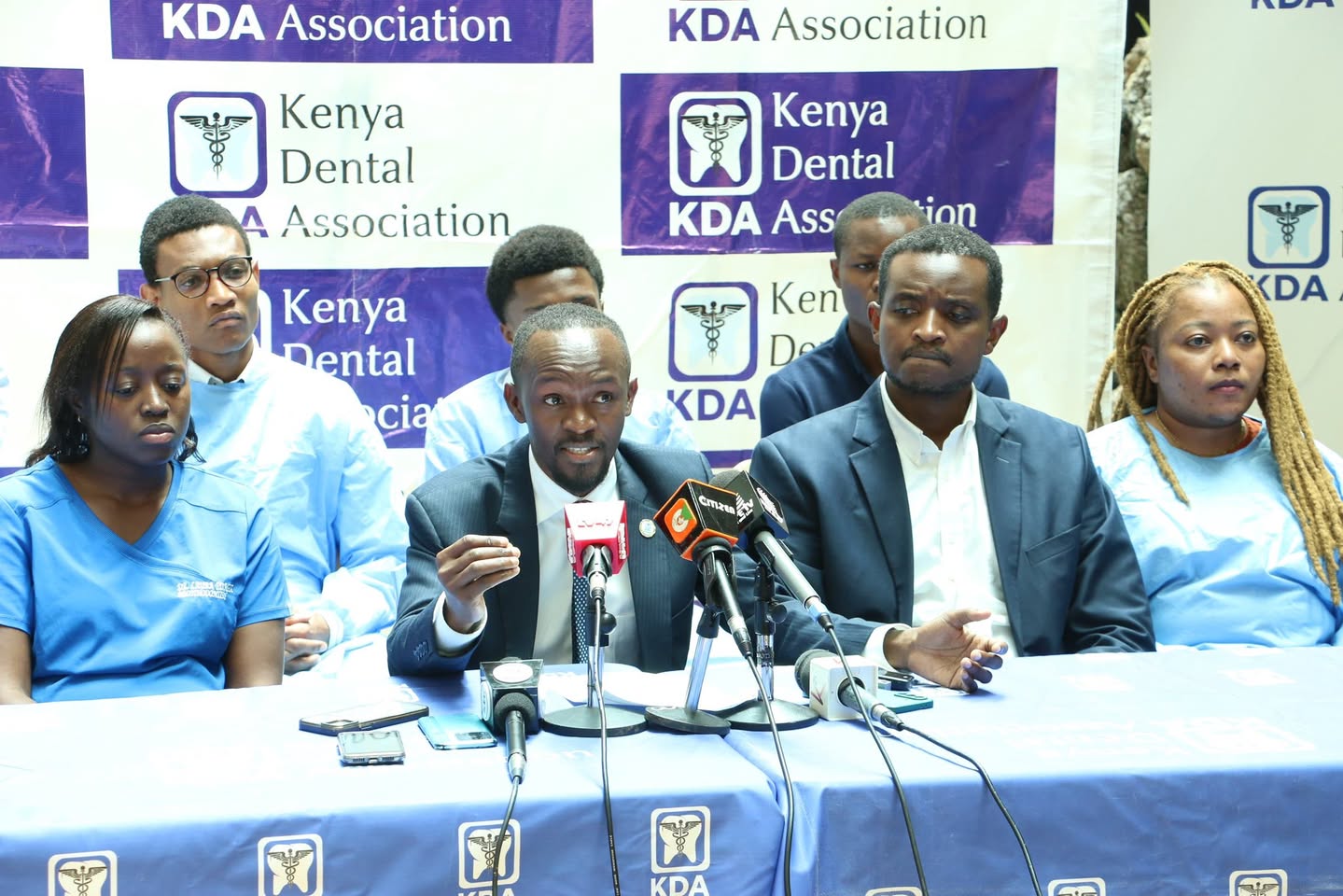
The Kenya Dental Association (KDA) has issued a stern warning regarding the proliferation of unregulated healthcare training programmes, asserting that such courses pose a significant threat to patient safety and professional standards in Kenya. The association highlighted concerns over programmes operating without proper regulatory oversight, curriculum validation, and accreditation from statutory and professional bodies. This lack of approval could lead to graduates being denied professional registration and licensure, rendering their qualifications invalid and potentially exposing the public to unqualified practitioners. The KDA has urged relevant government ministries and regulatory councils to take decisive action to safeguard the integrity of the country's healthcare system.
Introduction
The integrity of Kenya's healthcare system is under scrutiny following a grave warning from the Kenya Dental Association (KDA) concerning the rise of unregulated healthcare training programmes. In a recent statement, the KDA expressed profound alarm that certain institutions are offering health-related courses without the requisite consultation, accreditation, and approval from established statutory and professional regulatory bodies. This development, according to the association, directly compromises patient safety and erodes the professional standards meticulously built over decades in the country's health sector.
The KDA's warning underscores a critical legal and ethical challenge: the potential for inadequately trained individuals to enter a profession where competence directly impacts human life and well-being. The association specifically pointed to issues with the Bachelor of Science in Oral Health degree programme, arguing that its current form does not align with established competency frameworks and the recognized scope of dental practice in Kenya. This article will delve into the existing legal and regulatory framework governing healthcare training in Kenya, examine the implications of operating or enrolling in unapproved courses, and highlight the urgent need for robust enforcement and inter-agency coordination.
Background
The regulation of healthcare training and practice in Kenya is primarily governed by several key legislative instruments and statutory bodies, designed to ensure quality, relevance, and safety. Central to this framework is the Kenya Medical Practitioners and Dentists Council (KMPDC), established under the Medical Practitioners and Dentists Act (Cap. 253), which was revised in 2019. The KMPDC's mandate explicitly includes regulating the training, registration, licensing, and professional conduct of medical and dental practitioners. It is responsible for approving and registering medical and dental training institutions, prescribing minimum educational entry requirements, inspecting and accrediting internship programmes, and conducting qualifying examinations.
Complementing the KMPDC's role, the Commission for University Education (CUE), established by the Universities Act, No. 42 of 2012, serves as the government agency mandated to regulate university education in Kenya. This includes the establishment, accreditation, and governance of both public and private universities, as well as the approval of their academic programmes. For technical and vocational training, the Technical and Vocational Education and Training Authority (TVETA), established under the Technical and Vocational Education and Training (TVET) Act, No. 29 of 2013, regulates and coordinates the TVET sector through licensing, registration, and accreditation of programmes, institutions, and trainers. Furthermore, the Kenya National Qualifications Authority (KNQA), established by the Kenya National Qualifications Framework Act, 2014, provides an overarching national system for the articulation, classification, registration, quality assurance, and monitoring of all national qualifications, setting standards and benchmarks for competencies.
Analysis
The KDA's warning highlights a critical enforcement gap within this otherwise robust regulatory architecture. The Medical Practitioners and Dentists Act, Cap. 253, explicitly states that the KMPDC must satisfy itself that courses of study for medicine or dentistry meet sufficient standards to guarantee that graduates possess the minimum knowledge and skill for efficient practice. Any institution offering such training without KMPDC approval is operating outside this legal framework. The Act further stipulates that practising medicine or dentistry in Kenya without KMPDC registration and a valid annual practice license is a criminal offence, carrying severe penalties including fines and imprisonment.
Similarly, the Universities Act, 2012, empowers the CUE to regulate and accredit university academic programmes. The CUE has the authority to close down institutions offering university education without its explicit approval. For TVET institutions, the TVET Act, 2013, mandates TVETA to accredit and inspect programmes and courses, and contravention of its provisions, such as operating without accreditation, can lead to significant fines or imprisonment. The KDA's concern regarding the Bachelor of Science in Oral Health programme specifically underscores the need for inter-agency collaboration, as university-level health programmes require joint approval and oversight from both the CUE (for academic standards) and the KMPDC (for professional and clinical standards).
The legal ramifications for students enrolled in unapproved programmes are severe. They risk being denied professional registration and licensure by regulatory bodies like the KMPDC, rendering their qualifications worthless for practice. This can lead to significant financial losses from tuition fees and wasted years of study, often necessitating costly retraining or bridging courses to meet recognized standards. The KDA's call for strengthened coordination among regulators, meaningful consultation with professional bodies, publication of clear guidance on approved programmes, and regular compliance audits is therefore not merely a professional recommendation but a plea for the enforcement of existing legal mandates to protect both students and the public. The case of Uzima University, which recently defended its medical school accreditation after media reports questioned its standards, highlights the ongoing scrutiny and the importance of institutions maintaining rigorous compliance with all regulatory bodies.
Conclusion
The Kenya Dental Association's warning serves as a critical reminder to all stakeholders in the healthcare and education sectors of the paramount importance of regulatory compliance. For educational institutions, it is imperative to ensure that all healthcare training programmes undergo rigorous accreditation and approval processes by the KMPDC, CUE, TVETA, and KNQA, as applicable, before being offered to the public. Failure to do so not only risks severe legal penalties but also undermines the credibility of the institution and the future careers of its students.
Practising attorneys advising educational institutions should emphasize the need for proactive engagement with regulatory bodies to validate curricula, clinical training standards, and overall programme quality. For students and parents, this serves as a crucial advisory to conduct thorough due diligence, verifying the accreditation status of any health-related course and institution with the relevant professional and educational regulatory councils before enrolment. The ongoing vigilance and decisive action by regulatory bodies, coupled with increased public awareness, are essential to prevent the proliferation of substandard programmes and to uphold the quality and safety of healthcare services in Kenya.
Citations
- 1.Medical Practitioners and Dentists Act, Cap. 253 (Revised 2019)
- 2.Universities Act, No. 42 of 2012
- 3.Technical and Vocational Education and Training Act, No. 29 of 2013
- 4.Kenya National Qualifications Framework Act, 2014
- 5.KBC Digital, "Dental association warns unregulated health courses threaten patient safety" (June 10, 2026)
- 6.The Star, "Dental association warns against unregulated healthcare training programmes" (June 10, 2026)
- 7.Tuko.co.ke, "Students Could Lose Years of Study Over Unregulated Health Courses, Kenya Dental Association Warns" (June 10, 2026)
- 8.Kenya News Agency, "Dental association warns against substandard medical training programmes" (June 10, 2026)
- 9.People Daily, "Uzima University defends medical school accreditation after concerns" (June 16, 2026)
How does this affect your business?
Get an AI analysis of this article grounded in your jurisdictions, practice areas, and any policy documents you've uploaded to Wansom.