
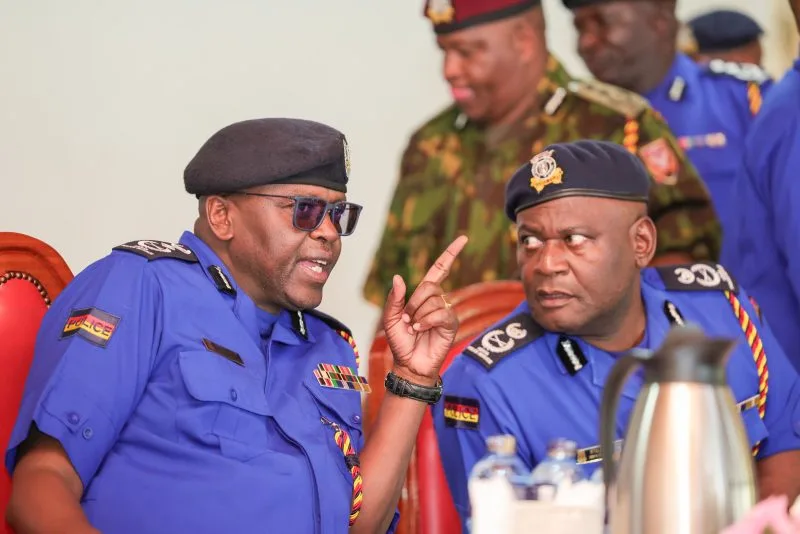
DIG Lagat vows Swift Action Against Election Offenders in Ol Kalou
Abstract
The Deputy Inspector General (DIG) Lagat's recent warning of swift action against election offenders in Ol Kalou underscores Kenya's commitment to upholding electoral integrity, particularly in the context of the upcoming parliamentary by-election. This article examines the robust legal framework governing election offenses in Kenya, primarily the Election Offences Act, 2016, and the roles of key institutions like the National Police Service (NPS), the Independent Electoral and Boundaries Commission (IEBC), and the Office of the Director of Public Prosecutions (ODPP). It highlights the various prohibited acts, from bribery and undue influence to violence and misuse of public resources, and discusses the enforcement mechanisms designed to ensure free, fair, and credible elections, offering critical insights for legal practitioners navigating the electoral landscape.
Introduction
The recent stern warning issued by Deputy Inspector General (DIG) Lagat regarding swift action against individuals found breaking election laws in Ol Kalou signals a heightened focus by law enforcement on maintaining order and integrity during electoral processes. With the Ol Kalou parliamentary by-election slated for July 16, 2026, following the demise of the incumbent MP, the political climate in the constituency is notably charged, drawing national attention. The DIG's assertion that "Anybody who is going to break the law will face the law" and that "There's no space for anyone to organise criminal activities" reflects a proactive stance by the National Police Service (NPS) to deter electoral malpractices and violence.
This declaration is particularly pertinent given Kenya's history of electoral disputes and violence, which has necessitated significant legal and institutional reforms. The commitment to swift action aims to instill confidence in the electoral system and ensure that the democratic will of the people is not subverted by illegal means. For legal professionals, understanding the scope of election offenses, the powers of enforcement agencies, and the potential liabilities is crucial for advising clients, whether they are candidates, political parties, or citizens participating in the electoral process. This article will delve into the legal framework underpinning such warnings and the practical implications for those involved in Kenyan elections.
Background
Kenya's electoral framework is primarily anchored in the Constitution of Kenya, 2010, which mandates free, fair, and credible elections. To operationalize these constitutional principles and address historical challenges of electoral misconduct, Parliament enacted specific legislation, notably the Elections Act, 2011 (Act No. 24 of 2011) and the Election Offences Act, 2016 (Act No. 37 of 2016). The Election Offences Act, 2016, specifically outlines a comprehensive list of prohibited acts and associated penalties, aiming to deter malpractices that could undermine the integrity of elections.
Key institutions are vested with powers to enforce these laws. The Independent Electoral and Boundaries Commission (IEBC), established under Article 88 of the Constitution, is mandated to conduct and supervise elections and enforce the law relating to election offenses. The National Police Service (NPS), governed by the National Police Service Act, 2011, is responsible for maintaining law and order, providing security, and investigating criminal activities. Police officers assigned election duties are deemed election officers for the purposes of the Elections Act and are subject to the direction and instruction of the IEBC. Furthermore, the Office of the Director of Public Prosecutions (ODPP) holds the constitutional and statutory power to institute and undertake criminal proceedings, including for election offenses, and to direct investigations. These interconnected roles form the backbone of Kenya's electoral justice system, designed to ensure accountability and deter violations.
Analysis
The Election Offences Act, 2016, details a wide array of prohibited conduct, categorised to cover various stages and aspects of an election. These include offenses relating to voter registration, voting procedures, actions by IEBC staff, maintenance of secrecy, personation, bribery, undue influence, use of force or violence, misuse of national security organs, use of public resources, and offenses related to election technology. For instance, bribery, a common concern in Kenyan elections, is explicitly criminalized, encompassing both the giving and receiving of inducements to influence voting. Undue influence, which involves non-physical pressure on voters, is also a serious offense. The Act also addresses the use of force or violence during the election period, which has historically been a significant challenge in Kenyan elections.
The powers of enforcement agencies are clearly delineated. The IEBC has the authority to order the arrest of persons who commit offenses under the Elections Act and can prosecute certain offenses. The ODPP, however, holds the primary power to order investigations and prosecute offenses under the Election Offences Act, a role it has recently reinforced by constituting a special Elections Preparedness Committee ahead of the 2027 General Election, with a mandate to coordinate investigations and prosecutions. This collaborative approach between the IEBC, NPS, and ODPP is crucial for effective enforcement. The DIG's warning in Ol Kalou, where reports of voter bribery and violence have emerged ahead of the by-election, highlights the practical application of these powers on the ground.
Challenges in enforcement persist, as evidenced by past difficulties in holding perpetrators of electoral violence accountable. However, the legal reforms introduced since the 2007-08 post-election violence, including the strengthening of the judiciary and the establishment of independent oversight bodies, aim to enhance the credibility of the electoral justice system. The emphasis on 'swift action' by the DIG suggests a commitment to overcome these historical impediments, ensuring that investigations are prompt and prosecutions are pursued diligently. The Election Offences Act also provides for general penalties, including fines and imprisonment, for various offenses, underscoring the seriousness with which these violations are viewed.
Conclusion
The Deputy Inspector General's unequivocal warning to election offenders in Ol Kalou serves as a timely reminder to all stakeholders of the stringent legal framework governing elections in Kenya. For legal practitioners, it is imperative to advise clients on the comprehensive nature of election offenses under the Election Offences Act, 2016, and the severe penalties associated with them. This includes not only direct acts of bribery, violence, and undue influence but also more subtle forms of misconduct, such as the misuse of public resources or technological interference.
Practitioners should emphasize the enhanced coordination and commitment from law enforcement agencies, including the NPS, IEBC, and ODPP, to ensure that electoral laws are strictly enforced. The Ol Kalou by-election will be a critical test case for the efficacy of these enforcement mechanisms. Clients involved in political campaigns, whether as candidates, agents, or supporters, must be made aware of their legal obligations and the potential for swift and decisive legal action against any transgressions, reinforcing the principle that electoral integrity is paramount for Kenya's democratic stability.
Citations
- 1.The Constitution of Kenya, 2010
- 2.The Elections Act, 2011 (Act No. 24 of 2011)
- 3.The Election Offences Act, 2016 (Act No. 37 of 2016)
- 4.The National Police Service Act, 2011 (Act No. 11A of 2011)
- 5.The Independent Electoral and Boundaries Commission Act, 2011 (Act No. 9 of 2011)
How does this affect your business?
Get an AI analysis of this article grounded in your jurisdictions, practice areas, and any policy documents you've uploaded to Wansom.