
Friday is not a holiday: What you need to know about the June 10-11 national cleaning days
Abstract
Following the devastating floods of June 29, 2026, President John Dramani Mahama declared Friday, July 10, and Saturday, July 11, 2026, as National General Cleaning Days across seven affected regions in Ghana. Despite directives for the nationwide closure of markets and shops, the government explicitly clarified that Friday, July 10, was not a public holiday. This article examines the legal distinction between a statutory public holiday, as defined by Ghana's Public Holidays Act, 2001 (Act 601), and a presidential directive for a national exercise. It delves into the President's executive powers to mandate such closures and public participation in the interest of public health and safety, highlighting the enforcement mechanisms in place even without a formal holiday declaration. The analysis provides crucial insights for legal professionals on the scope of executive authority during national emergencies.
Introduction
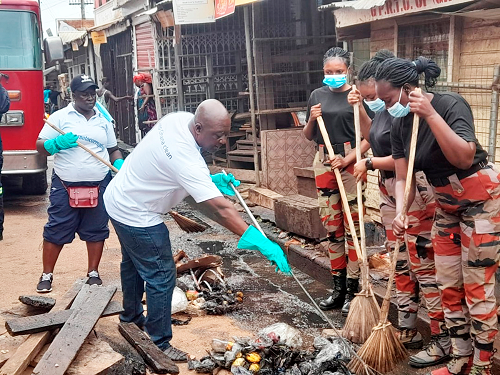
In the wake of severe floods that ravaged parts of Ghana on June 29, 2026, President John Dramani Mahama issued a directive for a two-day National General Cleaning Exercise to be observed on Friday, July 10, and Saturday, July 11, 2026. This extensive clean-up initiative, aimed at clearing debris, desilting drains, and disinfecting affected areas, necessitated the closure of markets and shops across seven regions. However, a critical clarification from the government underscored that Friday, July 10, despite the widespread closures and mandatory participation, was not to be considered a public holiday. [14, 20, 23]
Background
The legal framework governing public holidays in Ghana is primarily enshrined in the Public Holidays Act, 2001 (Act 601). This Act delineates specific days as statutory public holidays, mandating obligatory rest and cessation of most commercial activities, and providing for paid leave for workers. [3, 6, 10] The Act also grants the President powers to declare additional holidays in the public interest by executive instrument or to substitute a public holiday for another day if deemed inexpedient to observe the original date. [5, 10] However, it is generally understood that the President does not possess a general power to unilaterally declare a day as a statutory public holiday outside the provisions of Act 601. [5] The declaration of the July 10-11, 2026, cleaning days came in response to devastating floods on June 29, 2026, which claimed lives, displaced thousands, and caused extensive damage to property and infrastructure, particularly in the Greater Accra Region and six other regions. [14, 20, 21, 22, 23] The exercise was coordinated by the Post-Flood Mitigation Committee under the theme "Our Actions, Our Future: Cleaning Ghana after the Floods." [14, 16, 17, 18, 19, 20, 23]
Analysis
The government's explicit statement that Friday, July 10, 2026, was not a public holiday, despite the mandated closure of markets and shops, highlights a crucial legal distinction under Ghanaian law. A public holiday, as defined by Act 601, carries specific legal implications, including the prohibition of business operations (with certain exceptions for essential services) and penalties for non-compliance under Sections 4 and 5 of the Act. [10] By clarifying that the day was not a holiday, the government indicated that the closures and directives for participation were not derived from the public holiday provisions of Act 601, but rather from the President's executive authority to manage national emergencies and public health crises. [14, 20, 23]
The President's directive for a national cleaning exercise, even with compulsory closures, falls within the broader scope of executive powers to ensure public safety, health, and welfare during a disaster. Such directives, while not creating a statutory holiday, carry the force of executive orders, particularly when issued in response to a national calamity like widespread flooding. The Minister of Local Government, Chieftaincy, and Religious Affairs, Ahmed Ibrahim, emphasized that all workers were expected to participate, and security agencies were directed to enforce the presidential order, with warnings of consequences for non-compliant traders and shop owners. [14, 20, 23] This enforcement mechanism, therefore, stems from the executive mandate to address the emergency rather than the specific criminal sanctions associated with violating public holiday laws.
This situation contrasts with the ongoing National Sanitation Day initiative, a monthly voluntary clean-up exercise. While a bill was reportedly sent to Parliament to provide legal backing for the National Sanitation Day, potentially allowing for prosecution of non-participants, the July 10-11, 2026, exercise was an immediate, emergency response with direct presidential directives for compliance. [9, 11] The distinction is vital for legal practitioners to understand the source and scope of governmental authority in mandating public actions and business closures outside the established public holiday calendar. It underscores the President's inherent powers to take decisive action during times of national crisis, even if such actions impose temporary restrictions on economic activity without formally declaring a public holiday.
Conclusion
The declaration of the July 10-11, 2026, National General Cleaning Days, coupled with the explicit clarification that Friday, July 10, was not a public holiday, offers valuable insights into the exercise of executive power in Ghana. For legal practitioners, it is imperative to differentiate between statutory public holidays, which are governed by specific legislation like the Public Holidays Act, 2001 (Act 601), and executive directives issued in response to national emergencies. While both may lead to temporary cessation of normal activities, their legal bases, enforcement mechanisms, and implications for employers and employees differ significantly.
Attorneys should advise clients that compliance with such presidential directives, particularly those aimed at safeguarding public health and safety during crises, is generally expected and enforceable through executive authority, even in the absence of a formal holiday declaration. This event serves as a reminder of the dynamic nature of governance during emergencies and the broad powers vested in the executive to protect the populace and facilitate recovery efforts. Practitioners should remain vigilant for official pronouncements and gazette notices that clarify the legal status and obligations arising from such national exercises.
Citations
- 1.Public Holidays Act, 2001 (Act 601)
How does this affect your business?
Get an AI analysis of this article grounded in your jurisdictions, practice areas, and any policy documents you've uploaded to Wansom.