
From Dodoma to Helsinki: How Ruto is rewriting Kenya’s place in the world
Abstract
Kenya's foreign policy under President William Ruto has undergone a significant reorientation towards aggressive economic diplomacy, prioritizing trade, investment, and skills exchange across Africa, Europe, and Central Asia. This strategic shift is manifesting in numerous bilateral and multilateral agreements, including the operationalisation of the EU-Kenya Economic Partnership Agreement, ongoing negotiations for the US-Kenya Strategic Trade and Investment Partnership, and active implementation of the African Continental Free Trade Area. These developments are reshaping Kenya's international economic landscape, presenting both opportunities and complex legal considerations for practitioners in areas such as international trade, investment, digital law, and labour mobility.
Introduction
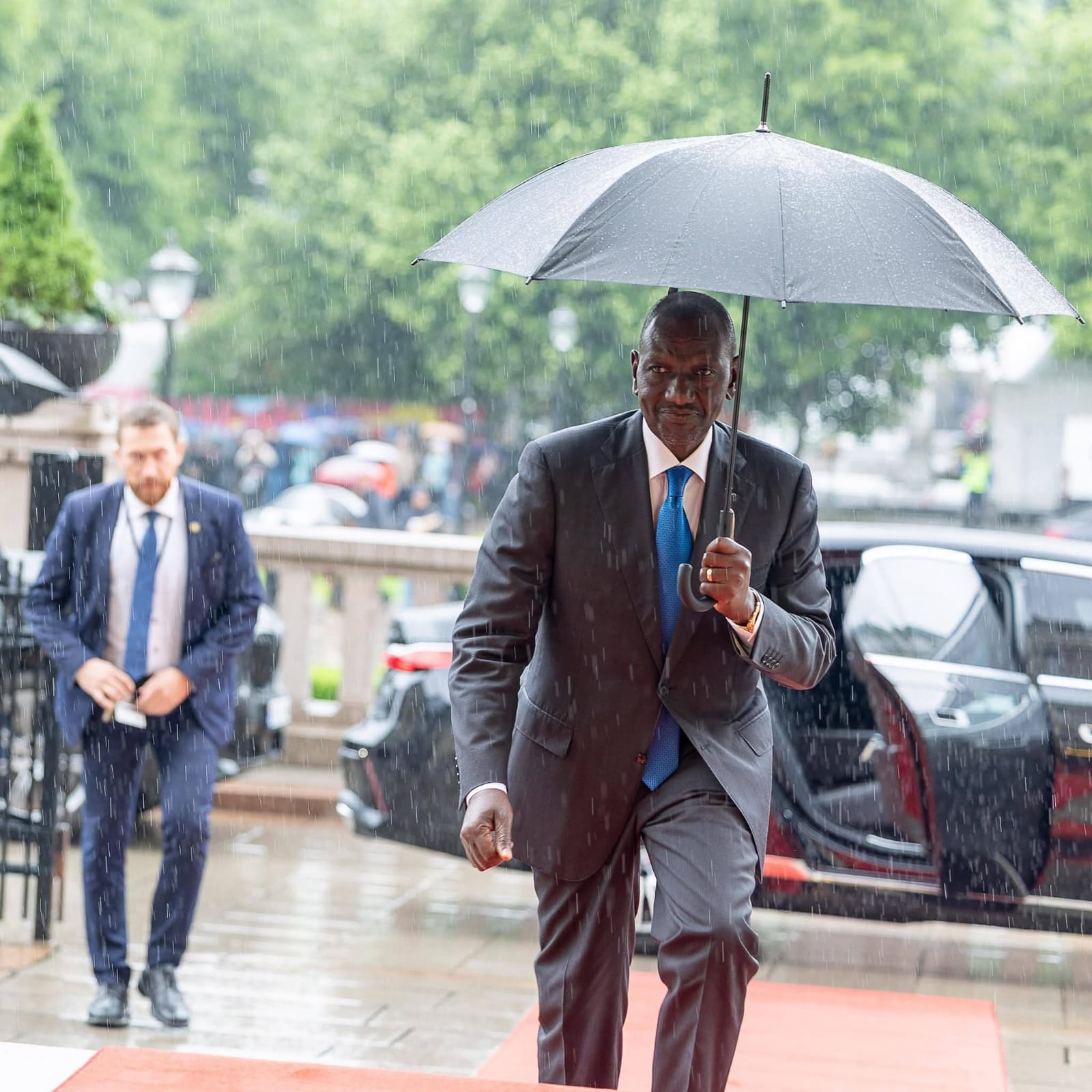
Kenya's global engagement is experiencing a profound transformation under President William Ruto's administration, marked by a deliberate and assertive pivot towards economic diplomacy. The traditional contours of foreign policy are being redrawn, with a clear emphasis on securing tangible benefits in trade, investment, and skills exchange. This strategic realignment, evident in a flurry of high-level state visits and the signing of numerous bilateral and multilateral agreements, aims to position Kenya as a pivotal economic hub and a proactive player on the international stage.
From the regional dynamics of Dodoma to the European capitals like Helsinki and Brussels, Kenya is actively forging new partnerships and strengthening existing ones. This article delves into the legal implications of this ambitious foreign policy, examining the statutory and doctrinal frameworks underpinning these international ventures. It will highlight key agreements and their practical consequences for legal practitioners, who must navigate an evolving landscape of international trade law, investment regulations, and cross-border legal compliance. The central thesis is that President Ruto's economic diplomacy is creating a complex yet opportunity-rich environment that demands a sophisticated understanding of both domestic and international legal regimes for Kenyan businesses and their legal advisors.
Background
Kenya's engagement with the global economy is primarily governed by a robust framework of domestic legislation and international commitments. At the heart of facilitating foreign and local investment lies the Investment Promotion Act, 2004 (Cap 485B), which established the Kenya Investment Authority (Invest Kenya) to promote and facilitate investments by assisting investors in obtaining necessary licenses and incentives. Complementing this, the Export Processing Zones Act (Cap 517) provides for the establishment of Export Processing Zones (EPZs) and the Export Processing Zones Authority (EPZA), offering attractive fiscal and procedural incentives, such as corporate tax holidays and customs duty exemptions, to export-oriented enterprises.
Crucially, the process of entering into international agreements is regulated by the Treaty Making and Ratification Act, 2012 (No. 45 of 2012). This Act mandates a rigorous process involving Cabinet approval, parliamentary scrutiny, and public participation before a treaty can be ratified, ensuring that international commitments align with Kenya's constitutional values and national interests. Article 2(6) of the Constitution of Kenya, 2010, further stipulates that any treaty or convention ratified by Kenya forms part of the law of Kenya, directly integrating international obligations into the domestic legal system. This constitutional provision underscores the significant legal weight of the international agreements Kenya is now actively pursuing, making their terms directly enforceable and relevant to local legal practice.
Analysis
President Ruto's economic diplomacy has yielded several significant legal and commercial developments. A cornerstone is the EU-Kenya Economic Partnership Agreement (EPA), which Kenya ratified in April 2024, with the EU Council adopting it in May 2024, leading to its entry into force on July 1, 2024. This agreement grants immediate duty-free, quota-free access for all Kenyan exports to the EU market, while gradually opening Kenya's market to EU imports. Legal practitioners must now advise clients on leveraging these preferential market access terms, navigating rules of origin, and understanding the binding provisions on trade and sustainable development, which include commitments on workers' rights, gender equality, and environmental protection, alongside a transparent dispute resolution mechanism.
Concurrently, Kenya is engaged in the US-Kenya Strategic Trade and Investment Partnership (STIP), launched in July 2022. This partnership, which superseded earlier Free Trade Agreement talks, aims for high-standard commitments across diverse areas such as agriculture, anti-corruption, digital trade, environmental action, good regulatory practices, and protections for workers and MSMEs. While negotiations are ongoing, the STIP signals a move towards deeper regulatory alignment and presents opportunities for legal professionals in areas like digital law, intellectual property, and compliance with international anti-corruption standards.
Regionally, Kenya is a key proponent and early ratifier of the African Continental Free Trade Area (AfCFTA), having launched its National Implementation Strategy (2022-2027). As one of the pilot countries for AfCFTA's rollout, Kenya is actively working to eliminate tariffs and non-tariff barriers, liberalize trade in services, and foster cooperation on investment, intellectual property rights, and competition policy across the continent. This presents immense opportunities for Kenyan businesses to access a market of 1.3 billion people, but also necessitates legal expertise in cross-border transactions, harmonized standards, and dispute settlement mechanisms under the AfCFTA protocols.
Beyond these major blocs, President Ruto's administration has secured numerous bilateral agreements. For instance, a state visit to Tanzania resulted in a commitment to eliminate all remaining non-tariff barriers by June 30, 2026, and to harmonize standards, directly impacting cross-border trade and customs procedures. Similarly, agreements with South Africa have seen the lifting of import duties on key Kenyan agricultural exports and the signing of six new agreements covering sectors like shipping and maritime. Engagements with Central Asian nations like Kazakhstan have opened new corridors for trade in ICT, agriculture, and finance, including plans for direct air cargo routes. In Europe, deals with Belgium include significant digital financing for Kenya's Digital Superhighway and discussions on EU data adequacy, while Norway has committed to recruiting Kenyan seafarers. These diverse agreements create a complex web of legal obligations and opportunities, requiring practitioners to conduct thorough due diligence on specific sector-focused protocols and their interplay with existing domestic laws.
Conclusion
President William Ruto's proactive economic diplomacy is fundamentally reshaping Kenya's engagement with the global economy, moving beyond traditional aid-based relationships to foster investment-driven partnerships. The proliferation of bilateral and multilateral agreements, from the EU-Kenya EPA to the AfCFTA and the ongoing STIP negotiations, signifies a strategic intent to diversify markets, attract foreign direct investment, and enhance Kenya's position in global value chains. This shift, while promising significant economic growth, simultaneously creates a dynamic and intricate legal environment.
For legal practitioners, this evolving landscape demands vigilance and adaptability. Opportunities abound in advising clients on market access strategies, regulatory compliance, intellectual property protection, and dispute resolution mechanisms under these new agreements. Lawyers must stay abreast of the specific provisions of each treaty, understanding their direct application under the Treaty Making and Ratification Act, 2012, and their interaction with domestic legislation like the Investment Promotion Act and the Export Processing Zones Act. Furthermore, the emphasis on digital trade, labour mobility, and sustainable development within these agreements necessitates specialized expertise in emerging areas of law. Practitioners should proactively engage with these developments, conducting regular legal audits for businesses involved in international trade and investment, and preparing for potential legislative or regulatory changes that will inevitably follow the implementation of these ambitious global partnerships.
Citations
- 1.Biden Administration Launches U.S.-Kenya Strategic Trade and Investment Partnership (July 15 2022)
- 2.Kenya Shifts to Economic Diplomacy to Drive Trade and Investment - Ecofin Agency (April 01 2026)
- 3.How Ruto's global tours could reshape Kenya's economy, transform lives - The Star (June 12 2026)
- 4.Kenya's Economy Gets Boost as Ruto Secures Trade and Digital Funding in Europe (June 13 2026)
- 5.How Ruto's Whirlwind Global Tours Will Reshape Economy, Transform Lives (June 12 2026)
- 6.EXPORT PROCESSING ZONES ACT - eProcedures Kenya
- 7.Export Processing Zones Act | PolicyVault.Africa
- 8.The Investment Promotion Act | PolicyVault.Africa
- 9.Safeguarding Foreign Investment in Kenya | CM Advocates LLP (February 24 2022)
- 10.THE INVESTMENT PROMOTION ACT
- 11.05 2025 | A Stronger Europe in the World | Economic partnership agreement with Kenya - European Parliament
- 12.Treaty Making and Ratification Act 2012 | PDF - Scribd
- 13.EU and Kenya strengthen partnership - European Commission (June 07 2026)
- 14.The U.S.-Kenya STIP in Light of Other Approaches to Trade with Africa - CSIS (July 27 2023)
- 15.From Dodoma to Helsinki: How Ruto is rewriting Kenya's place in the world | KBC Digital (June 11 2026)
- 16.U.S.-Kenya Strategic Trade and Investment Partnership - Federal Register (August 05 2022)
- 17.Export Processing Zones in Kenya - THE INTERNATIONAL JOURNAL OF BUSINESS & MANAGEMENT
- 18.Kenya's 2024 Foreign Policy Outlook: Challenges, Opportunities and Prospects - 1. Background
- 19.Kenya export processing zones in 2026 - Healy Consultants
- 20.Trade Policy Developments: United States - Kenya - SICE - OAS
- 21.INVESTMENT PROMOTION ACT - eProcedures Kenya
- 22.EXPORT PROCESSING ZONES AUTHORITY - EPZA Kenya
- 23.United States and Kenya to Hold Eighth Negotiating Round Under the Strategic Trade and Investment Partnership - USTR (September 09 2024)
- 24.Explainer: Ruto's Diplomatic Ascent Puts Kenya at the Heart of Global Power Politics (June 16 2026)
- 25.Inside 6 trade agreements signed between Kenya and South Africa during Ruto's state visit (June 04 2026)
- 26.How Ruto's global tours could reshape Kenya's economy and trade outlook - The Standard (June 11 2026)
- 27.How Ruto's whirlwind global tours will reshape economy, transform lives - Capital Business (June 11 2026)
- 28.Ruto Pushes for Investment Led Kenya-Belgium Partnership (June 08 2026)
- 29.Kenya launches its National AfCFTA Implementation Strategy (August 04 2022)
- 30.the treaty making and ratification act
- 31.The Kenyan Parliament and Investment Treaty Making (June 27 2019)
- 32.Factsheet: EU-Kenya Economic Partnership Agreement - EU Trade - European Union
- 33.The EU-DAG and the Consultative Committee within the Kenya-EU Economic Partnership Agreement | CBSD
- 34.About us - InvestKenya
- 35.Kenya - Trade Agreements (July 05 2024)
- 36.What Ruto's Nordic mission means for Kenya's future | KBC Digital (June 14 2026)
- 37.Treaty Making and Ratification Act 2012 | PDF - Scribd
- 38.The Economic Partnership Agreement between the European Union and the Republic of Kenya: an example of “variable geometry” a - AISDUE (December 18 2023)
- 39.the treaties bill, 2011
- 40.President Ruto Returns with Bilateral Pacts After Week-Long European Economic Tour (June 13 2026)
- 41.2024 Investment Climate Statements - Kenya - State Department
- 42.Kenya's Ruto Details Multi-Billion Investments with France in Major Fields | AC1N - YouTube (May 10 2026)
- 43.Unlocking Opportunities for Kenya's Industrialization through the African Continental Free Trade Area - KIPPRA (October 24 2024)
- 44.Kenya National AfCFTA Implementation Strategy - International Trade Administration (September 28 2022)
- 45.The African Continental Free Trade Area (AfCFTA) - KRA
- 46.Kenya's National AfCTA Implementation Strategy 2022-2027 - Epsilon Publishers
How does this affect your business?
Get an AI analysis of this article grounded in your jurisdictions, practice areas, and any policy documents you've uploaded to Wansom.