
'Ghostbuster' row: Trademark need not be formally declared well-known to get cross-class protection, says Delhi HC
Abstract
The Delhi High Court, in the case of *Columbia Pictures Industries Inc. v. Registrar of Trade Marks & Anr.*, has delivered a significant ruling clarifying that a trademark need not be formally declared 'well-known' to avail cross-class protection during opposition proceedings. Justice Jyoti Singh held that there is no statutory mandate under Section 11(2) of the Trade Marks Act, 1999, requiring prior formal declaration of well-known status. Instead, the Registrar of Trade Marks is empowered to determine whether an earlier mark qualifies as well-known during the opposition process itself, by considering the factors enumerated in Sections 11(6) and 11(7) of the Act. This decision streamlines the protection mechanism for established marks, reducing procedural hurdles for proprietors seeking to prevent the registration of identical or similar marks for dissimilar goods or services.
Introduction
The landscape of trademark protection in India has received crucial clarification from the Delhi High Court, particularly concerning the safeguarding of well-known marks across diverse classes of goods and services. In a recent judgment, *Columbia Pictures Industries Inc. v. Registrar of Trade Marks & Anr.*, the Court addressed a long-standing procedural ambiguity regarding the necessity of a formal declaration of 'well-known' status for a trademark to receive cross-class protection. This ruling holds significant implications for brand owners and legal practitioners, streamlining the process of protecting established intellectual property from dilution and unauthorized use.
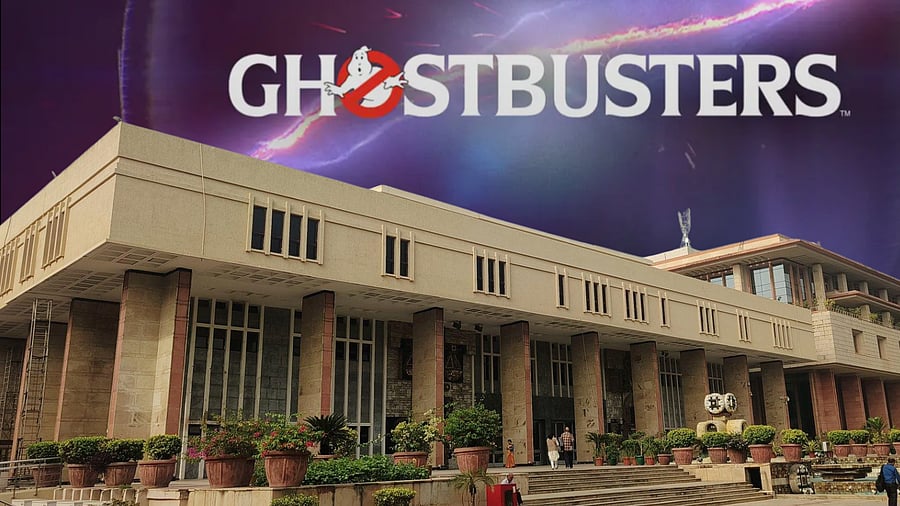
The case involved Columbia Pictures Industries, the proprietor of the globally recognized 'GHOSTBUSTERS' franchise, opposing the registration of 'GHOST BUSTER' for unrelated chemical products. The Registrar of Trade Marks had initially rejected this opposition, citing a lack of registration in the specific class of goods. However, the Delhi High Court's intervention has now unequivocally stated that the Registrar possesses the inherent power to assess a mark's well-known character during opposition proceedings, thereby negating the need for a separate, often protracted, formal declaration.
This article delves into the Delhi High Court's reasoning, the statutory framework governing well-known trademarks in India, and the practical ramifications of this judgment for trademark proprietors seeking robust protection against potential infringers across different commercial sectors.
Background
The Trade Marks Act, 1999, provides a robust framework for trademark protection in India, with special provisions for marks that achieve a 'well-known' status. Section 2(1)(zg) of the Act defines a 'well-known trademark' as a mark that has become so widely known to the relevant section of the public that its use in relation to other goods or services would likely indicate a connection between those goods or services and the mark's owner, and that the interests of the owner are likely to be harmed by such use. The primary benefit of a well-known mark is its enhanced protection, extending beyond the specific classes of goods or services for which it is registered, often referred to as cross-class protection.
Section 11 of the Act outlines the relative grounds for refusal of registration. Specifically, Section 11(2) prohibits the registration of a trademark that is identical or similar to an earlier well-known trademark, even for dissimilar goods or services, if the use of the later mark would take unfair advantage of or be detrimental to the distinctive character or repute of the earlier well-known mark. Prior to the Trade Marks Rules, 2017, the determination of well-known status was primarily through judicial pronouncements. The 2017 Rules introduced Rule 124, which established a formal procedure for a proprietor to apply to the Registrar on Form TM-M, accompanied by a prescribed fee and evidence, to have their mark declared well-known and included in the official list. This formal process, while providing certainty, can be time-consuming and costly, requiring a fee of INR 1,00,000 and extensive documentation.
Despite the existence of this formal declaration process, the question often arose whether such a declaration was a mandatory prerequisite for invoking the protections afforded to well-known marks under Section 11(2) during opposition proceedings. The Delhi High Court's recent pronouncement directly addresses this procedural query, clarifying the scope of the Registrar's powers in such matters.
Analysis
The Delhi High Court's decision in *Columbia Pictures Industries Inc. v. Registrar of Trade Marks & Anr.* arose from an appeal filed by Columbia Pictures Industries against an order of the Registrar of Trade Marks. Columbia Pictures, the owner of the renowned 'GHOSTBUSTERS' film franchise, opposed the registration of the mark 'GHOST BUSTER' for pharmaceutical, veterinary, and sanitary preparations falling under Class 5. The Registrar had rejected Columbia Pictures' opposition in April 2025, reasoning that the 'GHOSTBUSTERS' mark was registered only in Classes 9, 25, 28, and 41, and that Columbia Pictures had no registration or evidence of use for goods in Class 5.
Justice Jyoti Singh, in setting aside the Registrar's order, critically observed that the Registrar had failed to examine Columbia Pictures' case under Section 11 of the Trade Marks Act, 1999. The core of the Court's ruling was its interpretation of Section 11(2), emphasizing that there is "no statutory prescription under Section 11(2) that the proprietor of an earlier mark must first obtain a declaration of 'well-known trademark' status before invoking the provision in opposition proceedings." This means that the right to oppose registration based on a mark's well-known character is not contingent upon its prior formal recognition, either by a court or through the Rule 124 procedure.
The Court clarified that the Registrar, during opposition proceedings, is fully empowered to determine whether an earlier trademark qualifies as well-known. This determination is to be made by considering the factors laid down in Sections 11(6) and 11(7) of the Act. These factors include the knowledge or recognition of the mark among the relevant section of the public, the duration and extent of its use, the geographical area of its promotion, the record of successful enforcement of rights, and any prior recognition as a well-known mark. The High Court highlighted that the Registrar had erroneously focused solely on the dissimilarity of goods and the absence of registration in Class 5, without assessing the reputation and well-known status of 'GHOSTBUSTERS' as presented by Columbia Pictures.
Furthermore, the Court noted the Registrar's failure to consider Columbia Pictures' allegations of bad faith adoption by the applicant. Columbia Pictures had presented evidence of previous proceedings before the United States Patent and Trademark Office involving a related entity, suggesting the applicant's awareness of the 'GHOSTBUSTERS' brand. This aspect underscores that the Registrar's examination in opposition proceedings must be comprehensive, encompassing all relevant legal grounds, including the well-known character of a mark and the bona fides of the applicant, even without a pre-existing formal declaration.
Conclusion
The Delhi High Court's judgment in *Columbia Pictures Industries Inc. v. Registrar of Trade Marks & Anr.* marks a pivotal moment for trademark jurisprudence in India, particularly concerning the protection of well-known marks. By affirming that a formal declaration of 'well-known' status is not a prerequisite for seeking cross-class protection during opposition proceedings, the Court has significantly eased the burden on proprietors of established brands. This ruling empowers the Registrar of Trade Marks to conduct a substantive assessment of a mark's reputation and well-known character during the opposition stage itself, based on the statutory criteria, thereby providing a more efficient and accessible avenue for protection.
For legal practitioners, this decision underscores the importance of meticulously presenting evidence of a mark's well-known character, including its extensive use, promotion, public recognition, and enforcement history, even in the absence of a formal declaration. It reinforces that the strength of a mark's reputation, rather than its procedural status, is paramount in securing cross-class protection against identical or similar marks. Practitioners should advise clients that while formal declaration under Rule 124 remains an option for definitive recognition, it is not the sole gateway to invoking the robust protections of Section 11(2). The judgment also serves as a reminder to the Trade Marks Registry to conduct thorough examinations of all grounds of opposition, including allegations of bad faith and claims of well-known status, ensuring that the spirit of the Trade Marks Act, 1999, is upheld in safeguarding intellectual property rights.
Citations
- 1.Columbia Pictures Industries Inc. v. Registrar of Trade Marks & Anr., C.A.(COMM.IPD-TM) 44/2025 (Delhi High Court, July 6, 2026)
- 2.The Trade Marks Act, 1999
- 3.The Trade Marks Rules, 2017
How does this affect your business?
Get an AI analysis of this article grounded in your jurisdictions, practice areas, and any policy documents you've uploaded to Wansom.